3 top tips to consider before attending Waldsee family week at Concordia Language Villages

My top three concerns before our first trip to Waldsee, and some advice for new family Villagers

Two years ago, I registered DS1 and myself for family week at Waldsee, the German language immersion camp at Concordia Language Villages in Bemidji, MN. For those who’ve never heard of it, CLV is a language-learning program put on by Concordia College. It is a highly regarded program, and there are few foreign language immersion options like it in the United States. They offer summer camps for kids in fifteen different languages and have done so in some form or another since 1961. Family week is one of the year-round additions to the program that allows adults to participate with their kids in this effective way of studying a foreign language.

Though I scoured the Internet in the spring of 2015, there was hardly any information available about the family sessions aside from official CLV content. I found enough camper reviews from kids and teens to take make an educated guess that this would be a good fit for us, but I registered with some trepidation.

I was very excited about the camp—and I can now recommend it highly!—but I’m not the sort to blindly trust the word of someone who’s trying to sell me something. I wanted to hear from parents who had actually made the trip to Waldsee with their offspring; I wanted to know what to expect, preferably from a mom like me. I took the plunge two years ago because DS1 is educated at home and it is hard to find great local options for studying German below the high school level. Waldsee is a great supplement to any German learning program, but perhaps uniquely valuable to autodidacts and others who learn without speaking partners.

We are returning to family week in 2017, this time adding DS2 to our party. Our time at Waldsee was so much fun, it seems unfair not to include the other kid, even though he’s never studied German before. I’m positive he will have a great time, and I really want to share the experience with him. Ideally, DH would join us, too. It seems wrong that he has to miss out on all the fun, but his vacation time is just too precious and Minnesota is too far afield.

Having dispensed with the exposition, here are a few reassurances that I wish I’d heard before my first trip to Waldsee.

1)    During family week, adults have plenty of fun options provided by the camp, but families are also free to spend their time as they choose.

In many ways, I’m a happy camper. I love cheesy camp songs. Though I’m an introvert, I love to be nestled up alongside, if slightly apart from, the cheerful camaraderie of others. My experience at Waldsee was just about perfect in this respect.

I was always aware of a fun activity I could join. I think something was on offer every waking minute of the day! The overall feeling at Waldsee is exhilarating and joyful.

I never felt like I was being forced or bullied into participating when I didn’t want to. Every activity was an opt-in.

In this vein, I also felt supported as a parent to allow my child to join in—or not. DS1 found a group of compatriots on the very first day, choosing most often to hang out with them for the rest of the week. This was a real shocker! DS1 is not a joiner, and I’d expected to be constantly nudging him into participation. Whether this was the magic of Waldsee or simple good luck, we’ll see when we return this year.

If my child had shown signs of over-socialization stress (introverts know what I mean), I would’ve pulled him out and taken him back to the cabin for some alone time. It was pretty obvious that the program allowed for it.

This is also a good place to mention that our party of two inveterate introverts felt we had sufficient privacy to unwind and recharge, even though we were sharing a room with one other family and a house with many others. Specifics of one’s personal space will vary depending upon who attends camp any given session, but we had curtains for physical privacy and enough space not to feel physically or aurally crowded.

2) Though the official policy is cautious, a family with some physical special needs can expect to enjoy Waldsee

We have some dietary needs that aren’t mainstream (but nothing life-threatening.) I was also diagnosed with a serious autoimmune condition in 2015. I was mildly concerned about having good food options, and I was pretty nervous about my own comfort and physical health at camp.

For food, my concerns were mostly unfounded. There was one meal where the kitchen assumed a lower lactose option (based on hard cheese) would be safe for my severely lactose-intolerant son, but they were able to give him the vegan option when I expressed concern that it wasn’t. He could’ve survived on bread and vegetables for one meal if it had been a bigger problem.

Family week makes this a bit easier than standard sleep-away camp weeks at CLV because we retained the option to keep well-wrapped/sealed personal food with us in our cabin. I had safe, supplementary food that we never needed, but it gave me peace of mind to know my son would never go hungry. Food from home would be considered contraband during sleep-away camp weeks, and it would be confiscated upon arrival.

As far as my concerns about staying comfortable as an adult with health problems staying at a kids’ summer camp, everything worked out pretty well. I never felt pressured to join an activity that would cause me physical problems. The bunk beds, while far from luxurious, were comfortable enough that I could sleep using standard bedding. Sharing a bunk with a family member made this easier since I could insist DS1 sleep on the top. There are days where climbing a ladder is simply out of the question for me.

If your family requires medication, consider bringing a suitable locking container for it. During family week, you keep and dispense your own family’s medications. Because there are no locks on the doors, I kept all of my pills locked up in a medication bag and secured in my suitcase all of the time. I never felt that my belongings were in any way compromised, but I didn’t want to risk a child getting into my medication and being poisoned.

We are making some different choices for our second stay at Waldsee, primarily due to my physical needs. The biggest change is driving to Minnesota instead of flying. My one major discomfort during the 2015 family week could have been alleviated with camping equipment I already own. The thing I missed most was a cushioned chair with a back. At camp, you sit on hard wooden benches most of the time. Young backs and bones manage this very well, but my arthritis made it painful. I was only really comfortable at Waldsee lying down in my bunk. This time, I’m going to pack a folding camping chair to use in my cabin and possibly also at longer activity sessions.

I had a lot of concerns about what would happen if my condition flared at camp. Upon arrival, many of these fears were allayed. Our T-Mobile and Verizon wireless phones both worked in the parking lot, so we weren’t cut off from communication with family or physicians. The drive from Bemidji wasn’t too long, and the road was in good condition. It seemed likely that expert help could arrive quickly if needed. The camp buildings were mostly pretty refined structures. These weren’t the very primitive cabins of my childhood Camp Fire experience. Mosquitoes were mostly outside, the furniture was of sturdy household quality, and I could flip on an electric lamp if I needed to find my way at night.

3) The best way to arrive and depart Bemidji, MN

In 2015, we flew into Bemidji (BJI), flew out of Minneapolis (MSP), and we used CLV transportation options (charter bus) to get between Waldsee and the airports. The transportation staff was professional and everything went as planned, but one lesson learned is that you lose too much time from the last day of a short week by flying out of MSP. You leave camp before breakfast to make the multi-hours drive to Minneapolis. If you are paying to attend this moderately expensive camp, make the most of it and enjoy every hour you’ve paid for!

Flying into Bemidji was easy, and I suspect that flying out would have been equally satisfactory. We arrived Sunday and stayed overnight at a hotel to acclimate to the time zone before camp, and also to give me a comfortable night’s rest before what I feared would be a week of roughing it. The hotel night was pleasant, but I would only suggest it if it saves you a fortune on airfare to or from BJI. Some of the local hotels have free laundry facilities that might make an overnight before heading home very productive.

The biggest issue with flying to and from camp is the quantity of stuff you can carry by plane. We rented a set of bedding from CLV so we could check only one suitcase for the trip. The bedding was adequate, but bringing my own from home will make me more comfortable this year. If you fly, I’d suggest paying the airline fees to check a second bag full of bedding over renting linens.

A great deal more can be said about who might enjoy the Concordia Language Villages experience and how much one can learn in a week, and I intend to expand upon this in future posts. For now, I’m beginning with the few points that gave me the most angst as I planned my first visit to Waldsee, and offering the advice I think a newcomer should hear first.

Have you ever attended—or considered attending—family week at CLV? Feel free to share your best advice, or ask your most burning questions, in the comments!

Here’s a link to another mom’s blog series about attending family week at the CLV Russian site, Lesnoe Ozero. I was looking for exactly this information back in 2015.

Here’s my next installment in what I’ll call Waldsee family week for dummies, this time with more pictures.

Books that change the contours of my mind

  • 1984 by George Orwell

  • The Martian Chronicles by Ray Bradbury

  • The Hour of the Star by Clarice Lispector

  • The Mists of Avalon by Marion Zimmer Bradley

  • The Pillars of the Earth by Ken Follett

  • An Instance of the Fingerpost by Iain Pears

  • The Red Tent by Anita Diamant

Listed in roughly the order I experienced them, these are extraordinary novels that had a profound effect upon my very understanding of the world. They stand out as “the greatest books I’ve ever read.”

It’s telling that most of the titles were read in or before young adulthood. Is youth simply more open to seismic shifts of consciousness, or did my good education expose me to a spectrum of great writing, exactly when and as it should?

The closest I’ve come in recent memory to a reading experience as paradigm-altering as these was non-fiction:

  • The Little LISPer by Daniel P. Friedman and Matthias Felleisen

While I still read novels for pleasure almost every day, this does reflect a trend I’ve observed in my life.

As a child, my discretionary reading was primarily fiction. As an adult, the majority of my selections seem to be non-fiction. Six of the seven books I have out from the library today are non-fiction titles. My Kindle is filled primarily with novels, bought and borrowed, so this may not be a representative sample of all my reading, but, when I consider the mental effort I put into reading these days, I do feel as though  it is non-fiction that provides most the gear-grinding heft of deep thought and hard work.

Sometimes I think that a lifetime spent enjoying wonderful writing has simply raised the bar for what qualifies as “a good book,” making great novels ever harder to find. Believe me, I’m still actively looking for one every time I visit Amazon.com or the local library. A non-fiction title need only offer new information in a palatable form to warrant at least a browse, if not a thorough read.

Is a shift from fiction to non-fiction a natural side effect of maturity, reflecting adult values and responsibilities? Or could my self-imposed exile from the world of intellectually demanding technical work to the domestic sphere and full-time parenting be the weightier factor here?

How have your reading choices changed as you’ve grown?

Organizing the chuck box & storing camp kitchen gear

If you’re like me (perpetually messy and disorganized in the physical realm) but you want to go camping, sometimes on the spur of the moment, you could probably benefit from storing your camp kitchen equipment in a dedicated “chuck box.”

“Chuck box” is a synonym for grub box, camp box or patrol box. Any of these terms means “your portable camp kitchen in a container.” These days, many car campers use a large Rubbermaid tote as a chuck box.

Until a couple of years ago, we used a large plastic bin for all of our smaller camping equipment, too. What really prompted my chuck box organization project was realizing how inefficient it was to set up camp with everything coming out of the same large bin in the back of the car simultaneously. We kept getting in each other’s way!

Typically, we pull into a campground, and DH sets up the tent while I keep the kids out of trouble and begin setting up everything else (that doesn’t go into the tent.) On particularly bug-infested camping trips, simply leaving the back hatch of the car open as we dig for one item after another feels like a major mistake. It was obvious I could design a better system than the “one large plastic bin” default that had performed adequately before he had children.

Looking back to my own childhood of once or twice a year, week-long camping trips, I wanted to avoid the over-stuffed van (yay! Volkswagen bus!) and the inevitable late arrival with profanity-laden tent erection in the dark. My parents packed too much stuff!

On the other hand, a strictly minimalist camp simply isn’t comfortable enough, or convenient enough, for me to enjoy camping. Some items make a camping trip significantly more comfortable, like sufficient padding under a sleeping bag (physical comfort), or a set of marshmallow sticks that give every kid a simultaneous s’more after dinner (mental well-being.)

Upon reflection, it was obvious to me that I needed to improve the modularization of our camping equipment. In some ways, our gear was already stored in a modular way. After all, the clothing was in a duffel bag ready to go into the tent, and the sleeping bags were similarly corralled in an oversized canvas sack. We hadn’t yet taken this to the next logical step, however, and separated the other gear into collections by function. DH and I were nudging each other out of the way or tapping feet waiting to dig the next piece of equipment out of the same giant black hole Rubbermaid tote leading to inefficiency and sometimes frayed nerves (mine!)

Step one was to create a master checklist for all of our camping equipment. I started with the one from REI’s website and adjusted it to match our style and gear. I simply listed the Chuck Box and Cooler on the master list, and then created a separate list for everything related to camp kitchen equipment.

Listing all the items you’d like to have with you on a camping trip can be enough for some campers all by itself. Checking off each item as you grab it from your kitchen or garage and load it into the car means you will get where you’re going with the gear you expect. This saves the expense of duplicating household items you already own, but it does take time, and it also exposes what may be expensive or delicate household items to the dirt and rugged conditions of life outdoors.

Many, if not most, campers own at least some dedicated equipment for duplicating household chores in a natural environment. My own mother still has a lovingly constructed camp “pantry” made by her woodworking father for her childhood camping forays. That box probably weighed at least 70 pounds when she loaded it up with canned goods, but it is still sturdy and attractive over fifty years later. It also stirs up good memories for me every time I see it in her garage. While solid wood has largely been replaced by lighter weight materials in modern sporting goods stores’ camping aisles, there’s something to be said for having a piece of kit than can literally qualify as a family heirloom.

Mom isn’t willing to pass along her camping pantry yet, but I recognized my new chuck box almost instantly when I found it by web search. You can jump to Blue Sky Kitchen right now if you want to see it before finishing my soliloquy. My chuck box is the one he doesn’t call a chuck box: the Extended Work-Top Box camp table.

Every other chuck box design that I found online—homemade or commercial, old-fashioned wood or high ticket aluminum—shared one similar characteristic that I knew would not create a relaxing camp environment for me: a high center of gravity.

Suffice it to say that a high center of gravity means something is easier to tip over. I’m not the most graceful person. I have poor eyesight, and I am prone to distraction. I’m a grown up who still sometimes forgets about the tent guylines and trips in broad daylight. I’ve been known to shatter a glass by missing the table while engaging in spirited dinner conversation. The sight of a camp kitchen perched on tall, skinny legs on the uneven dirt ground doesn’t give me peace of mind.

I love my Work-Top Box because I can set up the raised work surface and extension leaves while keeping the bulk of my equipment stored in the box body safely down on the ground. The weight of the box itself keeps the raised area steady, and any equipment inside only adds to the ballast.

While the Work-Top Box is obviously a utilitarian piece of equipment, it is also a wooden box (oak hard ply and redwood) made by a human being, not a roto-molded plastic bin churned out by a factory. It was designed by an American entrepreneur who obviously enjoys camping and likes to share his expertise. He offers plans, kits you can build yourself, and fully built boxes ready to stock and take camping. I get an extra measure of satisfaction every time I see my Work-Top Box stored away in the garage because I feel good about every aspect of this purchase, and it brings back fond memories of camping trips past.

Having settled on the ideal storage box for my camp kitchen, I loaded it up and took it camping a few times. Once deployed, it met my needs and expectations, but I realized a few things about set up that could obviously be improved.

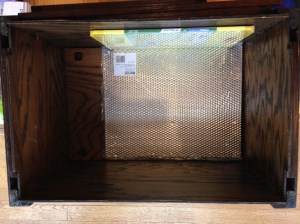
Chuck box no interior organizationS

Chuck box, haphazardly stuffed with camping equipment

First of all, the fully loaded Work-Top Box is something I can slide a few feet to get it out of my way, but not something I can safely lift, let alone carry. I can split the load with someone, but it isn’t ideal for our camp set up scenario for me to require assistance with one of the first tasks I need to accomplish. I want the chuck box up and out of the way in case DH finishes setting up the tent before I’m done and wants to access more gear from the car.

I don’t want the box to be lighter for any scenario except moving it, so I’m not looking for permanent changes to the box. Once again, modularization can solve my problem.

Upon arriving at camp (or returning home), I can take the lid off the chuck box and remove a few interior bins—one at a time!—to keep the weight of each load from being too much for my arthritic hands. Choosing lightweight bins made of washable materials means I can set them down on the picnic table, the ground, or whatever surface is convenient. I can also enlist the help of even my younger child to carry a dish pan sized load. With the heavy cookware thus shifted, I can lift the empty—or nearly empty—Work-Top Box and carry it to the desired location before setting up camp (or cleaning up the soiled equipment in the dishwasher back at home.)

Chuck box steam pans empty stackedS

Food-safe, dishwasher-safe, lightweight, commercial quality steam pans

Checking the interior dimensions of the Work-Top Box, I discovered that readily available commercial cooking equipment called “steam pans” were a very good fit inside the box. You’ve probably seen food served from these at buffets in metal chafing dishes. One full size steam pan almost completely fills the box from side to side, but leaves room to store a full-sized cutting board between its lip and the long side of the box. (A standard, full size steam pan measures 20-¾ inches long by 12-¾ inch wide.) These pans come in different depths, but 2-½ inch, 4 inch, and 6 inch deep pans are common. A four inch deep full size steam pan will hold all of my long, skinny BBQ sized cooking utensils, the pot holders, and a host of other kitchen equipment. I will keep this at the top of my Work-Top Box when it is fully packed.

Chuck box ready to re load with organizationS

Chuck box ready to pack with steam pan organizers; oversized yellow cutting board and silver heat-resistant mat fit along side and bottom

One full size pan is the equivalent size to two “half” pans, 4 “quarter” pans, and so on, available in several other common fractional sizes. (A half size steam pan measures 12-¾ inch by 10-½ inch.) For my purposes, I was also looking to replace my standard plastic dish pan with a smaller size that would fit more efficiently in my new box. Two six inch deep “half” steam pans, one made of stainless steel and the other in less expensive, lighter-weight polypropylene plastic, stack neatly next to each other beneath the full size pan. These two pans are big enough to wash my camping dishes.

The stainless steel pan, being a cooking implement, could actually be used directly on the stove or by the fire to heat water, though I’ll probably continue to heat water in a kettle on the stove during dinner as I have in the past.

Lids are available for these, but I didn’t buy any since the rims of the half pans provide sufficient support the full pan. The extra depth of the 6-inch half pans allows me to pack taller items, including a 4-cup Pyrex measuring cup, inside each one. If I decide that I want to store the two half pans above the full size pan once we’ve field tested this system, a flat, full-size pan lid should allow for the pans stack in this configuration.

Chuck box half pans not ideal on top of full panS

Full pan underneath would require a lid to support half pans above

Colander inserts are available that perfectly line any given size steam pan. Since I was looking to add a space-efficient colander to my chuck box, I opted for a half sized one that nests beautifully in one of my dish pans. Big round objects are always hard to pack efficiently, so I was pretty excited to find these.

The Work-Top Box is about 12 inches deep with the extension leaves stored inside, so stacking the six-inch and four-inch deep pans will leave plenty of room for last minute additions or somewhat oversized items at the top. Loading up the box this way isn’t fiddly or time-consuming. It also makes it much easier to find and remove any given utensil compared to the jumble inside when I first loaded the box. Kitchen tools also stay organized while the Work Top Box is deployed in camp.

Chuck box deployed state with equipmentS

Blame my photography, not my Work Top Box, for looking crooked

Chuck box deployed state with equipment close up full panS

The full size steam pan goes back in the box once the Work Top Box is set up, adding weight to keep that center of gravity low

Buying a bunch of specialty equipment isn’t necessary to enjoy camping, but it certainly can make packing and unpacking more convenient. How do you organize your camp kitchen equipment?

Hobbies

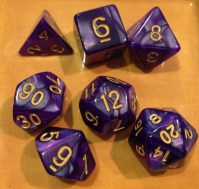
Phandelver game dice

  • NEW: learning to DM (Dungeon Master, i.e., run and referee) a D&D role playing adventure
  • Reading everything I can get my hands on about my passion-of-the-moment
  • Traveling vast distances at low rates of speed, usually in the company of minors
  • Rational exploration of natural living and healthy food choices
  • Making the world a better place
  • Language as fascinating cultural artifact and tool for interpersonal cooperation
  • Long-term food storage planning & occasional cookery
  • Home improvement with heavy emphasis on IKEA
  • Silk dyeing
  • DRIP investing and financial self-help
  • Medieval Jewish life from a woman’s perspective
  • Optimizing… everything!