
A patriot is “one who loves and supports his or her country.”*
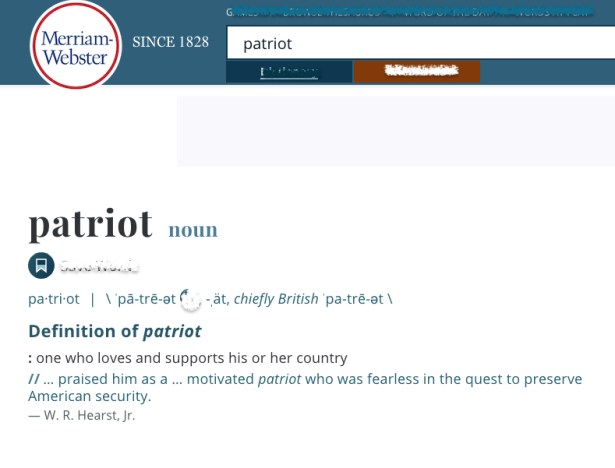 I am a patriot.
Theoretically, elected officials in any reasonable incarnation of a democratic society should also be patriots. Of course, we know that self-serving, would-be autocrats abound in the halls of power. Human nature draws the worst—as well as the best—of us there. However, the U.S. Constitution was written as a curb against despotism.
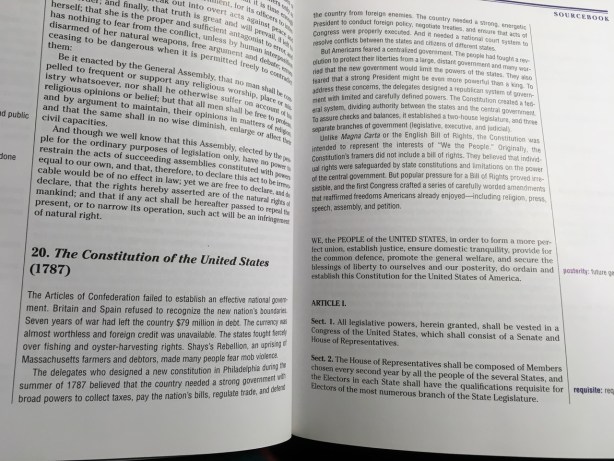 You cannot love America while wiping your nose with its foundational documents.
Two weeks after a nationwide election certified by our courts and by our own chosen† election officials, only 17 out of 253 elected Republican lawmakers—6.7%—had publicly acknowledged that Biden defeated Trump in his bid for President of the United States. That leaves 93.3% of them derelict in their duties, openly flouting the oath each person swore as Senator or Representative to the 116th Congress: to support and defend the Constitution.
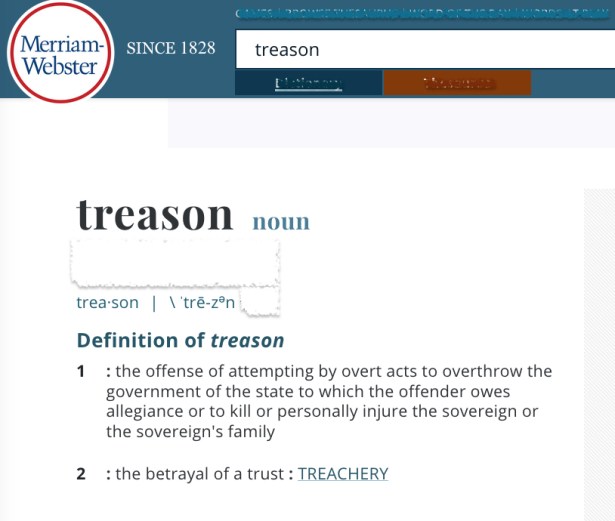
That’s not just a failure of bi-partisan politics worthy of personal shame, it’s the first step towards treason.*
 Two thirds of Americans voted in 2020; that’s a level of turnout that hasn’t been seen in over a century. At least 160 million members of the electorate are paying attention. Casting a ballot is important, but our work as citizens is not done.
 If you live in a district with a recalcitrant elected official, speak up as a constituent and demand that s/he acknowledge the will of the people. Take note of who’s doing his or her job, and whose back remains turned to what can be credibly described as an attempted coup by a blessedly incompetent strongman.
Fair-minded, law-abiding people must speak out now for what is right. In our silence, liars, cheaters, and extremists try to pervert American ideals, sullying our name. Moderates must now make themselves heard.
I respect honest disagreements, but I will never bow to tyranny.*
I acknowledge the will of the people.
I champion the rule of law.
I am a patriot.
Are you?
♦
* Definitions from Merriam-Webster: patriot, treason, tyranny.
† In 26 states, the ultimate person in authority over elections is him-/herself elected. Other states have an appointee in charge. A total of 33 states have elected individuals directly involved in oversight of their elections, sometimes via a board sharing responsibility with an appointed chief. In most others, the elected legislature or governor appoints someone to the position(s). Here’s a great resource for understanding regional election management differences across America. I learned a lot from it.
The gist of it all, however, is that the people in charge of our elections are themselves a product of our representative system; this is the way a constitutional federal republic is supposed to work.

 Today, I dropped my completed ballot—and those of my spouse, mother-in-law, and father-in-law—into an official drop box outside our town’s City Hall.
 According to
  Your opinions matter. Your vote counts. Exercise your right to be heard!
 Unless you are seeking to overthrow our entire system of government, you need to vote to make our republic work. Even if you are happy with the status quo, you should be expressing your pleasure with a vote for the incumbent(s). If you object to what Washington is doing, complain after you get yourself to the polls to put your opinions in writing!
 This right is the linchpin to what made America great. I’d argue that the ideas that “all men are created equal” and that our leaders are only “
 Really Wonderful Things