Books by my bedside 2017/07/22

I’ve noticed that I often bring up in conversation one or more of the fascinating books I’ve been reading lately, only to fail utterly at recalling titles or authors’ names. I’ll take this opportunity to at least have a handy reference available for anyone who cares to follow up on something I’ve said.

Just check my blog!

books 2017.07.22 - 1

Non-Fiction

History

The Bad-ass Librarians of Timbuktu : and their race to save the world’s most precious manuscripts by Hammer, Joshua

Dinner at Mr. Jefferson’s : three men, five great wines, and the evening that changed America by Cerami, Charles

White Trash : the 400-year untold history of class in America by Isenberg, Nancy

Language

The Little Schemer by Daniel P. Friedman and Matthias Felleisen

Pimsleur German I (audio CD)

Memoir

The Boy Who Harnessed the Wind Kamkwanba, William

True Crime

In Cold Blood : a true account of a multiple murder and its consequences by Capote, Truman

Fiction


The Fearless Travelers’ Guide to Wicked Places by Begler, Peter


Reading Notes:

Do you have a logical mind? Do you enjoy mental puzzles and games? Maybe you do, but you’ve never tried any computer programming? Or you know something about programming, but haven’t read this book?

books 2017.07.22 - 2Consider picking up a copy of The Little Schemer.

Your library might have The Little LISPer instead. It’s the same thing, just an older edition. Consider them equally good reads unless you have a specific need to learn the Scheme dialect of the language, LISP.

Though the first edition of The Little LISPer is as old as I am, I didn’t read it in college, where I majored in Computer Science. I picked it up a year ago for fun.

The Little Schemer is one of the most mind-stretching things I’ve ever read.

You don’t need a special application or even a computer to learn from this book. A pencil and paper or text editor will do. For an intellect that revels in a certain kind of logical thought, it is well worth the effort to give it a whirl.

This isn’t about learning a piece of technological equipment. It’s strength training for your mind.


Windows, culture & great comforts: how do we learn to share what we take for granted?

The world has gotten so much more interconnected. My tiny blog has been viewed by readers from all over the world. Yet, still, we miss opportunities to share our best ideas about life’s most basic conveniences.

My thoughts today are prompted by windows. Specifically, what I’ve thought of as “German windows” since my first visit to that country in the late 1990’s. A recent internet search tells me they are referred to as “Tilt and Turn” or simply “Tilt Turn” windows in English-speaking markets.

Do Germans even have a special name for this type of window, or is it just “a window” because the technology is expected?

The details of why I love these windows are a little off topic for this post, but they are uniquely functional fenestrations. I was reminded of that fact during a recent stay in a “passive house” (i.e., energy saving construction built using European “green” concepts.) Tilt & Turn windows might solve a challenge in my home, so I went looking for sources in the USA.

My specific home improvement aside, I was left with a renewed frustration about the difficulty of implementing well-tested, obviously useful technology that’s ubiquitous in another country here in my home.

Having traveled, I have some idea of the scope of great ideas for making comfortable homes that have developed around the globe. I’d love to bring some of these innovations back with me. Talk about the ultimate souvenir! But, to do so is almost impossible on a middle class budget.

I learned that this problem exists years ago as a first time homeowner with old steam radiators. An 80 year old unit needed to be replaced, ideally with something much narrower and taller. The existing unit stuck out ten inches past an adjacent doorjamb and into the hall! The plumber swore no such radiator existed for sale in the USA. I wasn’t knowledgeable enough then to realize how limited the repertoire of a standard contractor was (and is.)

I now have a plumber who enjoys learning about cutting edge technologies in his field. He’s taught me a lot about what can be had, domestically, and at what (high!) price. Thanks to him, at least I have options to evaluate for myself.

Scottish castle - 1

Scottish castle that had some fine modern radiators

Way back in 2002, I could have purchased the tall, slim, wall-mounted radiator I’d seen in Scotland, contrary to the old plumber’s thoughts. I couldn’t have afforded the system upgrades necessary to use it in my old house, however.

Our tradespeople frequently learn through mentoring relationships and apprenticeships—a tried and true method, undoubtedly—but it appears that the process precludes much exposure to innovation.

Couldn’t a better job be done in sharing building products and processes, at least between regions with similar climates?

Conservative behavior does make sense when we are talking about a home. For so many, it represents the bulk of his financial resources; the ultimate “investment.” No one wants to spend foolishly when it comes to her nest egg.

The flip side to this, however, is a failure to adopt even simple improvements that save resources over the mid- to long-term. The eventual costs end up staggeringly large. Also, right now, we enjoy less comfort at home.

Until you’ve traveled away from home and experienced life as another culture lives it, it is hard to even identify your own most mundane expectations and prejudices as such. Wearing shoes indoors or not? Various household appliances as luxuries vs. necessities? Local swimming pool, recreation center, or library as nice perk, or indispensable locus of community life?

Because I’ve traveled—and indulged a personal hobby of reading and occasionally obsessing about foreign cultures—I enjoy my daily life more.

I use a Japanese deep soaking tub for arthritis relief. I can’t imagine life anymore without an electric kettle (a habit I picked up in the UK) for preparing my tea. My husband and I share sleep more soundly with bed linens arranged in the German tradition—two separate twin duvets of wildly different warmth/weight on our king sized bed.

Most of these are inexpensive objects easily blended into a typical American home. My tub, for example, is a portable model that fits in my shower stall, something like an overgrown version of child’s wading pool, but it provides more comfort than any Western bath I’ve tried. I’d love to remodel my outdated bathroom someday and include a beautiful, high quality, built-in tub of this type, but that may never be economically feasible.

Also, the most intriguing aspect of the Japanese tub—an integrated heater that keeps a bath at a ready temperature—is not allowed in the USA. I think it is the cultural disconnect between people who wash before they get in to soak (Japanese) vs. the idea that the tub is the bath in which you soap and scrub. Only chemically disinfected hot tubs can be kept hot in America.

All of the previous paragraph is assuming I’ve got a handle on the actual code issues with these heaters, which I may well be misunderstanding. I have no background in the building trades, nor am I a particularly handy homeowner. Here’s more about using an ofuro in the Japanese tradition.

There are real technical reasons these are the hard innovations to incorporate. Building codes are different. Electrical requirements are different. Standards are different.

But, if we don’t know the technology exists to improve our lives, how can we ask for it?Boy Harnessed the Wind book cover photo

Another influence on these thoughts. A book I’m reading about how a boy growing up in Malawi experienced, and learned to work with, technology.

How do we, as interconnected citizens of the world, in constant contact with each other, share the best, most comforting aspects of our lives?

Can we do a better job of getting the word out?

Can we share our greatest comforts?

Books by my bedside 2017/07/06

I’ve noticed that I often bring up in conversation one or more of the fascinating books I’ve been reading lately, only to fail utterly at recalling titles or authors’ names. I’ll take this opportunity to at least have a handy reference available for anyone who cares to follow up on something I’ve said.

Just check my blog!

Non-Fiction

Language

Pimsleur German I (audio CD)

Fiction

Airman (audiobook, read by John Keating) by Colfer, Eoin.

Echoes in Death (In Death Series, Book 44) by Robb, J. D.

Lost in Arcadia: A Novel* by Gandert, Sean

The Murder of Mary Russell by King, Laurie R.

A Small Revolution* by Han, Jimin

The Things We Wish Were True* by Whalen, Marybeth Mayhew

Year of Wonders: A Novel of the Plague Brooks, Geraldine

Reading Notes:

If you’ve followed my blog for long, you may notice a radical reduction in non-fiction titles this week. I’ll attribute that to a few factors:

  1. I avoid traveling with library books because I’m afraid I’ll lose them or return them late. I borrow most of my non-fiction books.
  2. One week of my three week trip was spent in a full immersion language learning environment which required lots of mental energy and all of my waking hours to be dedicated to a language other than English. I can’t read very interesting books in my target language; I’m not fluent enough!
  3. During week two, I caught a cold and my physical energy plummeted, too, leaving me mentally lazy and searching for pleasant distractions (i.e., novels!)
  4. I drove about 3450 miles/54 hours over the past three weeks, about 2/3 of it as the only adult in the car. I didn’t have as much time to read as I usually do, and we didn’t listen to as many audiobooks as I thought we would.

RoadTrip round trip map

Speaking of audiobooks…

Airman made a good family listen-aloud story. Eoin Colfer is better known for his Artemis Fowl series, but this book stands alone. It’s historical fiction (appeals to me), vaguely steampunk with several in its cast of characters dreaming of inventing airplanes (appeals to DS1), and has a plot that clips along fast enough to keep DS2 fully engaged.

There is one stretch about 25-30% into the story where the protagonist’s idyllic childhood is destroyed in an instant that I feared this novel would become too dark for my enjoyment. There are murders of beloved characters, sadistic prison guards, and evildoers wielding power in Airman. I’d suggest it for older elementary kids and up, not little or sensitive listeners.

In general, however, audiobooks, usually the primary form of entertainment on our family road trips, weren’t as popular on this one. In addition to Airman, which we finished, I’d loaded our hard drive with:

  • Breadcrumbs by Anne Ursu
  • Skullduggery Pleasant by Derek Landy,
  • Der kleine Prinz (German) by Antoine de Saint-Exupery
  • Hitchhiker’s Guide to the Galaxy by Douglas Adams
  • Science Fair by Dave Barry & Ridley Pearson
audiobooks Skullduggery Airman - 1

I buy used audiobooks for road trips; usually former library copies like these

Blame it on the good company of the other kids we brought to camp, or the availability of electronic devices for more personalized diversions, but there didn’t seem to be enough time to hear more audiobooks.

We did also listen to two or three recorded language learning lessons daily for the first 26 hours of travel, which spent 1 – 1½ hours per day. Plus, warning four kids about upcoming rest stops, getting four kids in and out of the van at the dozen or so daily rest stops, and suggesting snacks other than chips and candy filled most of the rest of the day. Or, at least, it seemed to.

Having the time and energy to curl up and read every evening—in my big, comfy bed, no less!—has been one of the greatest pleasures of returning home from this particular trip.

The Murder of Mary Russell by Laurie R. King

Mysteries are my brain candy. I purchased Laurie R. King’s latest entry into the Sherlock Holmes/Mary Russell series back in March, and have been saving it to savor during my summer travels. King is a fabulous novelist, and this series in particular hits exactly in my escapism sweet spot.

Historical fiction? Strong female lead? True love (non-smarmy) between a pair of great intellects? Check, check, and check!

Book cover Murder of Mary Russell King

I’ve never been disappointed by a piece of fiction written by Laurie R. King. The Murder of Mary Russell is meeting that standard thus far, though I am reading it slowly to make it last.

*A book given to me for free because of my Amazon Prime membership

Summer morning snapshot: mother saying goodbye from a fishing cabin

Just before 6am, chilly in an unfamiliar bed in a rustic fishing cabin, I try to burrow deeper under a strange, thin blanket, and I listen as my little guy leaves the house with the men.

He’s small for his age, barely the size of an eight year old, though he’s actually nearing the end of his elementary school years. How does he qualify for manhood?

Answered easily enough: by waking at dawn without complaint, and by catching more than his fair share of last night’s dinner. So far, he has out-fished Grandpa, 15 fish to Grandpa’s ten.

With my older child gone away to camp and the younger snapping on a life jacket and struggling valiantly to lift–by himself–the smallest Igloo cooler, there are no small bodies left to join me for a morning snuggle. To warm the child, of course, but also very much to warm my heart.

There are no softly snoring or sleepy heads peeping out of heaped blankets that I can kiss on my way to put the kettle on.

I tried to go back to sleep, but there’s nothing that can fill the vacant space where my babies should be except writing this down, letting it out, making room for them to grow… and, eventually, to go.

There’s the heartbreak of a mother’s job well done.

Road Trip! New England to Minnesota Part I: a minivan, a mom, and four kids.

Why am I rushing from New England to Minnesota the day after school lets out for summer? (Cue Alice Cooper: School’s Out!)

And how does one rush to Minnesota from here, anyway? Why, by minivan, of course.

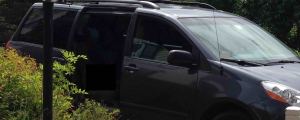
MinivanRegular readers may have noticed another oddity already: the title of this post says there are four kids in my minivan. Two of them are mine. Where did the other two joyriders come from?

I’ve posted before about the rare domestic opportunity for immersive study of foreign languages that exists in Bemidji, MN. I read about it for years before taking the plunge and attending Family Week with DS1 at Concordia Language Village‘s German language site, Waldsee. That was two years ago.

We’re heading back to Family Week at Waldsee this summer. Due to an abundance (some might say surfeit) of enthusiasm on my part, I wasn’t content to return with just DS1. He is a middle schooler who has been learning German since 1st grade.

His younger brother, DS2—who keeps reminding me that they don’t study German at his school, they do Spanish!—has also been drafted into our party. I remain convinced that DS2 will be a full convert to the joys of Waldsee after his first bite of Kuchen from the Café. He also loves to sing and dance and generally make a spectacle of himself. He’s going to fit in just fine.

Our party is completed by the addition of a pair of friends—brothers, and, in fact, twins. They are making the transition from school to home education for next year, and German is one of their areas of interest.

The seed of this idea was planted when I discussed with the twins’ mother the difficulty in finding local home school classes in less popular languages. It clearly grew into her acceptance of my offer to act in loco parentis for the twins during Family Week.

OSV 2 yellow flowersIf CLV is willing to define a family as any group of at least one adult and at least one child who wish to be counted as family, so, apparently, am I. Let’s see if my crazy idea flowers.

I’ve known the twins for several years, and, by all available evidence, they are very nice boys. Ask me in July if I’ve revised my opinion.

Our route from New England to Bemidji, MN will take two and a half days (25 road hours) of driving. God bless America, but it sure takes an effort to cross it.

The plan is to complete two ∼10-hour days on the weekend, then complete the final five hour stretch on Monday morning, arriving in Bemidji around check-in time for camp. That’s 2:30-4 pm.

If I survive, I then immediately begin an intensive language learning program while supervising my four charges.

Or maybe I will smile beatifically, let it all roll over me, and eat lots of Kuchen. We’ll see how my energy holds up.

We’ve got our Pimsleur German lessons loaded in the car‘s hard drive, headphones for all the kids, and enough distracting electronic devices for a small army. I’ve packed water bottles, snacks, and a Tupperware bowl with tight-fitting lid in case motion sickness* strikes.

Embarking on an epic road trip a few hours after school ends with no alternate driver and a van full of kids might be counted as one of my more… optimistic endeavors.

Remember, that which does not kill us, or any of the children, makes us stronger. (So we can kill them better at a later time?)

I’ll accept any prayers, well-wishes, or cones of silence from whomever cares to offer. Ah, those carefree summer days… (Cue Beach Boys: I Get Around)

Continued in Road Trip! New England to Minnesota Part II.
*Add ginger candies, mints, Sea Bands, and an eye mask to the list of offerings to the god of seasickness. DS2 is a risk. No screens allowed for him during motion. He’s got hours of audio books on his iPad.