Masks may be liberty-preserving alternative to mandatory vaccines or vax passports

There may be an alternative to mandatory vaccines and the inherent privacy and security concerns of either paper or electronic vaccine passports: allow people to opt out, but normalize the use of masks in densely populated, public, indoor settings when conditions suggest caution is demanded.

In the United States, this requirement should be tied directly to CDC reported rates of dangerous, communicable diseases with wastewater surveillance informing decisions. Medical research should be funded to track the effectiveness of masks against flu and anything else that’s feasible, not just COVID-19.

Ongoing investigation of the role aerosols—and inadequate ventilationplay in spreading common diseases demands equal attention and funding.

I, for one, would not return to an office as of May 2021 without a mask on my face if the space didn’t promise four to six air changes every hour or a fully vaccinated cohort of coworkers! This Wired story is a must read for those who’d like to understand the origins of medicine’s deeply flawed 5 μ myth defining “airborne” pathogens.

While our coronavirus memories are fresh, we owe it to future generations to prepare better for the next global outbreak. It is as inevitable as SARS-CoV-2 was. Fumbling our collective response, however, is not preordained.

We’ve learned a lot during the course of the coronavirus pandemic.

Ample real world evidence is now available suggesting that even simple homemade cloth coverings reduce the risk of infection from at least this one airborne virus. Flu also virtually disappeared during the 2020-21 season, though that could be as readily attributed to social distance and isolation as opposed to masks.

In the absence of the worldwide supply chain disruptions common early in this pandemic, more definitively effective surgical and N95 masks are easily obtained and affordable. Employers with public storefronts should have boxes of them deployed in the workplace in the same way food service companies provide gloves to their workers.
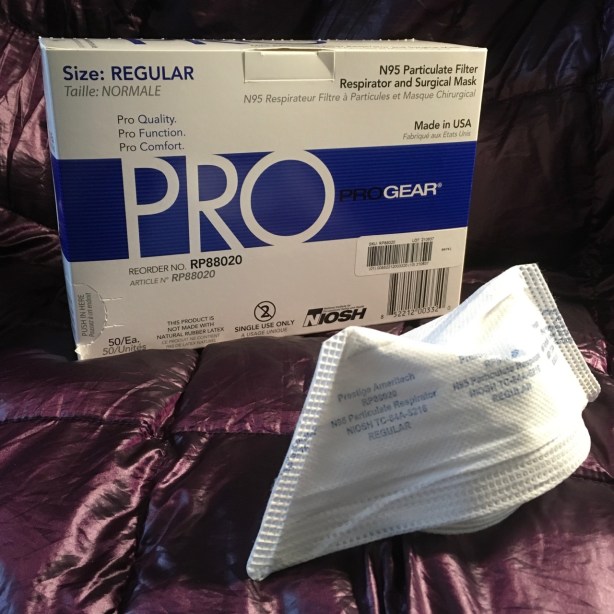
Unfolded ProGear N95 mask sitting in front box of 50 it came in

As with gloves and hairnets in restaurant kitchens, masks should be the immediate, hygienic response to entering the personal space of unknown persons with unknown vaccination status while any community is in the throes of an infectious agent.

Massachusetts’s governor is quoted in a May 7th Boston Globe opinion piece as saying, “some people have ‘very legitimate reasons to be nervous about a government-run program that’s going to put a shot in their arm.’” The same piece goes on to report, “Attorney General Maura Healey… this week repeated her call for public employees to be vaccinated as a condition of their jobs.”

Requiring every public employee in a customer facing position to wear a face mask at work unless s/he chooses to offer verifiable proof of vaccination seems like a cheap, simple, practical solution to me. As every scientifically literate, law-abiding citizen of the United States now knows, wearing a mask is no more difficult* than wearing pants.

Rome, the power house of the ancient world, believed trousers were ridiculous, barbaric garments. Quite literally, Romans, like the Greeks before them, saw pants as uncivilized clothing fit only for uncouth Goths and Vandals. The entire Western world, and most people around the globe, now don trousers without compunction. Masking one’s face requires no greater degree of adaptation!

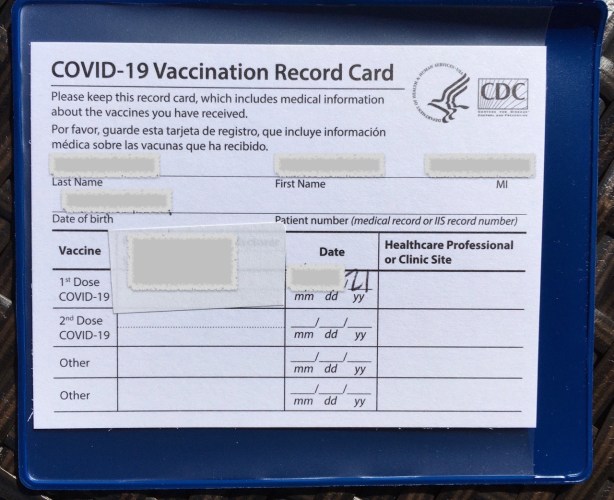
Most of us could decide which we prefer at work: to wear a mask, or to accept vaccination. Crucially, the public at large ends up protected either way.Redacted official CDC COVID-19 Vaccination Record Card
I think it is likely that I, personally, will never want to fly again without a face covering, if only because I’m so well aware of my own tendency to touch my face and even bite my nails when experiencing anxiety. It’s a terrible habit I’ve never been able to break, but a comfortable face shield or mask would remove almost all of that risk to my health.

There will always be liars and attempted cheats, of course. Responses to those caught committing public health fraud should be proportionate and focused on preventing harm to the community.

Perhaps being fitted with a device designed like the ankle bracelets employed for house arrest for a period of time would work, offering a visible warning to strangers while broadcasting via Bluetooth? a message alerting those in the vicinity of the need to increase social distance. This could be a system that works with individual’s cell phones, or a device required for public occupancy of spaces meeting certain size or density limits rather like the requirement to install smoke alarms and fire sprinklers before opening a hotel or nightclub for business.

The primary solution is to normalize the continued use of masks in dense situations where we crowd together with unknown persons. The secondary need is for public spaces to meet reasonable, updated standards for safety in light of our current understanding of risk in the post-COVID-19 world.

Once COVID-19 vaccines are fully approved by the FDA, I do believe that employees who work specifically with the most vulnerable population should be required to accept vaccination or leave those particular roles.

Aides in nursing homes should not be able to opt out of coronavirus vaccines, nor the flu vaccine in normal years, nor should nurses serving the immune-compromised. Prison guards—who work with populations literally unable to escape from unvaccinated sources of exposure—are another obvious group whose personal choices should not be allowed to endanger the lives or health of others.

The actual conditions of employment for such positions demand a workforce that doesn’t subject other people to unnecessary risk so easily mitigated by inoculation. Case in point: the unvaccinated Kentucky health care worker who caused the death of three elderly residents of the nursing home where s/he worked. To pretend otherwise makes a mockery of both human decency and common sense.

In another example: a recent study published in JAMA showed that 46% of organ transplant patients produced zero antibodies after a complete 2 shot course of SARS-CoV-2 mRNA vaccine. It’s unreasonable that such individuals should be unknowingly subjected to the ministrations—however well-intentioned—of unvaccinated health care workers, certainly not without the immune-compromised patient’s being informed of their relative risk and given the opportunity to offer fully informed consent to taking said risk.

Face masks could also offer an effective solution for the conflict between public school vaccination requirements and anti-vaxxer parents currently allowed in some states to claim religious or other non-medical exemptions for their children.

Further research might prove that masks are not effective against every disease against which we have mandatory childhood vaccinations, but face coverings could potentially eliminate the friction between parent choice and community health in the context of the vital public good which is free, universal education.

Where freedom is the prize—and outbreaks of vaccine-preventable childhood infectious disease remain rare in America—I’d argue that the value of face masks as an alternative to mandatory injections is well worth exploring.Disposable surgical mask
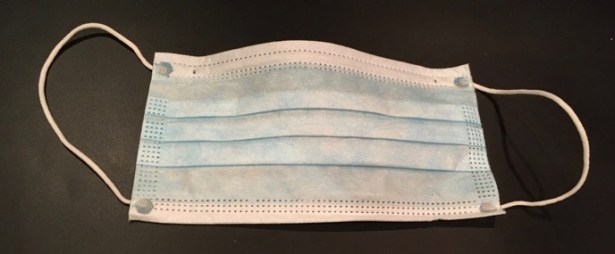
Western medical science was patently wrong, before COVID-19, when it declaimed that face coverings offered no protection from infectious disease. We still aren’t sure if they protect the wearer so much as those in the vicinity of a masked, sick individual, but we do have substantial evidence that widespread adoption of masks can protect populations during a deadly outbreak.

Perhaps most importantly, where even the most well-vetted, safest vaccine or medication carries some tiny risk of harm to its recipient, wearing an appropriate, well-fitting mask correctly has virtually zero chance of injuring anyone. Low cost interventions with few side effects are ideal public health measures.

Asian nations which had internalized the historical lessons of earlier epidemics had it right; many** normalized face coverings during flu season. Now we know better, too. Science proves its inherent value when we incorporate new data into our body of knowledge, especially when we recognize data challenging existing beliefs and ingrained patterns of behavior.

This BMJ editorial (PDF) highlights the danger of clinging to false understandings. This opinion piece by Dr. Zeynep Tufekci is well worth a read on the subject of organizations lurching only slowly toward acceptance of new information challenging medical and scientific preconceptions.

Before the next pandemic, we should take great pains to study when, where, and how cheap, medically risk-free facial coverings work to effectively control the spread of disease. How many thousands fewer would have died if we’d deployed masks as a solution worldwide in days instead of months in 2020?

This is not merely a political issue. It is a matter of public health. Where solutions exist that preserve both life and liberty, we owe it to democracy—and humanity—to explore every possible compromise.

Per the CDC, roughly 1000 flu cases were diagnosed during the pandemic 2020-21 season vs. more than 65,000 cases in the more typical 2019-20 season.

* As with trousers, some are the wrong size, and some are more comfortable on a particular body than others. Trial and error may be required to find the perfect fit for a given individual. Compared with the effort necessary to remediate infecting a susceptible individual with a life-threatening disease, this process is, at worst, a trivial inconvenience.

Per the Boston Globe: One of the major senior care operators in the state of Massachusetts came to a similar conclusion before COVID-19, though the quote perversely suggests that the organization was more interested in shaming staff members as opposed to protecting elderly residents:

“A year before the pandemic, Hebrew SeniorLife required flu shots for the first time for staff. Administrators achieved 100 percent compliance by imposing what seemed at the time an onerous condition: Holdouts would be required to wear masks 24/7 during flu season.

‘That was totally embarrassing then, but not now,” Woolf said. “We don’t have that hammer anymore.’”

In my opinion, after legitimate scientific studies were conducted to confirm that mask use by unvaccinated staff protects vulnerable patients to an equivalent level as vaccinated staff with faces uncovered, this could be a sufficient and highly appropriate alternative to mandatory shots in some cases.

Voluntary residential situations for children under age 18 should probably be held to a higher standard, in my opinion, and strictly require vaccinations for all but medically exempt participants. Absent direct parental supervision, it seems unreasonable to subject anyone else’s child to unnecessary risk due to personal choices that contradict the best current medical advice.

** Routine wearing of masks was imported to Japan from Western nations who’d adopted them as one response to the influenza pandemic of 1918-19. Unlike we Americans, Japanese culture never dropped them as a reasonable personal response to being contagious after the urgency of the Great Influenza subsided.

This Huffington Post article suggests that the Chinese adopted protective face coverings even earlier: “In 1910 and 1911, citizens were encouraged to wear masks to combat the pneumonic plague outbreak in Manchuria.”

The article goes on to point out that other Asian nations picked up the habit of covering faces during outbreaks due specifically to the SARS epidemic of 2002-2003. I’ve read that Koreans, in particular, actually viewed masks in a somewhat negative light as a foreign, Japanese import before the first SARS crisis.

Service jobs were already underpaid & risky; no wonder workers don’t rush back

My family owned a small business that grew from two to eight stores during my adolescence. By the time I graduated from college, I had over a decade of work experience in retail sales, pulling orders in our small warehouse, and doing the office work supporting such an enterprise.

I grew up grateful for never having to take a job at McDonald’s to gain that first professional experience. My highly intelligent peers attending some of the best colleges in America took summer jobs as hotel maids and washers of cars on auto lots while I was already in high demand with data entry and database management skills by my late teens.

I had the great good fortune of being “the bosses’ daughter” when I took shifts behind the register in our stores, safe in the knowledge that no complaint from a customer would ever get me fired. That didn’t prevent me from seeing how precarious employment could be for minimum wage clerks and servers less favored by nepotism and auspicious birth.Pile of money

Extensive firsthand experience in retail has informed my behavior towards customer service employees ever since.

Throughout the pandemic, I’ve taken pains to tip well as we’ve ordered in our groceries and occasional meals—usually double what I would have paid before March 2020, but always more than any app’s minimum. When I read about the Trader Joe’s employee fired for asking management’s permission to deny service to customers who refused to wear masks indoors, I immediately wrote to the company in support of the worker’s position. I haven’t shopped at Trader Joe’s since.

Though the pandemic may finally be waning, I continue to go out of my way to patronize companies who’ve made firm commitments—and taken more visible steps—to protect vulnerable front line employees against COVID-19 itself and from abuse by customers who don’t believe in science or follow government mandates regarding public health.

Here’s a May 1st Globe article about restaurant employees exhausted by “enforcement fatigue” due to their role as the unofficial police of health mandates for diners.

Last week, after government figures were released showing a reluctance on the part of the unemployed to return to service jobs, every major paper* seemed to run op-eds and articles pondering why workers aren’t flocking back to staff restaurants and hotels. People whom I’m guessing have never worked in service seem to sincerely believe that overly generous unemployment benefits are a primary cause of this phenomenon.

The fact that these jobs pay low wages is usually mentioned, though, as is the reality that many working parents are still required at home due to school and day care closures.

Lower income parents are realistically facing the truth that their children, like themselves, face outsized risks at returning to in-person learning inside overcrowded schools with above average local case positivity rates for COVID-19. People of color are tending to keep their children home and continue remote learning at higher than average rates in my region, probably for this reason. I have yet to see this factor noted in news coverage of the unemployment issue.

What strikes me about almost every article is the near total lack of awareness of just how terrible service work can be. It isn’t just low pay keeping the unemployed away, but the enormous physical and mental costs associated with taking that work.

From the Washington Post:

“‘Employers are hungry for candidates, but job seekers don’t seem to have noticed that yet,’ said Julia Pollak, a labor economist at ZipRecruiter.

But workers are still hesitant to return, partly because they want to wait until they are vaccinated first and partly because they are discouraged after months of not getting any callbacks, says Pollak.”

I find this economist’s lack of insight into the rationale for the choices of these service workers baffling. They “haven’t noticed” job openings? I sincerely doubt that.

Realistically, the unemployed are weighing the risks of exposure to a dangerous virus which sickens them in greater proportion than it does their better-off managers vs. the paltry rewards of minimum wage in exchange for a constant barrage of abuse from the public.

The cost-benefit analysis seems obvious when the choice is below-sustenance wages vs. the risk of long term disability or even death from coronavirus. If I couldn’t afford to be out of work for weeks or months, I, too, would delay—as long as I possibly could—returning to service while persistent infirmity and death strike many thousands** of Americans every day.

Remember, these are the U.S. citizens least likely to have any paid sick time available to them. Only about one third of the lowest paid wage workers do, whereas the majority of those of us earning in the top 50%—sufficient to accrue an emergency fund—also enjoy the financial protection of paid time off.

Employers must face the fact that some of the lowest legal wages in America—a pathetic $2.13 per hour for tipped employees—are being offered to people with the highest odds of confronting unmasked customers with no recourse for self-defense: restaurant servers.

Best practices asks diners to cover their faces while staff is nearby; real world conditions never adhere perfectly to best practices. And then, a sizeable minority of Americans refuses to even acknowledge the risk they impose on servers through callous disregard of mask mandates where those rules are even still in force. Disposable surgical mask

Many COVID-19 believers themselves now act with selfish entitlement after receiving vaccines, ignoring the reality that no one knows if they could still infect people around them while basking, unmasked, in their own newfound protection.

Referencing the same Post article I mentioned above, at least one expert came closer to realizing the truth I find so obvious:

“Others say the reason workers without college degrees aren’t flooding back into restaurants and hospitality jobs is because the pay is too low.

‘We should be asking how we got to a place where service sector wages are so low and benefits are so nonexistent and workplaces are so unsafe and scheduling practices are so volatile that a mere $300 per week [on unemployment] may be better than the financial benefits and security of a job,’ tweeted Elizabeth Pancotti, a senior analyst on the Democratic-led Senate Budget Committee.”

(bolded emphasis on the coordinating conjunctions in this quote is mine)

Frankly, I’m gratified to see that an analyst for the Senate Budget Committee appears to have a better grasp on real world conditions for America’s working class clerks and servers than the labor economist at a recruiting company. I see that as evidence that someone in my government is doing her job.

Before the life-or-death threat of a pandemic, the reality was that a clerk in a shop or a server in a restaurant was treated as less than human during almost every shift.

When I last worked retail circa 2003, it was already common for customers to throw items onto the counter at my register, chatting on a cell phone and ignoring my presence except to shove a credit card or a handful of bills in my direction without any acknowledgement that I was there. I imagine the further proliferation of smart phones has made that kind of rudeness even more frequent.

I made the observation to co-workers at the time that these same people are probably the ones who complain if their calls are answered by machines when they try to contact large corporations.Contact phone

If the customers in a purely discretionary, higher end business like ours treated someone like me so poorly, it’s probable that conditions are abominable for those without my advantages.

As a teen selling beauty products, I was relatively well educated, mannerly, protected by a pale complexion and all the obvious signs of middle class economic status, never mind the confidence of being part of the ownership of our family business. At the bookstore, years later, my husband’s secure professional career sheltered me from any cost that could be incurred by protecting my dignity when customers behaved badly.

Let me add at this point that I sincerely enjoy working in customer service!

I get a charge out of delighting someone by finding what they want on my shelves. I like hearing the small stories behind someone’s search for an item in my inventory. I take pride in my ability to cope under the pressure of lines at my register, handling even a Christmas rush or malfunctioning equipment with aplomb.

For those of us who sincerely love people, there’s an instant dopamine hit of reward when you make someone happy, satisfying reasonable customers by furnishing them with what is needed or wanted. I’d always wished to work in a bookstore, and I joyfully recommended titles to interested shoppers while I did. I’ve known many healthcare workers and food service employees similarly delighted to nurture others via “caregiving” careers.

I was very good at front-facing customer service work, but, still, certain aspects of it were always dark and demoralizing.

About weekly, I would encounter a customer difficult enough that my heart would race and my body would enter an adrenaline-charged fight or flight state. And, again, I was a socially privileged person working in a well-staffed chain store in an upper middle class, suburban shopping center or a busy mall. I can’t speak to conditions in mom and pop establishments in rougher neighborhoods.

I was never robbed on the job thank God, but I did experience fear for my personal safety on numerous occasions. I faced decisions about flagrant theft, mentally ill repeat patrons, one of whom began to cross lines of appropriateness in a sexual manner in our store, and many, many customers who felt entitled to raise voices and use crude language, for example, in response to strict return policies though such policies were clearly posted and printed on receipts in accordance with state law.

It was in spite of the regular—though, admittedly, perpetrated by a small minority—dangers and degradation of dealing with the public that I opted to return to retail sales when I left my last engineering role after 9/11 but before I had my first child. Even occasional angry or violent agitators can wield outsize influence on an employee’s sense of well-being

Those of us who could step behind a counter to avoid grabby customers with wandering hands have always enjoyed more protection from unwanted sexual attention than waitresses required to come within arm’s-length of their patrons as they set down plates of food. When you’re close enough touch a diner’s tabletop, you are also within range of any airborne virus, not to mention those “Russian hands” and “Roman fingers” attempting to cop a feel.

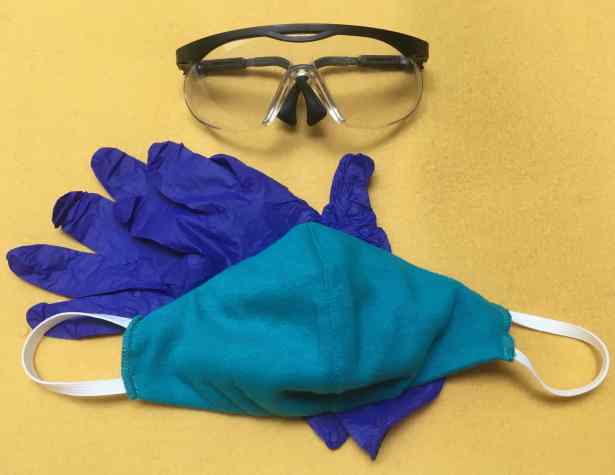
Safety goggles, cloth face mask, and disposable gloves

Reports abounded throughout 2020 of customers ignoring health restrictions such as mask mandates, berating and even becoming violent with service employees for asking them to comply with rules designed to protect everyone. These new insults must be added to the already poor working conditions that have always afflicted servers and clerks.

Partisan politics prevented some police departments from enforcing health mandates even when staffing levels did not, yet customer-facing service workers were already subject to dehumanization and harassment before health-related risk mitigation tactics became politicized. Even shoplifters and aggressive customers didn’t guarantee a timely visit from the authorities in my experience over a decade ago.

Employees will return to vacant jobs when the conditions and wages offered meet or exceed the risk of illness and harassment inherent to each role. There’s no mystery. Anyone who’s worked in service could explain the situation to those confused journalists and politicians, yet most of those would be amazed how rarely anyone thinks to lend an ear to the ubiquitous essential workers catering to us all.

Researching this post, I discovered a Business Insider article stating that the Trader Joe’s employee in question was rehired about a week later, possibly due to the furor on social media that ensued from his firing. I might shop there again in the future, but am personally unlikely to revisit this decision until pandemic restrictions have been lifted. As of April 27, hundreds of Americans per day are still dying of COVID-19, and tens of thousands are being diagnosed with it. Offering your employees safer working conditions only when public pressure forces you to do so does not speak to corporate values I want to support.

* Further examples from Boston Globe and the New York Times

** My reasoning for assuming thousands per day risk long term disability and death is as follows: For 29 April 2021, the New York Times reports 51,465 new COVID-19 cases and 697 deaths. A study reported in February 2021 that the percentage of coronavirus sufferers who go on to experience long term, debilitating symptoms is about 33%. One third of 51,465 new cases would suggest 17,154 “long COVID” (a.k.a., post-acute sequelae SARS-CoV-2 infection or PASC) are likely.

Screen shot of calculatorOne reason I’ve avoided working in food service—since a mandatory stint in my college dining hall as part of my financial aid package—or in health care is that those products are actually essential for life. The stakes, therefore, can be sky high, potentially justifying extreme behavior on the part of the guest. I’m unaware of anyone every dying due to a lack of professional brand shampoo.

Similarly, when I took a job at a bookstore, it helped me to keep my cool in the face of irate customers to acknowledge that their desire to buy a particular book was simply not a life or death situation… except, perhaps, if they sought a first aid manual!