Books by my bedside 2017/07/06

I’ve noticed that I often bring up in conversation one or more of the fascinating books I’ve been reading lately, only to fail utterly at recalling titles or authors’ names. I’ll take this opportunity to at least have a handy reference available for anyone who cares to follow up on something I’ve said.

Just check my blog!

Non-Fiction

Language

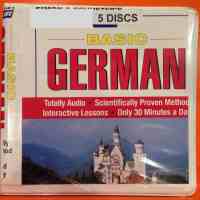
Pimsleur German I (audio CD)

Fiction

Airman (audiobook, read by John Keating) by Colfer, Eoin.

Echoes in Death (In Death Series, Book 44) by Robb, J. D.

Lost in Arcadia: A Novel* by Gandert, Sean

The Murder of Mary Russell by King, Laurie R.

A Small Revolution* by Han, Jimin

The Things We Wish Were True* by Whalen, Marybeth Mayhew

Year of Wonders: A Novel of the Plague Brooks, Geraldine

Reading Notes:

If you’ve followed my blog for long, you may notice a radical reduction in non-fiction titles this week. I’ll attribute that to a few factors:

  1. I avoid traveling with library books because I’m afraid I’ll lose them or return them late. I borrow most of my non-fiction books.
  2. One week of my three week trip was spent in a full immersion language learning environment which required lots of mental energy and all of my waking hours to be dedicated to a language other than English. I can’t read very interesting books in my target language; I’m not fluent enough!
  3. During week two, I caught a cold and my physical energy plummeted, too, leaving me mentally lazy and searching for pleasant distractions (i.e., novels!)
  4. I drove about 3450 miles/54 hours over the past three weeks, about 2/3 of it as the only adult in the car. I didn’t have as much time to read as I usually do, and we didn’t listen to as many audiobooks as I thought we would.

RoadTrip round trip map

Speaking of audiobooks…

Airman made a good family listen-aloud story. Eoin Colfer is better known for his Artemis Fowl series, but this book stands alone. It’s historical fiction (appeals to me), vaguely steampunk with several in its cast of characters dreaming of inventing airplanes (appeals to DS1), and has a plot that clips along fast enough to keep DS2 fully engaged.

There is one stretch about 25-30% into the story where the protagonist’s idyllic childhood is destroyed in an instant that I feared this novel would become too dark for my enjoyment. There are murders of beloved characters, sadistic prison guards, and evildoers wielding power in Airman. I’d suggest it for older elementary kids and up, not little or sensitive listeners.

In general, however, audiobooks, usually the primary form of entertainment on our family road trips, weren’t as popular on this one. In addition to Airman, which we finished, I’d loaded our hard drive with:

  • Breadcrumbs by Anne Ursu
  • Skullduggery Pleasant by Derek Landy,
  • Der kleine Prinz (German) by Antoine de Saint-Exupery
  • Hitchhiker’s Guide to the Galaxy by Douglas Adams
  • Science Fair by Dave Barry & Ridley Pearson
audiobooks Skullduggery Airman - 1

I buy used audiobooks for road trips; usually former library copies like these

Blame it on the good company of the other kids we brought to camp, or the availability of electronic devices for more personalized diversions, but there didn’t seem to be enough time to hear more audiobooks.

We did also listen to two or three recorded language learning lessons daily for the first 26 hours of travel, which spent 1 – 1½ hours per day. Plus, warning four kids about upcoming rest stops, getting four kids in and out of the van at the dozen or so daily rest stops, and suggesting snacks other than chips and candy filled most of the rest of the day. Or, at least, it seemed to.

Having the time and energy to curl up and read every evening—in my big, comfy bed, no less!—has been one of the greatest pleasures of returning home from this particular trip.

The Murder of Mary Russell by Laurie R. King

Mysteries are my brain candy. I purchased Laurie R. King’s latest entry into the Sherlock Holmes/Mary Russell series back in March, and have been saving it to savor during my summer travels. King is a fabulous novelist, and this series in particular hits exactly in my escapism sweet spot.

Historical fiction? Strong female lead? True love (non-smarmy) between a pair of great intellects? Check, check, and check!

Book cover Murder of Mary Russell King

I’ve never been disappointed by a piece of fiction written by Laurie R. King. The Murder of Mary Russell is meeting that standard thus far, though I am reading it slowly to make it last.

*A book given to me for free because of my Amazon Prime membership

Learning language as a gift to people we may meet

“I want to go everywhere and understand everyone. I never will, but it does motivate me.

It’s amazing how people respond when you [as a visitor] use even a little of their language, though. Like you’re offering a gift. And, I suppose, we [language learners] are: that of our time and attention.”

This post started as a reply to a comment left by Torazakana, a Japanese language learner whose efforts and accomplishments leave mine in the dust.

I include “living 3+ months in a foreign country with a different language” on my bucket list, but the longest I’ve stayed abroad yet was three weeks in Europe after finishing college. That was fun, but emphatically a tourist experience, not one of cultural or linguistic immersion.Beach sunset - 1

I don’t expect to be admired or congratulated for the work I do on foreign languages. I enjoy the challenge, the mental stimulation, and the sense of accomplishment from doing something more useful than binge watching Netflix. I like setting an example for my kids of lifelong learning and self improvement.

But I really love the light that comes into the eye of a friendly native speaker when I make an effort to communicate in their tongue, according to their terms. I love to give this gift. I revel in the return offering of goodwill and appreciation.

Even more than my (sometimes laughable) attempts at, say, Icelandic and its multitude of challenging sounds, or Catalan that tricks me repeatedly with its brushes against both Spanish and French concealing a reality of total independence, more than any speech itself, the international interpersonal connection is in the attempt. It is the reaching out that bridges the divide.

Language itself is just walking across the bridge that sincere effort built.

Books by my bedside 2017/06/09

I’ve noticed that I often bring up in conversation one or more of the fascinating books I’ve been reading lately, only to fail utterly at recalling titles or authors’ names. I’ll take this opportunity to at least have a handy reference available for anyone who cares to follow up on something I’ve said.

Just check my blog!

Non-Fiction

Pimsleur

Language

Pimsleur German I (audio CD)

Pimsleur German II (audio CD)

Fiction

Echoes in Death (In Death Series, Book 44) by Robb, J. D.

The Great Passage written by Miura, Shion, translated by Carpenter, Juliet Winters (note: this was a freebie from Amazon for being a Prime member)

Thirteen reasons why by Jay Asher

Reading Notes:

Great Passage coverI finished The Great Passage last night. It was a novel I read at a slower pace; not urgently, but in a concerted and thoughtful way. That fits neatly with the book’s narrative about the team of employees at a publishing house working—for years!—on the publication of a new dictionary of the Japanese language.

It wasn’t what I’d consider a quotable book until the very end. I highlighted these two passages that I liked very much, which might help you decide whether this is a novel you’d enjoy reading.

“A dictionary is a repository of human wisdom not because it contains an accumulation of words but because it embodies true hope, wrought over time by indomitable spirits.”

(page 193)

and

Human beings had created words to communicate with the dead, and with those yet unborn.

(page 200)

The book does a beautiful job of shining a light on a subject that could easily be overlooked: the creation of a dictionary.

What kind of person commits to such an endeavor? What is the work like? Why does it matter, to them and to you?

For me, it also presents a lovely view into a very different culture. I could see evidence of differences I’d read about. I also learned many new things about the Japanese language and office culture in Japan.

The Great Passage is a well-translated foreign book that made for peaceful, but contemplative, bedtime reading. I would gladly delve into works by this author—and this translator—again.

Spit it out! Memorizing phrases & the parroting process for improving foreign language fluency

Rote memorization won’t make you a fluent speaker of a new language, but it can be a powerful tool for increasing your foreign language fluency.Pimsleur

You often resort to routine phrases in your native language

Imagine this common scenario.

You’re hurrying into a familiar place, surrounded by people you know. Someone asks casually, “Hi! How are you today?

Most likely, you answer without a thought:

Fine, thanks.”

You answered with a learned response. You weren’t engaging the higher functions of your complex brain and its multiple intelligences. You went by instinct. That’s rote.

This kind of verbalization isn’t going to make you a master public speaker. It isn’t the rich, nuanced stuff of great oratory or literature. But words and phrases like these make up a huge proportion of the words spoken every day.

If you cultivate your knowledge of simple, canned responses to common questions and scenarios in a target language, you can really accelerate your comfort with speaking and your eventual progress toward fluency.

Fluency only comes if you actively use the language

I’ve always been a good student. The strength of my short term memory and my classroom skills made it fairly easy for me to get good grades in high school and university classes in Spanish and German. In spite of this, even after years of study, I was nowhere near fluent in Spanish, though I could read written materials fairly well.

By contrast, in only one semester of purely spoken Japanese taught by an immersion method, I learned a handful of phrases that stick with me in their entirety (and at full speed) to this day.

After that course, I never studied a language the same way again.

Do you intend to read, write, or converse in your target language?

Before Japanese, I improved primarily in the area of language my classes tested: reading and writing.

Sure, the students in my classes engaged in dialogues, but these were a small fraction of the time spent, and conversational skills were almost never on the test. With 15 pairs of high schools students talking to each other simultaneously, ostensibly in Spanish, there was no way for the lone teacher to notice—let alone correct—errors, omissions, or even a total failure to complete the assigned dialogue.

If your interest in acquiring a new language is to read, say, Descartes in his native French, or Don Quixote in the original Spanish, the American classroom experience may serve you well. For everyone else, read on! Continue reading

6 more German pop songs for learning Deutsches Vokabular und Grammatik

Because my children haven’t been embarrassed enough by my enthusiastic sing-alongs, here are six more pop songs that I’m using to improve my German language skills.

Added to my playlist, Deutsche Popmusik:

I found lyrics for all of these songs online in the original Deutsch and in English translation. Try MetroLyrics.

1) Leider Geil

By Deichkind; I had to pay $12 from Amazon USA for the CD as it wasn’t on iTunes, but you can easily find and view the video online to check it out for free.

Possibly explicit. Anyone fluent in German care to enlighten me about this song’s degree of rudeness? Please share in the comments if you know.

If you’ve ever seen America’s Funniest Home Videos, you’re well on your way to imagining the music video for Leider Geil. Familiarity with the “watching people do moronic stuff” genre will also help you understand why my young teen son found this song so appealing. This is the only foreign language track he asks to hear.

This song definitely has some mature content (coarse language and references to a one night stand), but, if my translation is accurate, I would allow my teen to listen to an equivalent track in English after some commentary from me about content.

Leider geil translates as “unfortunately awesome,” but geil also means “horny.” My German isn’t good enough to know just how risqué the language is, but it’s awfully catchy. It has a modern, slacker-esque, rhythmic edge that reminds me of the relationship between the Beastie Boys and pop music back when I was a teen. As far as I can tell, the wordplay seems clever in translation.

Are these guys cool? Are they male chauvinists? I have no idea, but I’m enjoying the tune.

I won’t ever forget how to say “unfortunately awesome” now that this song is in my head. I might accidentally deploy the phrase in polite company and embarrass myself. Oops! Leider geil!

2) Männer

From iTunes, I bought a cover version by “Partysingers” of this Herbert Grönemeyer hit.

Here’s an anthem for the men’s movement. Musically, this song is so retro 1980’s, which makes sense since it came out in 1984. It isn’t my favorite track in the playlist, but it’s a good resource for opposite adjectives with lyrics like:

Men have it hard, take it easy,
Outwardly hard, but inside all soft…

3) Tage wie diese

Available on iTunes, by Die Toten Hosen (yup, that means The Dead Pants.)

4) Wir trafen uns in einem Garten

Available on iTunes, by 2raunwohnung.

I’m listing these two songs together because both fall under the umbrella of “songs that sound like the kind of music I might listen to casually in my own language.” Neither has an unforgettable hook of the sort I can’t get out of my mind. Both fit reasonably well into my music library of alternative music, most of it from the late 1990’s and early aughts.

With lyrics in hand, a language learner can easily follow along with the words. The trick, for me at least, is to keep concentrating on them for the purpose of studying; I tend to get distracted by other things because these songs are a little too easy for my mind to transform into background music.

Comfort and familiarity may not be such a good thing when trying to pay close attention and learn.

5) Die Gedanken Sind Frei

Available on iTunes, by the Brazilian Girls.

The Brazilian Girls are apparently not Brazilian, and there’s only one female member in the band. She’s the one singing this pop interpretation of a classic German folk song that translates as Thoughts are Free.

And I am locked in a dark dungeon
I scorn the pain and human works
For my thoughts break the bounds and the walls,
Thoughts are free!

I learned of these lyrics from the lovely children’s book, From Anna, which I’ve previously reviewed. Searching for the full text—which brought me to tears reading the excerpt in the novel—led me to this quirky modern interpretation. I quite like its combination of funky rhythm, lightly overlaid electronics, a pretty, feminine vocal sound, and the traditional protest/progressive lyrics.

6) Da Da Da

As with 99 Luftballons in my first post about catchy German pop songs, this one was already in my music library. Unlike Nena’s really obvious hit, I had forgotten completely that there were German lyrics in Da Da Da. After all, da is the Russian word for yes.

You might remember this song from an old Volkswagen commercial (circa 1997.) If you do recall it, you might hate it. It’s a fairly goofy, very repetitive song with minimal lyrics, but some of them are in German. If you like this kind of electronic sound, you can learn to say “I do not love you, you do not love me” auf Deutsch. I hope that doesn’t come in handy!

If you enjoy Da Da Da, you’ll definitely want to check out Eisbär from my earlier German song post.

Happy listening!