Posting schedule: summer vacation is for blogging moms, too

I’ve been posting almost daily since April, when I started in earnest to write Really Wonderful Things. I hope that all of this hard work has built up a nice portfolio on a variety of topics, and that my archives now have lots to offer for new readers who stop by.

Starting immediately, my summer schedule will be a post on Tuesdays and Saturdays.

PEI beachSummer vacation, for us, means travel, family activities, and time away from our desks. Wifi isn’t readily available—nor would I want it there!—in the wilderness.*

I’m not neglecting those of you who do me the honor of following RWT. I’m unplugging. It’s supposed to be good for you.

And I’m really only unplugging a little bit.

If I have access to Wifi, I will still read and answer comments every day.

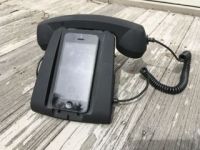
Contact phoneI expect I will continue reading most, if not all, of the blogs I follow, too. Following a blog can feel like making a friend. I want to find out what happens next.

I reserve the right to write extra posts at any time. I may not be able to help sharing Really Wonderful Things that I learn, see, or do this summer. I’m an enthusiastic over-sharer. It’s who I am.

Here’s wishing every reader** a summer season abundant in everything really wonderful to you.OR Florence - 2011

*Maybe wilderness can be defined here as the local park, or a campground with hot showers, but the point remains.

**I know I have some followers from the Southern Hemisphere. You are headed into winter. Perhaps my summer posts can help warm your cold days.

Summer road trip planned? Schedule a check up for your car now!

It’s a great idea to have a professional give your vehicle a once over before a road trip, especially if you didn’t ace auto shop. According to my mechanic, I’m the rare customer who schedules a car appointment well in advance.

Welcome to Iowa signI was going to include a list of stuff to have them check. There’s a battery, and there are tires and fluids… Then I realized how much I rely upon having an excellent mechanic to keep my vehicle in good operating condition!

I’m planning to drive several thousand miles across multiple regions of the United States this summer, so I scheduled a check up for my van. I made an appointment for the week before our departure date. I did this when I had my snow tires taken off in April.

I asked the scheduler at the auto shop, “Is one week ahead of my trip okay? If you find a problem, will that give you enough time to fix it?”

He said yes, and I scheduled the appointment.

The mechanic also laughed and included this wisdom:

Most people come in the day before a trip. When I find something wrong, they beg me to fix it immediately. I don’t always have the parts or the time!”

Anecdotally, I believe the mechanic.

Yesterday, my husband came home from work and asked what time we’re headed out to visit friends today.

He said, “I’m going to be driving back and forth to that conference next week, and it’s pretty far away. I want to get an oil change in the morning and have them check whether anything is wrong with my car.”

He’s driving out of state to his conference tomorrow…

I had already written the first paragraph of this post.

Coincidence? You decide…

Cue Twilight Zone music

An introvert cruises with Carnival & finds room for everyone’s idea of a good time

Carnival: fun for all, all for fun?

I knew going in that I was not a good fit for the typical Carnival Cruise Line demographic. Carnival bills itself as sailing “the fun ships.” Frankly, I’m not sure I’m an easy match for any commercial demographic slot, but easygoing party animal perhaps least of all.

I am an unabashed introvert. I don’t like crowds, and I don’t like noisy environments. I don’t listen to popular music, I hardly watch TV, and I’m not “fun” in an obvious way. I don’t participate in most of the activities I see online listed as features of Carnival itineraries.

So I came to my first cruise, aboard the Carnival Glory, fully aware of all this, but willing, for several reasons, to go along for the ride.

Childhood fantasy of The Love Boat

First and foremost, I’ve wanted to experience an ocean cruise since I was a very young child watching The Love Boat with my mother. I yearned to travel even then.

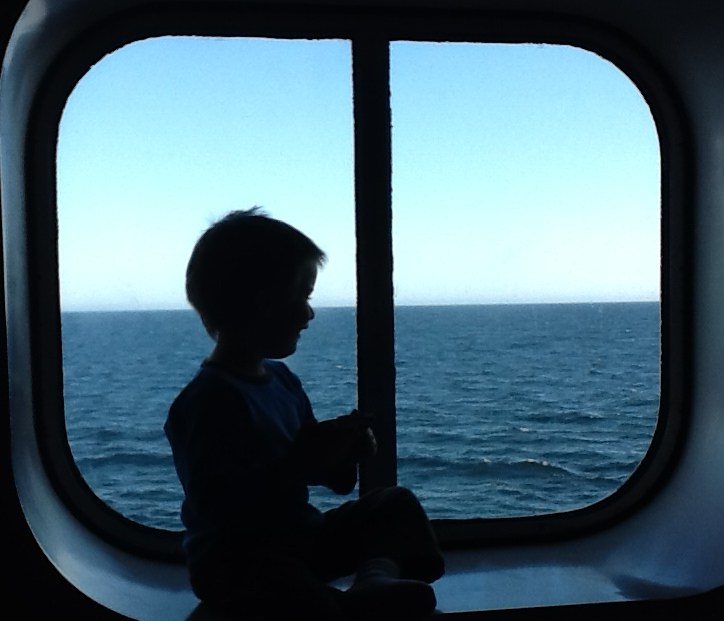
Oh, how romantic cruising seemed, hearkening back to the halcyon days of ocean liners plying the seven seas. Glamorous evening wear? Officers in uniform? Exotic ports? Yes, please! Thirty years later, I finally made it to sea with my own little one in tow.2012-carnival-cruise-saint-john-nb-canada-1.jpg

Low prices and good value

Another simple reason I opted for a Carnival cruise, in spite of reading descriptions that made it sound like the least appropriate line for me, was simple economics. Carnival Cruise Lines sells a mass market product at a value price.

After taxes, I paid $83 per person per night, and that was for an ocean view stateroom, not the cheapest inside cabin. This departure left from a city near my home, making it all of $3.50 in tolls to get us to the port, plus 10 miles’ worth of gas, wear, and tear on the car. A four night voyage from my home port was a very inexpensive way to try cruising.

Testing the waters

Finally, I wanted to take a short, inexpensive voyage with my youngest son because I have big plans for grand, trans-Atlantic adventures… but my little guy has been known to get motion sick.

Continue reading

Capsule wardrobe for Hilton Head Island, under-seat carry on size

This won’t be as pretty as the Polyvore sets you’ll see on fashion-oriented blogs. I’m not a photographer or a fashionista. In spite of this, I want to post a capsule wardrobe as I packed it in an under-seat size carry on bag for a recent (early March) family trip to Hilton Head, SC.

Amtrak luggage on cart redacted

Train carry on luggage at Savannah, GA Amtrak station. For two travelers, we had three Tom Bihn bags: an Aeronaut45 (with our train compartment friendly Rolo inside for organization), Western Flyer, and a large Shop Bag full of snacks and bottled water.

Compact capsule wardrobe saves precious vacation time

Packing lists and capsule wardrobes—which is just a fancy way of describing a simplified wardrobe that can be mixed and matched to create many combinations— help me enjoy my trips more. My stress is reduced, I don’t waste precious vacation time deciding what to wear, and I can present myself the way I prefer to be seen when I’m meeting new people.

Rarely do I see a travel wardrobe capsule that reflects the reality of someone like me. Items of clothing on my petite yet plump and short-waisted body look nothing like the stock catalog photos on Polyvore. More importantly, my priorities begin with function before moving on to the more enjoyable considerations of color and form.

Dressing appropriately while maintaining health & function

I have an autoimmune condition that involves widespread joint pain. I suffer particularly from foot problems. My wardrobe is constrained by the limiting factors of shoes that accommodate bulky rigid orthotics and clothes that don’t squeeze or pinch even when inflamed joints swell.

My symptoms flare when I’m tired. Travel, no matter how wonderful, comes with physical and sometimes mental stress. Traveling light is one way to reduce symptoms from my condition: I’m less likely to wear myself out, physically, with a lighter weight bag.

And yet! I’m a colorful person who enjoys attractive clothes. I don’t obsess over fashion, but I accessorize daily. When time is ample, I willingly spend some of it on my appearance. I rarely wear black, which I find both boring and depressing, and my neutrals are often dark red or dark plum instead of sedate grey, navy, or taupe. I express myself sartorially.

Wardrobe and sleepwear

Every stitch of clothing (minus my raincoat) for five days with 40 degree (F) temperature variations in the forecast. It was COLD when we left; STEAMY arriving in Savannah.

Wardrobe considerations—climate and events

Our trip was for four nights and five days. We flew to Savannah, stayed three nights in a Villa at Sea Pines Resort, then DS1 and I rode the train (Amtrak, overnight) back home. We left and returned to temperatures in the 40’s; it was 60-79°F in Georgia and South Carolina. Because DH was traveling for work, we needed dressy clothes suitable for socializing with professional colleagues in a resort environment.

With a rental car and apartment style accommodations, I could have easily packed everything plus the kitchen sink. Aside from enjoying the planning exercise of creating a packing list for this trip, I wanted to travel light on Amtrak. There was no baggage car on our Northeast Regional train after connecting in New York City. The train’s carry on restrictions are much more generous than found on airplanes, but handling luggage remains one of my least favorite aspects of travel.

I used my smaller travel pack for this trip, a Tom Bihn Western Flyer. Even fully packed, I can typically manage this bag myself. It’s better when I don’t bring a laptop, which I didn’t need for this quick getaway.

Packing lists — never forget a vital item

Here’s my clothing packing list, adapted from this one at LadyLightTravel.com:

Packing List for Hilton Head

Outerwear

teal raincoatFor early spring travel, outerwear choice is pretty critical. We had occasional light rain in the forecast. Even a week or two earlier, I would have gone with my purple, lightweight down coat, but water resistance is my bottom line in spring. All five pockets on this coat zip securely closed—a travel essential!

  • Teal Duluth Trading soft shell coat (thin gloves, not shown, in a pocket)
  • Purple down vest
  • Purple thin knit cap (not shown, in coat pocket)
  • Teal waterproof sneakers
  • Grey Propet Women’s Travelactiv Mary Jane (dressiest shoe I could consider)


Ahnu shoes sneakers

Ahnu Sugarpine shoe rainbow! Podiatrist approved, and colorful enough for me. Front row: airier mesh; Back row: waterproof styles.

I had to make sure everything I brought worked with my comfortable, supportive Ahnu Sugarpine sneakers in teal. These are my go to shoes for reducing the likelihood of crippling pain from too much walking. I opted for the waterproof pair that coordinates nicely with my raincoat and capsule color scheme of teal-magenta-grey.

Bottoms

I started my fashion choices by selecting the bottoms. As a fairly modest dresser, there are some pants I won’t wear with more revealing tops. I wanted the freedom to remove layers as necessary in case the temperature was hotter than forecast while still literally covering my bum.Bottoms1

To layer underneath on the colder, northern ends of the trip, I had pieces ranging from long johns, to silk pettipants, to pantyhose (which violate the comfort doctrine, but I do wear them as needed to add discreet warmth when dressed formally.)

I’m counting my soft, stretchy Angelrox Goddess dress as “bottoms” because it layers well and stands in for a skirt. These dresses (I also own a full-length Goddess Gown) are body conscious so I usually wear a wrap or otherwise layer on top. Tight is not my style. The Goddess dresses are so soft and so comfortable, though, I can forget to be self-conscious about the snug fit. Wearing one, I feel as glamorous as an old time movie star with the comfort of pajamas!

Tops

This is where I cut back from my usual policy of having one or two extras, just in case. The weather was forecast to be moderate enough, and I knew I could go shopping if necessary. I usually do bring more pieces than this, but I absolutely did not need additional tops to wear fresh, interesting outfits every day.

  • Grey cotton/spandex Duluth Trading No-Yank Tank (not shown)
  • White ExOfficio crinkle kimono tunic
  • Floral sheer silk poncho
  • Magenta faux twinset (sheer silk turtleneck & cotton/nylon cardigan)

Accessories

This is where the magic happens! Wow, no, not really that exciting, but… this is where a bunch of clothing pieces that I like turn into full-fledged outfits like those I wear at home when my full closet is available.

I don’t bother with makeup very often, and my hairstyle is almost as minimal as wash-comb-go, but I didn’t realize how much my accessories matter to my sense of being “fully dressed” until after our home was burglarized a few years ago. Mostly, I was grateful that we weren’t at home or hurt and that nothing more than “stuff” had been stolen, but every morning for weeks, I would turn to the shelf in my bedroom where my costume jewelry had been and feel my heart sink at the empty space dusted with police fingerprint powder.

The thieves took most of my deceased grandmother’s costume jewelry and a little velvet box full of Post-it sized love notes my husband left me every Sunday morning before his karate class during our first few years of marriage. It’s ironic that they missed our hidden safe where my few expensive pieces of “real” jewelry  were hidden, but they stole slips of paper many times more valuable to me and lots of $20 jewelry that gave me joy but probably earned them virtually no cash.

  • Pashmina in grey/magenta/teal
  • Scarf in teal/white rayon
  • Angelrox teal “sleeves” (arm warmers or fingerless gloves)
  • Earrings (silver dangles)
  • Earrings (colorful stone dangles by Shayla Lynn Jewelry)
  • Necklace (silver with moonstone by Shayla Lynn Jewelry)

Unmentionables

Here I am mentioning the unmentionable, but I have to specify these details for completeness if you’re wondering how a capsule wardrobe really packs into a case as small as the Western Flyer.

  • Floral silk caftan
  • White rayon tank/tunic for sleeping (also works as a top in hot weather)
  • 5 pair underpants
  • 2 brassieres
  • 7 pair socks (one wool, 2 thin ankle socks, 4 no show footies)

These don’t factor into the wardrobe as far as style goes, though I’ll admit to a touch of smugness that my travel caftan color coordinates in teal blue.

Underwear and socks pack so small, I do usually bring enough to avoid hand-washing because I don’t enjoy it. I could get by with two pairs of each by sink washing every night, but I’ve never felt the weight loss was worth the time spent from my vacation day.

Remember that the outfit you wear on travel day doesn’t go into the carry on. Here’s what I wore onto the plane along with my water resistant teal jacket.travel outfit

Everything else

This is where I confess to everything else I stuff into my carry on bag… except there isn’t very much. First of all, my full confession includes the fact that I prefer to carry my everyday purse (a Tom Bihn medium Cafe Bag) aboard as a personal item. I don’t have to cram all my daily distractors into my Western Flyer!

I have a Tom Bihn Packing Cube Shoulder Bag that is always packed with my carry on comfort kit. This is where my inflatable neck pillow, silk sleep sack (we call it the sleestak, a la “Land of the Lost”), ear plugs, eye mask, and lip balm live. During a flight, it is big enough to temporarily house my Kindle or iPad, too, if it is easier to reach than my purse.

Aside from the Packing Cube Shoulder Bag, my Tom Bihn 3D Clear Organizer Cube 3-1-1 toiletry kit, and my electric toothbrush, I stash a water bottle in the front pocket of my Western Flyer, and I always carry at least a small personal PackTowl with the water. I’ve read my Hitchhiker’s Guide to the Galaxy! Also, my little guy is prone to motion sickness. And playground swings are often wet. A towel always comes in handy for moms as well as hitchhikers.

Putting it all together

When you’ve packed it all, the Western Flyer looks like this.

It zips closed without a fight. The Western Flyer isn’t over packed, and the bag weighs in at 9 lbs (just over 4 kg.)

Organizing the chuck box & storing camp kitchen gear

If you’re like me (perpetually messy and disorganized in the physical realm) but you want to go camping, sometimes on the spur of the moment, you could probably benefit from storing your camp kitchen equipment in a dedicated “chuck box.”

“Chuck box” is a synonym for grub box, camp box or patrol box. Any of these terms means “your portable camp kitchen in a container.” These days, many car campers use a large Rubbermaid tote as a chuck box.

Until a couple of years ago, we used a large plastic bin for all of our smaller camping equipment, too. What really prompted my chuck box organization project was realizing how inefficient it was to set up camp with everything coming out of the same large bin in the back of the car simultaneously. We kept getting in each other’s way!

Typically, we pull into a campground, and DH sets up the tent while I keep the kids out of trouble and begin setting up everything else (that doesn’t go into the tent.) On particularly bug-infested camping trips, simply leaving the back hatch of the car open as we dig for one item after another feels like a major mistake. It was obvious I could design a better system than the “one large plastic bin” default that had performed adequately before he had children.

Looking back to my own childhood of once or twice a year, week-long camping trips, I wanted to avoid the over-stuffed van (yay! Volkswagen bus!) and the inevitable late arrival with profanity-laden tent erection in the dark. My parents packed too much stuff!

On the other hand, a strictly minimalist camp simply isn’t comfortable enough, or convenient enough, for me to enjoy camping. Some items make a camping trip significantly more comfortable, like sufficient padding under a sleeping bag (physical comfort), or a set of marshmallow sticks that give every kid a simultaneous s’more after dinner (mental well-being.)

Upon reflection, it was obvious to me that I needed to improve the modularization of our camping equipment. In some ways, our gear was already stored in a modular way. After all, the clothing was in a duffel bag ready to go into the tent, and the sleeping bags were similarly corralled in an oversized canvas sack. We hadn’t yet taken this to the next logical step, however, and separated the other gear into collections by function. DH and I were nudging each other out of the way or tapping feet waiting to dig the next piece of equipment out of the same giant black hole Rubbermaid tote leading to inefficiency and sometimes frayed nerves (mine!)

Step one was to create a master checklist for all of our camping equipment. I started with the one from REI’s website and adjusted it to match our style and gear. I simply listed the Chuck Box and Cooler on the master list, and then created a separate list for everything related to camp kitchen equipment.

Listing all the items you’d like to have with you on a camping trip can be enough for some campers all by itself. Checking off each item as you grab it from your kitchen or garage and load it into the car means you will get where you’re going with the gear you expect. This saves the expense of duplicating household items you already own, but it does take time, and it also exposes what may be expensive or delicate household items to the dirt and rugged conditions of life outdoors.

Many, if not most, campers own at least some dedicated equipment for duplicating household chores in a natural environment. My own mother still has a lovingly constructed camp “pantry” made by her woodworking father for her childhood camping forays. That box probably weighed at least 70 pounds when she loaded it up with canned goods, but it is still sturdy and attractive over fifty years later. It also stirs up good memories for me every time I see it in her garage. While solid wood has largely been replaced by lighter weight materials in modern sporting goods stores’ camping aisles, there’s something to be said for having a piece of kit than can literally qualify as a family heirloom.

Mom isn’t willing to pass along her camping pantry yet, but I recognized my new chuck box almost instantly when I found it by web search. You can jump to Blue Sky Kitchen right now if you want to see it before finishing my soliloquy. My chuck box is the one he doesn’t call a chuck box: the Extended Work-Top Box camp table.

Every other chuck box design that I found online—homemade or commercial, old-fashioned wood or high ticket aluminum—shared one similar characteristic that I knew would not create a relaxing camp environment for me: a high center of gravity.

Suffice it to say that a high center of gravity means something is easier to tip over. I’m not the most graceful person. I have poor eyesight, and I am prone to distraction. I’m a grown up who still sometimes forgets about the tent guylines and trips in broad daylight. I’ve been known to shatter a glass by missing the table while engaging in spirited dinner conversation. The sight of a camp kitchen perched on tall, skinny legs on the uneven dirt ground doesn’t give me peace of mind.

I love my Work-Top Box because I can set up the raised work surface and extension leaves while keeping the bulk of my equipment stored in the box body safely down on the ground. The weight of the box itself keeps the raised area steady, and any equipment inside only adds to the ballast.

While the Work-Top Box is obviously a utilitarian piece of equipment, it is also a wooden box (oak hard ply and redwood) made by a human being, not a roto-molded plastic bin churned out by a factory. It was designed by an American entrepreneur who obviously enjoys camping and likes to share his expertise. He offers plans, kits you can build yourself, and fully built boxes ready to stock and take camping. I get an extra measure of satisfaction every time I see my Work-Top Box stored away in the garage because I feel good about every aspect of this purchase, and it brings back fond memories of camping trips past.

Having settled on the ideal storage box for my camp kitchen, I loaded it up and took it camping a few times. Once deployed, it met my needs and expectations, but I realized a few things about set up that could obviously be improved.

Chuck box no interior organizationS

Chuck box, haphazardly stuffed with camping equipment

First of all, the fully loaded Work-Top Box is something I can slide a few feet to get it out of my way, but not something I can safely lift, let alone carry. I can split the load with someone, but it isn’t ideal for our camp set up scenario for me to require assistance with one of the first tasks I need to accomplish. I want the chuck box up and out of the way in case DH finishes setting up the tent before I’m done and wants to access more gear from the car.

I don’t want the box to be lighter for any scenario except moving it, so I’m not looking for permanent changes to the box. Once again, modularization can solve my problem.

Upon arriving at camp (or returning home), I can take the lid off the chuck box and remove a few interior bins—one at a time!—to keep the weight of each load from being too much for my arthritic hands. Choosing lightweight bins made of washable materials means I can set them down on the picnic table, the ground, or whatever surface is convenient. I can also enlist the help of even my younger child to carry a dish pan sized load. With the heavy cookware thus shifted, I can lift the empty—or nearly empty—Work-Top Box and carry it to the desired location before setting up camp (or cleaning up the soiled equipment in the dishwasher back at home.)

Chuck box steam pans empty stackedS

Food-safe, dishwasher-safe, lightweight, commercial quality steam pans

Checking the interior dimensions of the Work-Top Box, I discovered that readily available commercial cooking equipment called “steam pans” were a very good fit inside the box. You’ve probably seen food served from these at buffets in metal chafing dishes. One full size steam pan almost completely fills the box from side to side, but leaves room to store a full-sized cutting board between its lip and the long side of the box. (A standard, full size steam pan measures 20-¾ inches long by 12-¾ inch wide.) These pans come in different depths, but 2-½ inch, 4 inch, and 6 inch deep pans are common. A four inch deep full size steam pan will hold all of my long, skinny BBQ sized cooking utensils, the pot holders, and a host of other kitchen equipment. I will keep this at the top of my Work-Top Box when it is fully packed.
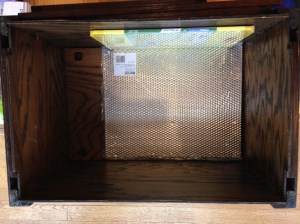
Chuck box ready to re load with organizationS

Chuck box ready to pack with steam pan organizers; oversized yellow cutting board and silver heat-resistant mat fit along side and bottom

One full size pan is the equivalent size to two “half” pans, 4 “quarter” pans, and so on, available in several other common fractional sizes. (A half size steam pan measures 12-¾ inch by 10-½ inch.) For my purposes, I was also looking to replace my standard plastic dish pan with a smaller size that would fit more efficiently in my new box. Two six inch deep “half” steam pans, one made of stainless steel and the other in less expensive, lighter-weight polypropylene plastic, stack neatly next to each other beneath the full size pan. These two pans are big enough to wash my camping dishes.

The stainless steel pan, being a cooking implement, could actually be used directly on the stove or by the fire to heat water, though I’ll probably continue to heat water in a kettle on the stove during dinner as I have in the past.

Lids are available for these, but I didn’t buy any since the rims of the half pans provide sufficient support the full pan. The extra depth of the 6-inch half pans allows me to pack taller items, including a 4-cup Pyrex measuring cup, inside each one. If I decide that I want to store the two half pans above the full size pan once we’ve field tested this system, a flat, full-size pan lid should allow for the pans stack in this configuration.

Chuck box half pans not ideal on top of full panS

Full pan underneath would require a lid to support half pans above

Colander inserts are available that perfectly line any given size steam pan. Since I was looking to add a space-efficient colander to my chuck box, I opted for a half sized one that nests beautifully in one of my dish pans. Big round objects are always hard to pack efficiently, so I was pretty excited to find these.

The Work-Top Box is about 12 inches deep with the extension leaves stored inside, so stacking the six-inch and four-inch deep pans will leave plenty of room for last minute additions or somewhat oversized items at the top. Loading up the box this way isn’t fiddly or time-consuming. It also makes it much easier to find and remove any given utensil compared to the jumble inside when I first loaded the box. Kitchen tools also stay organized while the Work Top Box is deployed in camp.

Chuck box deployed state with equipmentS

Blame my photography, not my Work Top Box, for looking crooked

Chuck box deployed state with equipment close up full panS

The full size steam pan goes back in the box once the Work Top Box is set up, adding weight to keep that center of gravity low

Buying a bunch of specialty equipment isn’t necessary to enjoy camping, but it certainly can make packing and unpacking more convenient. How do you organize your camp kitchen equipment?