
Almost another full year of pandemic permutations, and the Gregorian calendar is wrapping up 2021. The Hebrew year 5782, however, is just entering its prime as we celebrate Hanukkah. Tonight, Sunday, December 5th, is the last night of this Jewish holiday.
What I love most about Hanukkah is its focus on the universal human need for light to triumph over darkness. On this, the eighth and final night of the Festival of Lights, my sputtering candles serve as a visual metaphor for a dream many of us share: may this be the final stand of COVID-19, too!
I hope that Omicron is a pathetic, last gasp of the no-longer-so-novel coronavirus; I pray for a future where we can resume our holidays, rituals, and everyday celebrations in each other’s company without fear.
I am personally blessed to be both vaccinated (Moderna) and boosted (Pfizer), and to have the freedom and means to travel this holiday season. My father, who got his first knee replacement last summer, was able to schedule his second side for the week after Thanksgiving. While elective surgeries like my father’s have been canceled in my home state*, hospitals in the Pacific Northwest, where he lives, remain open to patients like him.
Hanukkah is notable for its emphasis upon pirsumei nissa, or “publicizing the miracle.” This isn’t just a minority group’s attempt to hold a holiday up against the majority culture’s big day. Rather, the miracle of a single vial of oil burning far beyond its expected daily duration for an entire week instead (necessary to create new ritual fuel) was deemed worthy of public emphasis by Jewish sages in antiquity.
This year, as my youngest child embarks upon education in a new environment—but, again, a Christian one—I can’t help but draw his attention to the history of gambling over dreidels for this holiday. It matters, a lot, why Jews emphasize this particular act.
As I understand it, during Syrian-Greek rule of the Holy Land (c. 200 BCE), it was illegal for our people to study Torah. The punishment for a Jewish religious education was death. A form of hiding in plain sight was developed; if enemy soldiers approached, students would pull out their spinning tops (dreidels) and pretend they were just playing.
There is so much that I admire in my youngest’s Catholic education. A recent letter from his principal included the following statement that resonates powerfully with me:
You were created by the God of love
in God’s image and according to God’s likeness,
to be a unique expression of that love.
It is through you
that God desires to manifest Love
to the peoples of the world in these times,
and to offer them the freedom
of the children of God.
According to our school, this statement is one of the fundamental principles of the Xaverian Brothers.
For all the ways I identify with these notions, I also found myself admonishing my child to remember his own unique heritage in recent weeks.
We are blessed to live in a society where we may elect to join any school, but we mustn’t forget the lessons of our forebears. A Jewish child should know where he came from; he must recognize that there are people living in America today who wouldn’t acknowledge him as either fully human, equal, or a true patriot. It’s unfortunate, but plain fact.
I feel myself to be an American before any other categorization, yet I don’t have the luxury of assuming that all my compatriots would agree with that assessment. It’s a tragedy that I have to emphasize the same to my children; it would be negligent to fail to alert them to this truth as I understand it.
The scent of spent beeswax tapers lingers in my nostrils as I waver between gratitude for my abundance of blessings and acceptance of the ridiculous prejudices that seem to motivate vast swathes of the public today.
I’ll take my luck and be thankful. I have the light from my menorah piercing the darkness, my father’s great good fortune to have gotten the health care he needs, and the secure knowledge of the love of friends and family who surround me.
As we near the darkest days of December, 2021, my wish is for the blessing of illumination to all who seek light. Best wishes for warmth, safety, health, and goodness to everyone reading this.

L’ chaim! To life! And to everything good, holy, and beneficent as we huddle against the darkness.
♦
*Due to a combination of COVID cases and staff shortages

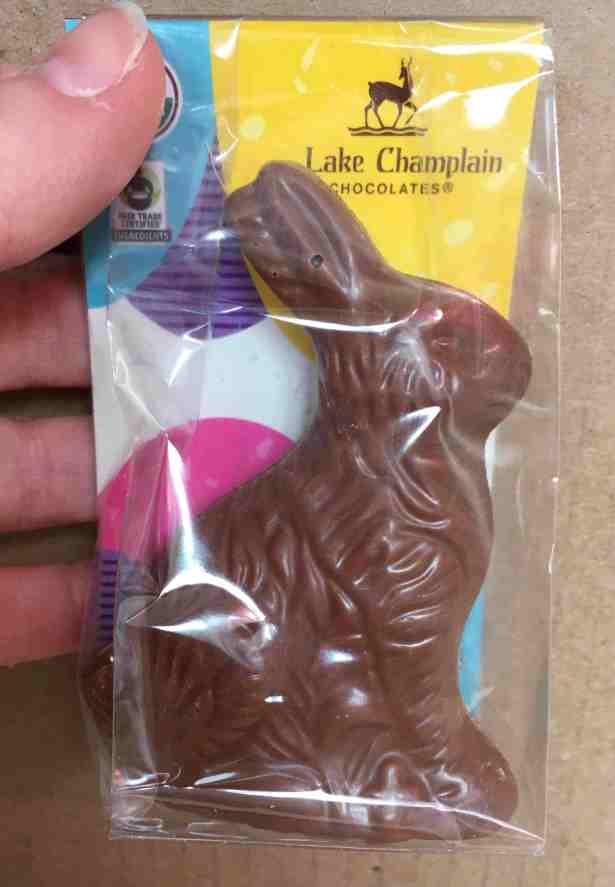
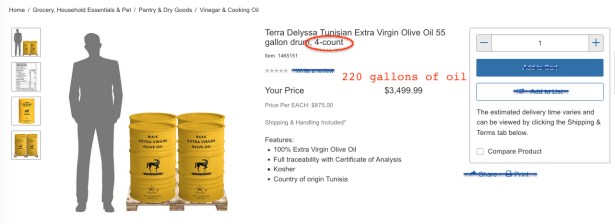
 At this point, having lifted the box and found it very heavy for its size, I realized my error. The logo I’d mistaken for Lake Champlain Chocolates’ rather coy deer was, in fact, the similarly high-stepping horse on a case of two large 3 Litre cans of
 Many of us are heeding public health advice and avoiding travel. Some of us are still grieving lost loved ones whose presence defined
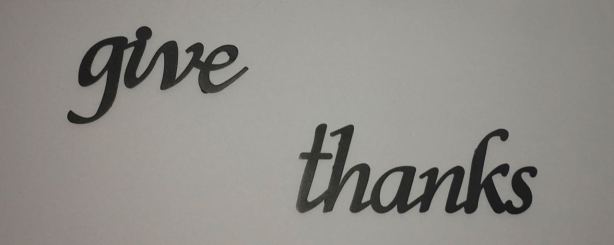 So perhaps I’m not playing so well with others, today. I’m hardly a Sugar Plum Fairy. I’ll be a builder, though, of my own Great Wall of Gratitude.

 Here are photos of my new, similar-to-what-I’m-talking-about, winter Happy Holidays gratitude sign. The first one was pink with flowers in honor of the approaching spring. Also flowers, like the holly I’ve sketched here, are easy to draw even without artistic talent. Both were drawn with Sharpie marker on EVA foam construction material to withstand the elements.


 Here’s one tangible way that I’m saying thank you to the drivers who serve my community.


 I was a little surprised, actually, by how easily I found an array of grab-and-go snacks in my pantry. The cessation of packed school lunches has left me with more “extra” individual serving items than I might have in normal times. Some of these items were included in a gift basket from a colleague, the cereal was one type in a multi-pack that my family didn’t go for, the kosher doughnut came in a Hanukkah Cheer package we received from a local Jewish group.
 The internet—and the official sites for the United States Postal Service, FedEx, and UPS—offers conflicting advice on whether and how one may tip professional delivery drivers. Officially, cash seems to be a no-no, or at least strongly discouraged; off the record, I know some drivers sometimes accept gratuities of money or gift cards.
 If I were going out, I might buy a dozen or so small denomination gift cards for places like Starbucks or Dunkin’ Donuts that abound in our area. $5 cards to drive thru restaurants seem reasonable, but I hesitate to offer gift cards that may be against the rules for drivers to accept.
 I wish I could think of a hygienic way to offer a warm drink on cold days right at my door, but leaving out a flask of hot coffee seems unappealing while a contagious virus is circulating.
 If my snacks go quickly and appear popular, I may also try home baked items
 I send cards sometimes; other years, I don’t get around to it.




 Really Wonderful Things