
Back to school or learning pod, every parent’s choice is reasonable

I don’t think my behavior should be characterized as doom-scrolling, but I do subscribe toand read dailytwo of the major American newspapers as well as a handful of magazines. I prefer my news* to be well-researched, fact-checked, and professionally edited, thank you!

Recently, everywhere I look, I’m confronted by angry, polarized debate creating artificial binary positions on the particulars of education in the COVID-19 era.

In person learning is too dangerous! Remote learning is useless! Both positions are flawed…

“In person learning is too dangerous!”

“Remote learning is useless!

Both positions are flawed because real life is nuanced. What works for one child—or one family, or one community—can’t be arbitrarily exported to someone else’s situation because there are meaningful differences between cases.

school supplies - 1Some teachers aren’t at particularly high risk for complications from the novel coronavirus, and want to get back into classrooms quickly. By all means, let’s put those educators to work in communities where infection rates make that a sensible solution. Other teachers have pre-existing conditions or would prefer to teach remotely: there’s an audience for that modality, too.

I have yet to see any analysis comparing the number of teachers who’d like to get back inside schools with the number of families who desire the same for their kids. What if all this finger pointing is for nothing and those numbers align naturally in most communities? Shouldn’t someone put a modicum of effort into asking such a straightforward question that could solve so many problems?

Remote education worked well for some students. Learning outside of a large, “industrial school” setting was the dominant mode of education for most people prior to the past century. It’s ridiculous to pretend that there is only one path from ignorance to wisdom; all of human history argues otherwise.
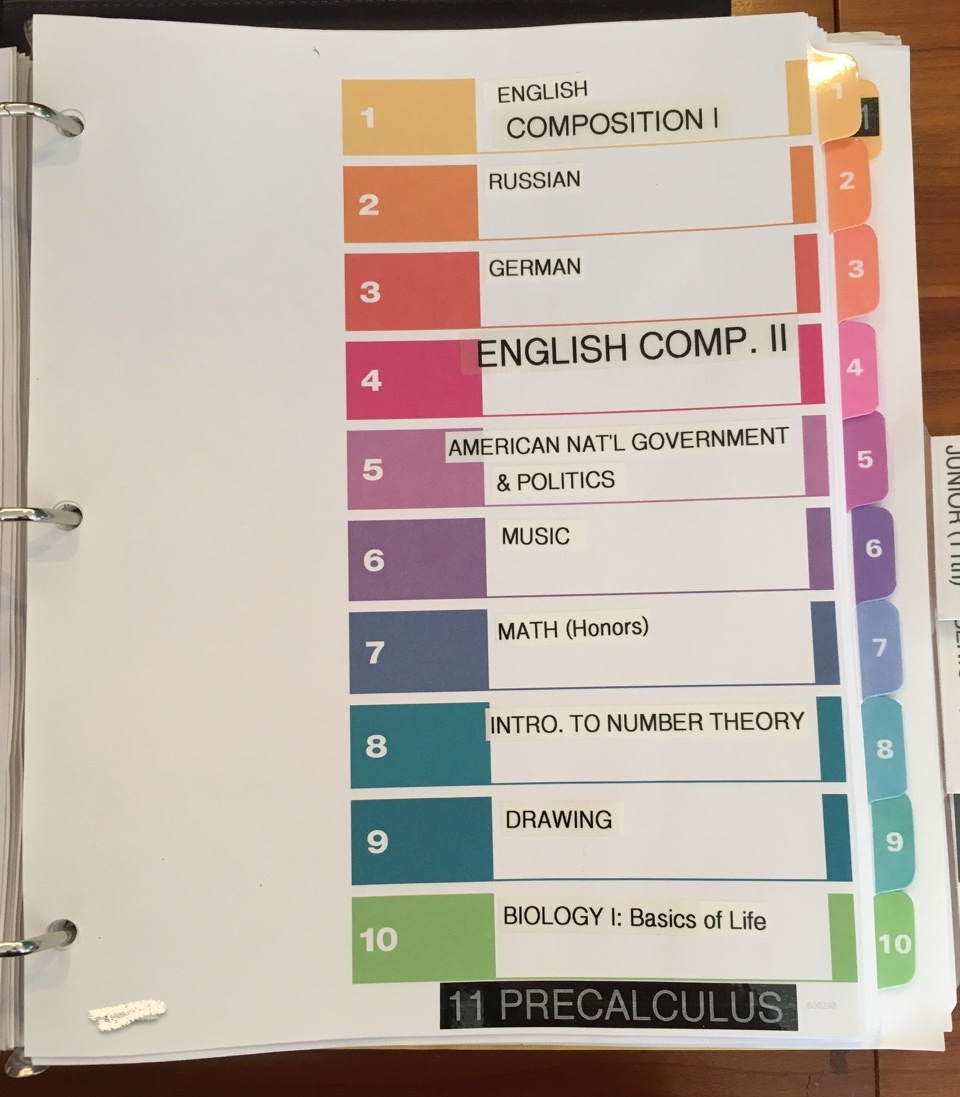
Binder page listing high school courses for grade 10I’ve read articles bemoaning the selfishness of (rich) parents forming COVID-19 learning pods instead of sending their kids back to public schools. At the same time, many (mostly urban) schools don’t have enough physical space to safely host all of their pupils in a socially distanced manner.

It strikes me as obvious that the removal of some kids—admittedly, those whose families can afford to pay private tutors or take time away from work to teach their own themselves—from over-crowded conditions will only improve the odds against infection-via-density for those who remain.

Backpack with textbooks and school supplies spilling out

It flat out sucks that we have yet to find a way to offer any semblance of an equal opportunity for an excellent education to all students regardless of color, creed, or zip code, but reducing each pupil’s risk of contracting COVID-19 in his or her classroom is a more straightforward problem to solve.

Since this is literally a matter of life or death, I think we should start with the low hanging fruit of smaller class sizes by whatever means possible. Some skilled educators may be lured by wealthy families’ ability to pay for private tuition, but few go into teaching for the money, so I suspect most passionate teachers will remain in the system where they chose to work.

Some families have no option but to send their kids back to classrooms. They depend upon this one and only form of state-sponsored child care in America in order to work, earning a paycheck, but also contributing their labor to benefit society. Their kids deserve to be the first children back at school in person. I willingly cede the seats my kids could rightfully occupy to children who need them more.

The children of essential workers and kids who live with food insecurity should have first dibs on in person instruction this year. This isn’t about getting the most back for every penny I spent in taxes, it’s about doing the right thing at a tumultuous time.

lunch box on kitchen counter

Lunchbox, ready for school.

It is pathetic that many of our schools are in poor repair and lack modern HVAC systems or windows that open. It is ridiculous how many young bodies we squeeze into rooms designed for far fewer. It is outrageous that millions of our children depend upon meals served at school for essential nutrition.

None of that is right, but all of it is true. I will continue to advocate for better schooling for every kid at every opportunity I see, but I’m not going to ignore reality when lives are at risk. Neither choice is pure merit, but neither choice deserves scorn.

The choice that works for your family this year is good enough. Do what works. Kids can learn in many ways and from many sources, especially when they see their parents carefully making thoughtful choices on their behalf.
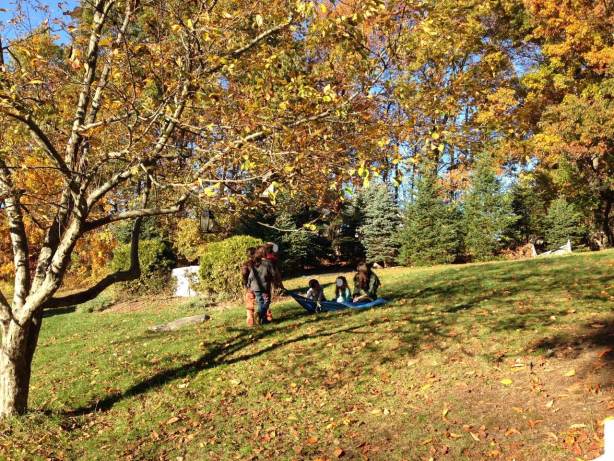
Children play amongst colorful leaves on a sunny autumn dayKids are resilient. Thank God! Most of the kids will be all right. That’s the best we can do in the face of a viral adversary that has killed 171,787 Americans as of August 29, 2020.

For the moment, the best I can offer my community is to keep my kids away from public spaces to alleviate the pressure of a pandemic on the strained resources of our health and education systems.

I’m doing my best, like so many other parents. Frankly, we should all give ourselves a break, because our best really is good enough for now. Instead of blaming each other for making different choices, let’s all focus on meeting the needs of our own kids, each in our own ordinary, reasonable way.

I voted Election sticker - 1Highly paid elected officials in D.C. and other capitals deserve the pressure and expectation of doing more, because they are the ones who dropped this particular ball. Give them the blame they’ve earned. The U.S.A. is failing in its attempt to manage the COVID-19 pandemic, but it isn’t for lack of effort on the part of average American parents.

* It’s true that I added the New York Times to my paid subscriptions only after COVID-19 started sweeping the world, but I’d been on the verge of the upgrade purchase for almost a year. I think this is where I give a shout out to the Boston Globe, The Atlantic, Wired magazine, and The Economist for edu-taining me through a pandemic, right? 

It was my growing reliance on NYT Cooking recipes during the early phase of sheltering-in-place (with hit-and-miss grocery deliveries) that finally prompted me to input my credit card number.

According to this NY Times article from September 4, 2020, 40% of parents have chosen remote learning instead of taking advantage of the hybrid or in person options offered in that city.

As a mother who has home schooled one of her children for over seven years, my experience was that customizing my own plan for my own child was far easier than implementing the adapted curriculum dictated by my other kid’s school that was unprepared for the sudden need for remote learning last spring. American parents have the right to educate their own children as they see fit, so declaring as a home educating parent is an alternative for those whose kids responded poorly to their schools’ offerings.

In 2018, 29.7 million children received free or reduced-cost lunch daily per the USDA

College cheats: getting in is nothing; learning is everything

The most obvious truth revealed by the recent college admissions cheating scandal that has ensnared Hollywood celebrities and other rich fools nationwide is that typical Americans have completely lost sight of the purpose or value of education.

Paying bribes to be admitted to university is frankly moronic for most of us. All of the real value of the college experience comes as a direct result of studying—and learningtherein.

Graduation cap and degree captioned University of DeceitRich kids will continue to stumble into lucrative careers because they have the right connections. Average kids, and the less well prepared, will take on massive debt for less and less substantive rewards when we devalue our universities by sending kids with no direction or purpose simply to fill seats.

Naturally, those who steal and cheat to get into college go on to cheat while attending college. I wouldn’t want to work with or hire that kid!

Businesses already decry the lack of qualified applicants for job vacancies though the percentage of Americans attending college has been increasing for decades. Being admitted to college confers zero qualifications. Learning—at a university or anywhere else—actually builds skills.

So, too, does honoring oneself and one’s community by behaving with honesty and dignity.

True scholarship also enhances one’s life in less quantifiable ways. The cheaters are too cowardly to risk realizing this fact for themselves.

Pile of moneyEarning a college degree has held, thus far, as a predictor of higher pay, but for how long? When students are enrolled only because “college is the next step after high school” vs. following an interest in deeper, more focused study of something specific, the automatic pay bump for a bachelor’s degree will disappear.
We ought not mold our colleges and universities into the image of our less and less functional compulsory K-12 system. Academia is not the right fit for everyone. All students are not the same. Disparate careers benefit from differing methods of preparation for new workers. Human beings have different learning styles.

Jobs go to people who can do the tasks required. College, in and of itself, teaches no specific skill save mastering the “admissions game.” That’s defined as test taking and/or bribery and fraud, apparently.

Children should be encouraged to do their best academically, but honor their unique selves by accepting both their strengths and weaknesses. Don’t let them fall victim to the patently false modern myth that admission to “the right college” is a golden ticket to happiness, prosperity, or success.

Consider trade schools, sampling classes at a local community college, internships, or self-directed online study if there is no perfect path to a four year degree right after high school.

Life is so rarely perfect! Why would one person’s education be?

One of the most compelling stories by an alumna of the small women’s liberal arts college I personally attended came from someone who went on to attain an MBA from an elite American business school. This woman was committed to attending that particular institution for her advanced degree, but had to apply three times before she was finally accepted. They were eventually persuaded by her passion and dedication.

Her message to us: persevere when you know what you want. This particular woman of color had reached her own definition of personal success by working hard and refusing to take no for an answer. She was a CFO at a startup at that time.

Education is not a zero sum game, though seats at a particular university may be. Focus on attaining the skills required by a career suited to your personality and strengths, and do realize that “where you went to college” becomes irrelevant very quickly after graduation for the vast majority of people.

“Steal,” yes, because cheaters have taken, through fraud, a slot at an institution where another scholar might benefit and contribute honestly to the campus experience for the entire community.

Spring Break: a great time to tell kids, “I’m glad you’re here”

Spring Break is winding up in our neck of the woods, and it brings up a pet peeve I’ve written about before: messages in popular culture that suggest children are an annoyance, or a burden, more than integral parts of our families and society.

Of course, I understand that a week at home with kids one usually sends off to school can disrupt orderly routines. It requires scrambling for babysitters or fun activities to fill unaccustomed hours. That presents an element of inconvenience, especially for those who can’t take the same days off of work to spend time relaxing with the freed children.

Calendar spring break - 1The disconnect between today’s school calendars and the dual working parent/single parent households that make up most American families doesn’t make the children themselves the problem.

Try to find a moment to tell your kids so, even if you think they’ll roll their eyes or believe you’ve gone batty. It’s good for them to hear it said.

It’s good for us to say it, too.

It’s easy to get caught up in life’s buffeting winds of distractions and disappointments. Kids are beholden to us adults for everything: shelter, food, toys, and a sense of where they stand in the world. Don’t forget that last bit in the struggle to optimize the tangible needs.

Mom hugI tell my kids I love them, but I also say how much I like them for who they are, no matter how different from me, and even when* those differences cause us to disagree.

They’ve heard me get angry at “back to school” sale ads that suggest parents rejoice once the brats are out of their hair. I reject those offensive notions, and I tell my kids so. Kids deserve better than that, just because they’re human beings, and even when their vacation weeks disrupt our schedules.

Spring Break this year at our house did include my sending them out to dinner and a movie with Grandma so that a group of moms could join me for a ladies’ literature evening. I know I’m fortunate to have willing family members available to give me a few hours off; I’m grateful for that.

My mom did bring our young friend, The Scholar, along for the evening together with my boys. Since The Scholar’s mother wouldn’t have been able to attend otherwise, this was a gracious favor on Mom’s part.

That brings up one other option for showing kids during school breaks that they are valued by caring adults: make the offer to help another parent fill some of those hours if you’ve got a bit more bandwidth free.

Children thrive when a variety of adults show them consideration and make time for them. Society thrives when all of our children are well cared for.

CrocusI’m not sure it’s the village that matters; I think it’s all about the tribe.

It’s amazing how tiny an effort can make the world a better place for someone else. I live in certainty that every child deserves at least that much.

*Not so much during a fight, say, do I remember to be so gracious, but I try to get the message across the rest of the time, so the good things overwhelm family squabbles. I’m no saint!

**She’s another home educated child whom I tutor in math because my talents differ from those of her mother.

Welcome back to school; I miss you while you’re there!

I dislike sending my little guy back to school on the day after Labor Day. In direct contradiction to the nonsense spouted in television commercials, not all parents cheer to have their kids out of the house.

If I were selfish, I would educate both of my children at home, to suit my personality and my interests. I send the younger one to school instead because it suits his.

I miss our long, quiet summer mornings. There’s time for us, then, to sit down together over breakfast. I miss saying yes to late night stargazing and other adventures because there’s no need to worry about a busy schedule.

I miss DS2‘s good company around the house during the day. He’s blessed with great wit and a loving temperament. He’s generous with his hugs.

I am excited to begin the new school session with DS1 here at home. He studies year ’round, but our schedule changes to a different pattern every September, December, January, and June. This choice is energizing, and keeps subjects feeling fresh.

DS1 is a pleasure to keep at home with me. We’re both fairly introverted, so we often work quietly, side by side. Quietly, that is, until one of us gets excited about a project or idea. Continue reading

Poring over pre-algebra textbooks to appease my non-math anxiety

I read six math textbooks yesterday from cover to cover, and I perused at least half a dozen more.

Math books textbook Laundry

Observe that the clean laundry was folded onto one of the stacks of textbooks, because it had to be done, but there was no energy left to move any of these objects elsewhere around the house

Why would I do such a thing? It’s because I’m feeling unprepared for pre-algebra. That’s making me anxious.

Wait, what?!?

I’ve said it before, but I’ve also learned that I must repeat it: I’m a lady who is good at math.

And, I’m going on about that again because I’m undertaking something new.  My current anxiety hinges on my ability to impart my knowledge of, and suitable appreciation for, the application of math… to someone else’s child.

A friend and her daughter are going to learn at home this year, like DS1 and I (and millions of other American kids) do. In addition to offering general advice, and pointing my friend toward excellent textbooks and home school collaboratives, I’ve agreed to help the girl by teaching Pre-Algebra.

As usual, when my friend floated this idea a year ago, I enthusiastically agreed. I offered encouragement, pointed out the pitfalls of which I’m aware, and sent her a steady stream of supporting research for whatever it was we talked about while all of this was theoretical.

It’s pretty fair to call me an enthusiast. In what area of interest? Well, whatever might be my fascination of the moment. I’m a serial enthusiast, and my intellectual appetite often exceeds my physical stamina.

Also, I work a project until I’m thoroughly exhausted; then I walk away* depleted. And I do walk away. It’s common for me to return to areas of interest after these desertions, but I don’t take them all up again.

My interest in a subject rarely subsides, but my activity in that given area rarely draws a shallow curve or a sensible straight line of steady progress. Jagged peaks and desolate valleys do a better job of depicting my levels of effort over time.

You can see it on my blog. I’ve considered composing posts and spacing them out on a sensible schedule of distributed areas of interest, but… I don’t really want to. Because, when I’m obsessed with camping equipment, or studying German, or maximizing minivan efficiency for a road trip, or the vital importance of true mastery of algebraic concepts, that is what I want to talk about, almost exclusively

until the next month, when I move on to the next thing. It’s fair to describe me as somewhat obsessive. I also accept the label of dilettante.

Which brings me back around to what I’ve done. I’ve hitched a young lady’s wagon to my erratic star, and it’s making me nervous.

I’m not a math teacher. I’m only marginally reliable. What have I done?

And yet…

…my young friend, whom I’ll call The Scholar, is exhibiting patterns I expected from the story I heard about her school experience. I gave her a series of pre- and post-tests from my various textbooks, and here’s what I uncovered:

  • She sees a novel problem, and she’s inclined to shut down. She sees each one as an opportunity to be judged a failure, not a chance to learn a new way to answer her own questions in the future.
  • She was given rules to memorize for calculating answers, but no explanation for why such rules work (or has no recollection of the explanations.) Math is a set of magical black boxes she’s supposed to carry around forever, weighing her down instead of providing tools she can use to accomplish much more with less effort.
  • She asks me if her answer is “bad.” She means, “incorrect,” but her feelings are out of alignment with the scale of the mistake.

When The Scholar asked if her math was “bad,” I pointed out that she wasn’t spitting on babies and kicking puppies. Making a mistake means she didn’t know what to do, or she didn’t do it right all the way to the logical conclusion. Incorrect? Yes. In pre-algebra, we are actively seeking convergent answers! But this is not a moral failing.

Life is full of emotionally fraught situations that put us through a wringer. Math isn’t one of them. Either we know how to proceed, or we learn—or look up—what to do. This should actually be a carefree process in the realm of feelings. This is purely intellectual.

The bad feelings here are a result of prior training. I think this is what happens when math is taught by someone with a phobia who doesn’t love, or at least appreciate, the subject.

So I’m not a math teacher, but I’m going to take a swing at this. Based upon the evidence I’ve gathered from my sheaf of pre-tests, my influence is likely improve the situation. It’s possible that it already has.

You see, one instruction I’d given The Scholar was to please indicate near each test section any strong reactions provoked by the content. A lot of those she recorded were negative. But a few problems were annotated, “fun!” That’s heartening to see, and it surprised her mom.

It’s been a long time since The Scholar enjoyed any element of her math education. We’re definitely going to include some of these “fun” puzzles in her upcoming assignments. All computational skills practice will benefit her. Puzzles and well-designed apps can offer her skills practice with less pain.

I could go on at even greater length about the positive qualities of the math curricula I’ve been perusing. As you can see from my photos, we own more than one set of elementary texts. I couldn’t even lay hands upon DS1‘s pre-algebra book (publisher Art of Problem Solving‘s Prealgebra) for my photo shoot. He and his grandfather were still busy with it and couldn’t be bothered to give it up on my (frivolous) account.

Math books textbook Life of Fred

Life of Fred

For a child who’s learned to hate math, I can’t recommend strongly enough a perusal of Life of Fred (Stanley Schmidt’s utterly unconventional collection) and/or the comic-book formatted Beast Academy series (another contribution from Art of Problem Solving.)

Math books textbook BA

Beast Academy

It doesn’t matter if the stated age range is “beneath you.” These books are fun to read, and I’d guess even most educated adults would learn something new about a subject they consider mastered by spending time with them. I did.

Upon reflection, I’m really grateful that my latest project will give me another turn through the workaday skills of pre-algebraic math, and in the company of a bright and unconventional kid like The Scholar.

I think we’re going to have a lot of fun.


*Perhaps sometimes better described as: I fall down and lie at rest and let the subject move away on its own.