
Perhaps because the pandemic gave me fewer distractions, I stuck with DuoLingo for most of 2020, primarily studying German and Spanish this time. I practiced there more than ever before, and I earned my longest continuing streaks.
I believe I created my DuoLingo account sometime during DS1‘s first year of home schooling, which would put that half a dozen years ago or so. My history with the platform is therefore fairly long, but my use has been sporadic. I come and go with all of my language studies, often in preparation for a trip, but I also use Pimsleur tapes and other resources, and I jump around between languages including those I started in school (Spanish, German, Japanese) but also occasionally French, Russian, or any other language I’ll be encountering in my travels.
 I’ve tended to view DuoLingo as a game, a dabble, or a linguistic lark. I’m already on record on this point: I am a dilettante.
According to the 2020 Year in Review report Duo sent me this December, I ended up in this year’s top 3% of users. Who would’ve thought it? Yay, me!

Whether these reports are a new feature, or if I’ve simply been “inactive” by winter in the past, this is the first time I remember receiving such a summary.
2597 minutes of language learning only averages out to about 7 minutes per day, roughly 50 minutes per week, so my minor obsession with the platform over the summer wasn’t too pathological. Nor is such a commitment sufficient, really, for anything except a nifty end-of-year ranking worthy of a self-congratulatory blog post.
Am I great at German now? Na ja, I’m afraid I still require subtitles to watch Nailed It! Germany or Dark on Netflix. Fluent, I ain’t!
Then again, the power of spaced repetition for retaining knowledge is undeniable. I’m hardly fluent in any language but my first, yet I have certainly cemented additional vocabulary in German and Spanish in 2020.
DuoLingo’s tag line is something like: “Learn a language in just 15 minutes per day.”
 The reality is that few will actually commit to the process, and almost no one can achieve fluency using any single tool. Even if you do commit 15 minutes per day to DuoLingo, you’ll be unlikely to be ready to address the United Nations without a whole lot of “something else” under your belt.
Also, the CEO is the person who invented CAPTCHAs, so there’s that working against DuoLingo’s place in my heart, too. I despise those stupid things.
 Many of us are susceptible to game-ification, however, so I encourage langauge learners to give DuoLingo a try. Extrinsic motivation isn’t such a bad thing for a necessary—yet repetitive—task like vocabulary study. I jealously guard my months’ long streak of continuous* days’ use of the platform. No stack of flash cards has ever kept me on track so continuously; not even the fear of low grades in college courses was as compelling as hoarding an imaginary currency called Lingots.
I’m 21 topics away from completing Level One of every available topic in German, the language I study most often on the platform. I’ll earn a completely meaningless Achievement dubbed “Conqueror” when I make it to that lofty(?) goal.
I’ve only topped out at Level Five on a single topic, Basics1 before the castle icon indicating Checkpoint One. It’s interesting, actually, recognizing from perusing the DuoLingo chat boards how some of us approach a language breadth-first, whilst others prefer a deeper dive, completing each topic up to its max in turn before moving on to the next.
I suppose the choice to do otherwise feels as obvious to other learners as mine does to me!
German has five Checkpoints or collections of topics, whereas Spanish has seven†. Some languages are more popular than others, and the platform seems to offer more content for the languages users demand. Rational of them, I suppose.
I’m just shy of Checkpoint Three en español.
DuoLingo is free, so it is well worth its price. Ads are a significant annoyance when using the iOS app, but I don’t see any in the web version running on my desktop though I do employ multiple ad blockers.
The number of ads shown seemed to increase with total usage on the iOS app; I might not have kept up with it if I’d seen ads after every lesson from the beginning like I do now.
It’s worth noting that the ads in the app occur only at the end of each topic lesson, so I can and do cover my screen with my hand until the close button becomes available, and unwanted screeching video noise pollution can be silenced when it does occur. Moderately annoying still ads outnumber intensely annoying video ads on DuoLingo in my experience, but the ads to which you will be subjected are no doubt dictated by some algorithm outside my ability to predict on your behalf.
I appreciate DuoLingo’s year end report for an accounting of how I spent 2597 minutes of pandemic isolation. Now if only I had such complete records for the other 415,003 minutes of it. I have some doubt that the balance was spent in so edifying a manner!
♦
* Full disclosure: I have used a “Streak Freeze” save at least twice, so my current 129 day streak is somewhat less impressive than it looks.
† FYI French has nine, Russian has five, and Hebrew has seven. You’ll have to do the resources yourself for any of the other 32 languages available to English speakers that are not in my DuoLingo queue.
 Many of us are heeding public health advice and avoiding travel. Some of us are still grieving lost loved ones whose presence defined
 So perhaps I’m not playing so well with others, today. I’m hardly a Sugar Plum Fairy. I’ll be a builder, though, of my own Great Wall of Gratitude.

 Here are photos of my new, similar-to-what-I’m-talking-about, winter Happy Holidays gratitude sign. The first one was pink with flowers in honor of the approaching spring. Also flowers, like the holly I’ve sketched here, are easy to draw even without artistic talent. Both were drawn with Sharpie marker on EVA foam construction material to withstand the elements.


 Here’s one tangible way that I’m saying thank you to the drivers who serve my community.


 I was a little surprised, actually, by how easily I found an array of grab-and-go snacks in my pantry. The cessation of packed school lunches has left me with more “extra” individual serving items than I might have in normal times. Some of these items were included in a gift basket from a colleague, the cereal was one type in a multi-pack that my family didn’t go for, the kosher doughnut came in a Hanukkah Cheer package we received from a local Jewish group.
 The internet—and the official sites for the United States Postal Service, FedEx, and UPS—offers conflicting advice on whether and how one may tip professional delivery drivers. Officially, cash seems to be a no-no, or at least strongly discouraged; off the record, I know some drivers sometimes accept gratuities of money or gift cards.
 If I were going out, I might buy a dozen or so small denomination gift cards for places like Starbucks or Dunkin’ Donuts that abound in our area. $5 cards to drive thru restaurants seem reasonable, but I hesitate to offer gift cards that may be against the rules for drivers to accept.
 I wish I could think of a hygienic way to offer a warm drink on cold days right at my door, but leaving out a flask of hot coffee seems unappealing while a contagious virus is circulating.
 If my snacks go quickly and appear popular, I may also try home baked items
 I send cards sometimes; other years, I don’t get around to it.





 You will need access to an oven or a toaster oven to cook veggies this way. Beyond that, all that’s required is about one hour and:
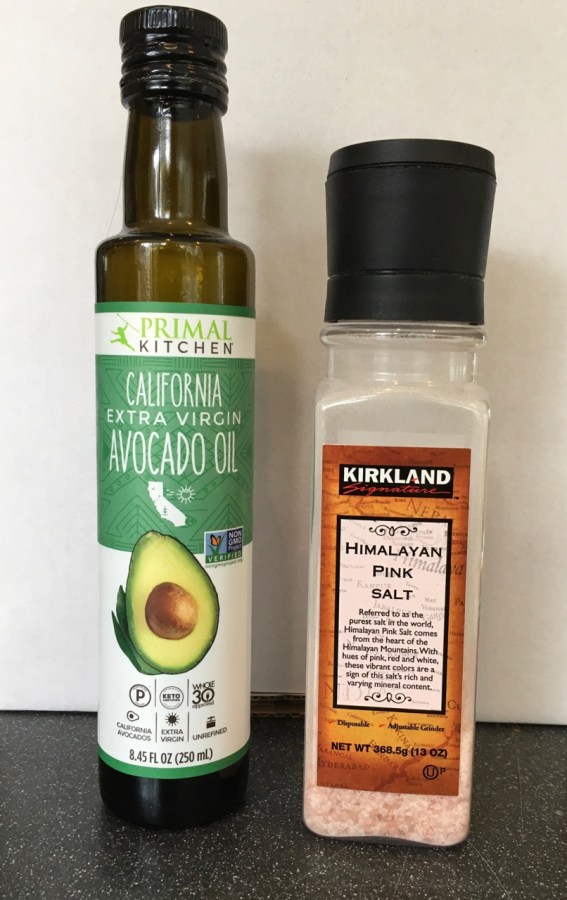 You can roast many other things, but the long storing properties of most root vegetables make them ideal for a COVID-19 era menu. Broccoli comes in little bunches; potatoes are sold in great big bags. Shelf life is the main reason for the discrepancy.
 Here’s a nice resource discussing
 Veg roasting tips from an unseasoned cook
 Really Wonderful Things