Phone a friend, if only to confess “I have no energy to talk”

An article* in the newspaper prompted me to reach out to a friend yesterday. It reminded me that we are all hopefully not sick but tired of the pandemic, and that perhaps our loved ones with small children are even more drained and hungry for a moment of adult contact.

It’s okay to reach out—a great idea, actually—even if your message is merely a confession that you’re too exhausted for a big, meaningful talk. What really matters is letting people know that you care. A text, a ping, a postcard: any of these is a whole lot better than nothing at all.

The article reminded me that my low energy might still be higher than someone else’s emotional charge.

Contact phoneLike many others, I’ve found the pandemic to be paradoxically physically isolating, yet discouraging to my tendency to reach out in other ways, even electronically. I may be the only person in America who has yet to join a Zoom meeting.

Perhaps because I’m an introvert, I’ve realized that stress tends to shut me up.

Though I never lack for opinions or the desire to share them, my mother’s death in 2019 made it very hard for me to post to Really Wonderful Things for a period of months. Similarly, while I think of many friends, often many times per day, the oppressive weight of living in a COVID-19 limited world often keeps me from calling or texting or even answering my phone when it rings with a call from someone I really miss.

I have no doubt that surviving a pandemic induces grief. As one bereaved just a year earlier, the parallels are plain to me.

Chatting with my friend—okay, it was texting—was a nice break from my current reality. She was the last person I saw socially before everyone sequestered at home. I met her still tiny baby that 2020 day over coffee at a shop near her house. NZ espresso Wildlife Refuge cafe

Already aware there was a mysterious virus swirling about the Earth, I didn’t ask to hold her little bundle of joy, but I did briefly get my freshly washed hands on one irresistible, itty bitty foot. Consider it the elbow bump version of appreciating a newborn as a pandemic loomed.

About a year has gone by since then. My friend’s baby is now a toddler with hair long enough to style in an up-do for a windy walk around a reservoir. I got to see a picture. I noted how the wee one’s hair favors the younger of her big brothers; my friend pointed out that her face is more like the elder sibling’s was in early childhood. Her eldest was about the age her baby is now when she and I first met!Woman hugs child

While joyful, the conversation was also full of pining for a return to our old kind of visits. I want hug her youngest urchin for the first time. She wishes she could help me fix what I’ve done to my poor sewing machine. We both miss those hours, here or there, that we used to steal for a cup of something and a chat while our kids were at school.

No wonder it’s so hard to catch up in the virtual realm. The act is such a stark reminder of all the real visiting that’s missing!

But we wandered, too, through the tentative plans our respective families are finally feeling free enough to make for the future. They’re thinking of moving for more yard space, or perhaps she’ll take a community garden plot to get her hands into the soil. I’m expecting that—come Hell or high water—I will find a way to get cross-country to see my father this summer. Both of us have begun pondering passports and international travel, but neither of us wants to board a long flight any time soon.

Her husband has always wanted to show their kids Niagara Falls; my family hopes to do a round trip cruise from Canada that circumnavigates Iceland from a port within driving distance in 2022.

It’s a bit like ordering seeds in January. It’s a lot like those longer, brighter New England days in early March when you can feel that spring really is a-comin’… while also remaining fully aware it would be unwise to put away the snow shovel just yet.purple and gold flowers blooming in Hafnarfjörður, Iceland

Reaching out and making contact—in even the tiniest way—plants another tiny grain of hope that we may all soon put this period of illness and extreme loneliness behind us. So phone a friend; nurture a bloom of camaraderie. They’ll understand if the best you’ve got to offer is, “I miss you, but I have no energy to talk.”

* “The parenting crisis without a vaccine: loneliness” by Boston Globe Correspondent Kara Baskin
Kitchen compost bucket solutions to tame the sticky stink

I’ll have to begin with the bad news: if you fail to take your compost out, eventually, there will be odors. Don’t believe anyone who tells you otherwise.

Fundamentally, we’re talking about the process of decay by which food scraps become nourishment for future cycles of growth. It’s all good, but you’ll notice there’s goo in good

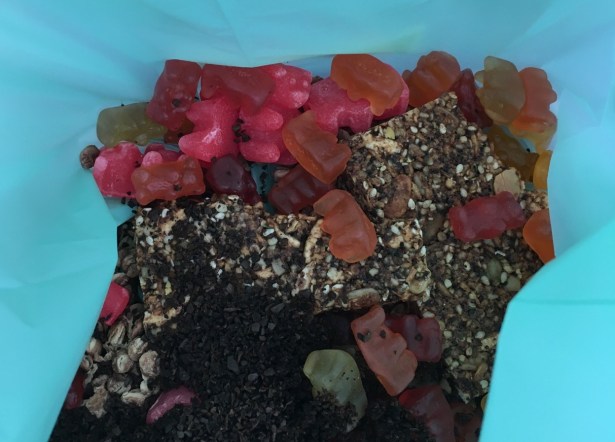
Biology gets sticky and stinky. Mathematicians know it.food in kitchen compost pail including gummy bears, coffee grounds, oatmeal, and seeds

Having accepted that taking out the compost is at least as important as removing household trash, here are my simple ideas for a less messy, less smelly, less likely to leak composting experience.

I recommend:

  • an 8-10 quart food storage container with tight fitting lid
  • 4 gallon compostable liners for the kitchen compost pail
  • a household paper shredder
  • scrap paper and cardboard shipping boxes destined for recycling
  • 13 gallon compostable liners for the curbside bin

Snapware food storage bin and lid lined with UNNI compostable bag with cardboard

Continue reading

Back to school or learning pod, every parent’s choice is reasonable

I don’t think my behavior should be characterized as doom-scrolling, but I do subscribe toand read dailytwo of the major American newspapers as well as a handful of magazines. I prefer my news* to be well-researched, fact-checked, and professionally edited, thank you!

Recently, everywhere I look, I’m confronted by angry, polarized debate creating artificial binary positions on the particulars of education in the COVID-19 era.

In person learning is too dangerous! Remote learning is useless! Both positions are flawed…

“In person learning is too dangerous!”

“Remote learning is useless!

Both positions are flawed because real life is nuanced. What works for one child—or one family, or one community—can’t be arbitrarily exported to someone else’s situation because there are meaningful differences between cases.

school supplies - 1Some teachers aren’t at particularly high risk for complications from the novel coronavirus, and want to get back into classrooms quickly. By all means, let’s put those educators to work in communities where infection rates make that a sensible solution. Other teachers have pre-existing conditions or would prefer to teach remotely: there’s an audience for that modality, too.
I have yet to see any analysis comparing the number of teachers who’d like to get back inside schools with the number of families who desire the same for their kids. What if all this finger pointing is for nothing and those numbers align naturally in most communities? Shouldn’t someone put a modicum of effort into asking such a straightforward question that could solve so many problems?

Remote education worked well for some students. Learning outside of a large, “industrial school” setting was the dominant mode of education for most people prior to the past century. It’s ridiculous to pretend that there is only one path from ignorance to wisdom; all of human history argues otherwise.

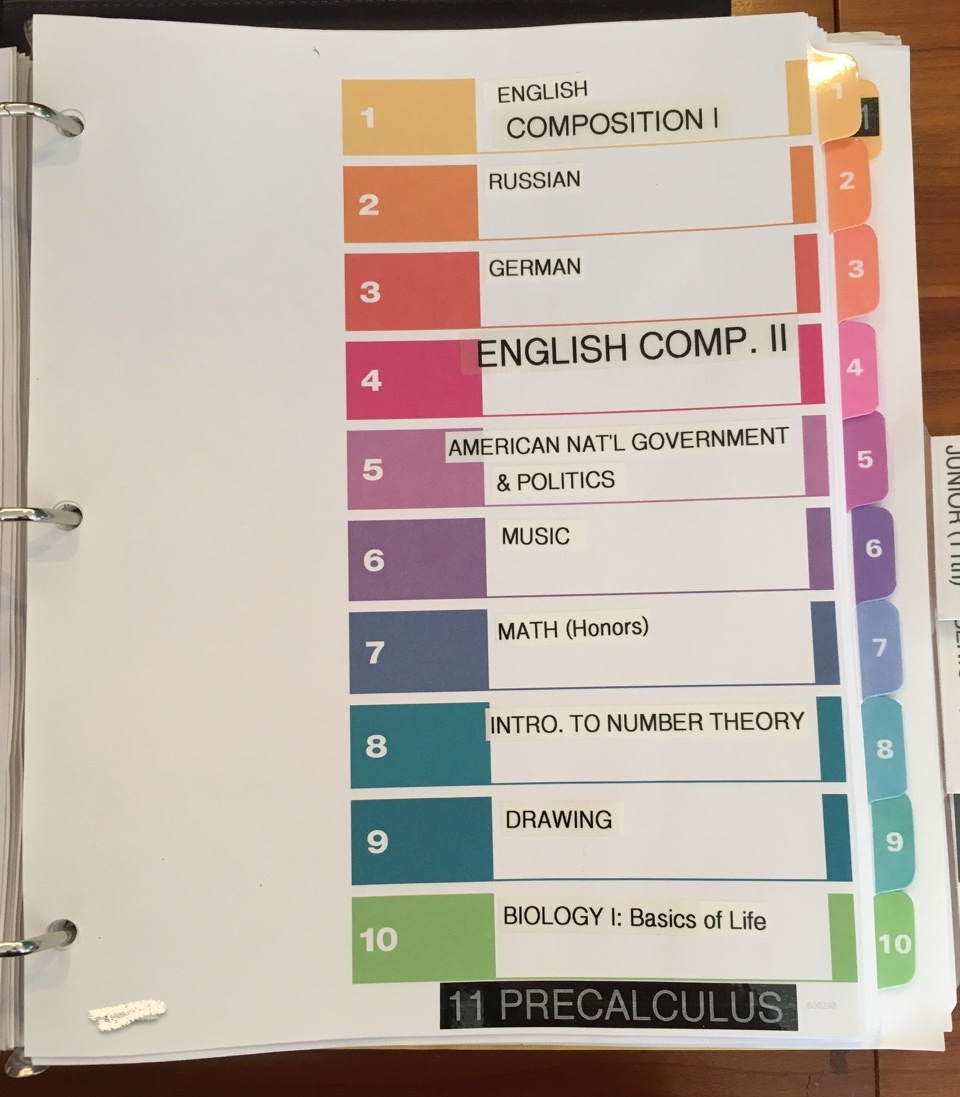
Binder page listing high school courses for grade 10I’ve read articles bemoaning the selfishness of (rich) parents forming COVID-19 learning pods instead of sending their kids back to public schools. At the same time, many (mostly urban) schools don’t have enough physical space to safely host all of their pupils in a socially distanced manner.

It strikes me as obvious that the removal of some kids—admittedly, those whose families can afford to pay private tutors or take time away from work to teach their own themselves—from over-crowded conditions will only improve the odds against infection-via-density for those who remain.

Backpack with textbooks and school supplies spilling out

It flat out sucks that we have yet to find a way to offer any semblance of an equal opportunity for an excellent education to all students regardless of color, creed, or zip code, but reducing each pupil’s risk of contracting COVID-19 in his or her classroom is a more straightforward problem to solve.

Since this is literally a matter of life or death, I think we should start with the low hanging fruit of smaller class sizes by whatever means possible. Some skilled educators may be lured by wealthy families’ ability to pay for private tuition, but few go into teaching for the money, so I suspect most passionate teachers will remain in the system where they chose to work.

Some families have no option but to send their kids back to classrooms. They depend upon this one and only form of state-sponsored child care in America in order to work, earning a paycheck, but also contributing their labor to benefit society. Their kids deserve to be the first children back at school in person. I willingly cede the seats my kids could rightfully occupy to children who need them more.

The children of essential workers and kids who live with food insecurity should have first dibs on in person instruction this year. This isn’t about getting the most back for every penny I spent in taxes, it’s about doing the right thing at a tumultuous time.

lunch box on kitchen counter

Lunchbox, ready for school.

It is pathetic that many of our schools are in poor repair and lack modern HVAC systems or windows that open. It is ridiculous how many young bodies we squeeze into rooms designed for far fewer. It is outrageous that millions of our children depend upon meals served at school for essential nutrition.

None of that is right, but all of it is true. I will continue to advocate for better schooling for every kid at every opportunity I see, but I’m not going to ignore reality when lives are at risk. Neither choice is pure merit, but neither choice deserves scorn.

The choice that works for your family this year is good enough. Do what works. Kids can learn in many ways and from many sources, especially when they see their parents carefully making thoughtful choices on their behalf.

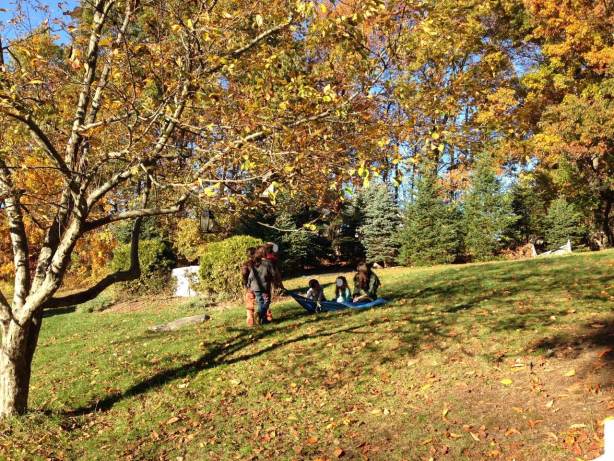
Children play amongst colorful leaves on a sunny autumn dayKids are resilient. Thank God! Most of the kids will be all right. That’s the best we can do in the face of a viral adversary that has killed 171,787 Americans as of August 29, 2020.

For the moment, the best I can offer my community is to keep my kids away from public spaces to alleviate the pressure of a pandemic on the strained resources of our health and education systems.

I’m doing my best, like so many other parents. Frankly, we should all give ourselves a break, because our best really is good enough for now. Instead of blaming each other for making different choices, let’s all focus on meeting the needs of our own kids, each in our own ordinary, reasonable way.

I voted Election sticker - 1Highly paid elected officials in D.C. and other capitals deserve the pressure and expectation of doing more, because they are the ones who dropped this particular ball. Give them the blame they’ve earned. The U.S.A. is failing in its attempt to manage the COVID-19 pandemic, but it isn’t for lack of effort on the part of average American parents.

* It’s true that I added the New York Times to my paid subscriptions only after COVID-19 started sweeping the world, but I’d been on the verge of the upgrade purchase for almost a year. I think this is where I give a shout out to the Boston Globe, The Atlantic, Wired magazine, and The Economist for edu-taining me through a pandemic, right? 

It was my growing reliance on NYT Cooking recipes during the early phase of sheltering-in-place (with hit-and-miss grocery deliveries) that finally prompted me to input my credit card number.

According to this NY Times article from September 4, 2020, 40% of parents have chosen remote learning instead of taking advantage of the hybrid or in person options offered in that city.

As a mother who has home schooled one of her children for over seven years, my experience was that customizing my own plan for my own child was far easier than implementing the adapted curriculum dictated by my other kid’s school that was unprepared for the sudden need for remote learning last spring. American parents have the right to educate their own children as they see fit, so declaring as a home educating parent is an alternative for those whose kids responded poorly to their schools’ offerings.

In 2018, 29.7 million children received free or reduced-cost lunch daily per the USDA