Many of us practically live in our cars, or it often feels like we do. From long commutes to the carpool expectations of modern parenting, our vehicles have become as familiar as our homes.
To keep ourselves healthy and comfortable on the go requires some effort. We fundamentally ignore nature’s expectations for our bodies (frequent movement, limited sitting) in automobiles.
Stock your vehicle for health & safety
What steps can we take to make our vehicles safer and healthier for our families?
Keeping a blanket handy and storing a reflective vest, safety flares and a wide brimmed hat in the trunk could reduce the hazard of an automotive emergency or an unplanned, prolonged stop awaiting rescue.
Carrying my Beastie massage ball and a pair of generic fit-over sunglasses (I’m utterly dependent upon prescription lenses to see) in the glove box helps me avoid debilitating headaches that could take our show off the road.
Little things like stocking shelf-stable snacks and bottles of water keep my family from resorting to junk food drive thru fare. Once in a while might be fine, but daily is a recipe for poor health and an empty wallet.
Storing drinking water in your car
That said, how safe is it to store drinking water in a vehicle?
 The poorly insulated metal and glass body of even the nicest car will always exacerbate local climactic conditions. On a hot day, the inside of the car will be a deadly inferno; in frigid weather, a stopped car blocks the wind, but quickly releases its heat once the engine is off.
Extreme heat could affect water safety
Exactly what happens to drinking water stored in a plastic container in a hot car is scientifically unclear, but it is reasonable to be cautious where heat and plastic are concerned.
My usual bottle for use in the car is a 1.5 litre Sigg made of coated* aluminum. I fill it every Monday morning, drive around with it all week, and bring it in for a thorough wash over the weekend. I have a set of glass bottles, too, which I will use cautiously in the car, but not “on the run” because I’m clumsy.
At this stage in their lives—elementary/middle school age—I’m not comfortable giving my kids glass bottles to use outdoors. They aren’t careful enough, and I don’t want shards of glass to ruin a day out. I could switch over to glass for their use solely while seated in the car, but I’ve watched a lot of objects get kicked out the door by a boy in hurry, and I also ask them to carry their own gear out from and into the house each day. My calculus on this question still points to unbreakable metal bottles for growing kids.
The sheer magnitude of the denting on their Sigg bottles tells a cautionary tale!
I’m a little more comfortable leaving water in my car in a reusable container that isn’t made of low grade plastic like disposable bottled waters, but I always try to avoid extreme temperature variations of my drinking supply.
In the summer, I typically refrigerate my bottle overnight before bringing it to the car. I prefer room temperature water, but, if it starts out cold, it may not reach “hot” before I drink it.
Sometimes, I’ll fill one of our lunchbox Thermos jars with ice cubes before I leave the house for a full day of adventures; I can add one or two as necessary to cool off what we drink from our personal bottles. It’s rare for the melt water in the Thermos to be anything but cool, even late in the day.
Freezing cold has its risks, too
Metal or glass water bottles might alleviate concerns about heating plastics containing potable water, but there’s another serious risk in New England’s four season climate: freezing.
When water freezes, it expands. Ask anyone who has had the misfortune of burst pipes at home during a deep freeze.
At least one of my children has forgotten a full aluminum Sigg container in a car parked outdoors in winter, resulting in an exploded bottle. I discovered the bottle before it thawed, so it was the loss of a pricey (~$15 USD) object that hurt, not ruined carpet or upholstery. The lesson was taken to heart.
At our old house, we parked outside. All water bottles were carried in from the car each night, and we brought new ones out with us the next morning. Most of this effort was to prevent freezing as opposed to spoilage or stinking since children don’t get any drinks in my car except for water.**
Now, I have the great privilege of parking in an attached garage, so what was a vital necessity is just an abundance of caution. The garage temperature doesn’t drop below freezing.
Even with my van being kept warm(ish) overnight, living in the Northeast means enduring at least occasional days where the air temperature doesn’t rise above the freezing point of water, but I don’t like being caught out and about without fresh, filtered water to drink.
Solution: an insulated wine tote
Here’s my solution: an insulated wine bag. Mine came in a gift. It was part of a matched set with a lunch bag and a file tote.
The wine bottle size is perfect for my large water bottle.
The interior layer of reflective insulation helps protect the water from temperature extremes. The decorative outer material feels like a lunch bag or heavy duty reusable grocery tote.
The top of the bag has Velcro to keep it closed when relying upon the insulation to do its job; I don’t even close it in mild weather. The whole thing folds flat when not in use. It wipes down for cleaning, but that’s rarely necessary since it’s used by an adult only for water.
Since implementing this storage solution, I’ve returned to my van to find a rime of ice in my drinking water, but never a catastrophic hard freeze that bursts my bottle. On hot days, I don’t encounter that gross mouthful of sun-warmed, plastic-tainted water.
You can see in my photos how the insulation solution also works to prevent the oversized and top-heavy bottle from toppling over out of shallow cup holders when I take corners a little too fast—I hang the Sigg in its insulated bag on my passenger seat armrest instead.
Velcro-ed shut, this keeps the bottle protected from temperature shifts, but it remains easily freed, even one handed, while driving. I know where to reach, and don’t take my eyes off the road.
Unscrewing the cap while driving to get a drink is actually much more difficult than accessing the bottle itself. Since my daily reality also involves having a tea or coffee mug in the car, I’ll often use that for water, too.
Once my morning caffeine fortification is complete, I’ll rinse out the mug and pour in a few ounces of drinking water at a time. This, I do while safely parked; I take my responsibilities to others on the road as a driver quite seriously. The coffee mug gets carried in at the end of every day for washing, and it’s never filled to the top with plain water. If it were forgotten, it wouldn’t be full enough to burst if frozen solid.
By pouring water from my large bottle into a cup instead of drinking directly from the spout, I also feel better about using the same one all week long. I refill it as needed, at the doctor’s office, or the gym, or school—anywhere convenient with filtered drinking water. Our town, a mere seven miles from our old home, gets its water from a different reservoir, and the taste is less than pleasing to a girl who grew up on the fantastic water sourced from the Bull Run water shed.
Keeping my mouth off the large bottle also makes it more hygienic to share when one of the boys forgets his bottle or has already emptied the smaller ones they find easier to carry when we’re active. It isn’t out of the question for us to drink from the same bottle, but I do try to avoid swapping germs willy nilly when there’s a good alternative.
Amazon is selling a range of similar insulated totes from $8 to $50. If you’re carrying a water bottle in your car in a climate that regularly freezes or exceeds comfortable temperatures, this is a good solution for keeping your drinking water at your preferred temperature for both taste and good health.
To avoid buying something new, consider using an extra insulated lunch bag for the same purpose, though you would probably need two shorter bottles instead of one large one for that scenario.
Once again, my Thermos food jars are often pressed into service like this. In winter, I’ll fill the 16 oz jar with hot water from my electric kettle. Hours later, it won’t be hot enough to brew a decent cup of tea, but it can take the chill off cold water from a bottle left exposed.

Bonus points for color-coordinating cup to lunchbox!
If I’m packing water for the whole family on an especially hot or cold day, I’ll nest more sets of bottles into lunch sacks with ice or heat packs as needed. I might then tuck one or two, or more! lunch bags full of waters into an insulated shopping bag or a cooler to extend the time even further before outside conditions affect our drinks.
You can spend a fortune on the best cooler available, or you can increase the insulating power of items you already have by doubling or trebling them up.
My insulated wine tote gets tucked inside the larger cooler as necessary when winter brings its worst, and my water bottle doesn’t freeze solid and burst.
♦
*I am left with questions about the potential risk of the “non-reactive” coating inside Sigg’s aluminum bottles, but I’m not enough concerned to dispose of a container whose other features I like that is still in perfect condition. I won’t re-purchase bottles by this brand because of how they handled the BPA controversy back in 2008.
**This is partly about health: we drink water because it’s the best choice for hydration. The other motivation is avoidance of sticky substances that will annoy me if they are spilled. If you aren’t old enough to clean my car thoroughly after you spill—or pay for detailing—you don’t get any option but water. Exceptions are made on long distance journeys when the family is in the car all day for many days in a row, but, at home, during a normal commute, water is absolutely sufficient.

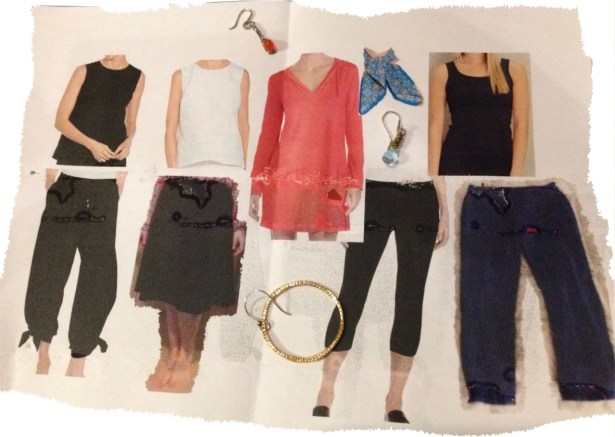 I planned a wardrobe for this trip,* and then, after some reflection, cut it back further to roughly what’s shown in the first image. As I traveled with it, I realized that it was, in fact, a tiny bit larger than it needed to be. I wore all but one miniscule garment that I carried, though, and we weren’t burdened with an unmanageable amount of stuff.
 Most important of all, I had what I needed to be comfortably dressed throughout the ten day trip. I’m a traveler with joint pain and an autoimmune condition who remains bound and determined to make it to more corners of the globe. Smart packing isn’t a hobby for me, it’s a necessity.
 The week before we arrived, our primary destination, Christchurch, baked in 90º+ F temperatures, but we had a cooler trend and the remnants of a cyclone to deal with. What I packed would have worked for either week’s weather, so it was a solid wardrobe plan.


 It is possible that I bought my Sherpani wheeled suitcase primarily because it came in a really fetching brown and purple color scheme. Highly unusual for luggage carousel spotting! Coordinated with clothes I wore frequently for travel! The presence of cute little daisies in charming spots could also have been a factor.
 You’ve never been in my bathroom, but I bet you could find the body towel in an instant without digging through this basket of clean laundry.
 Really Wonderful Things