Is grief reflected in (un)polished silver?

One way I’m still processing my grief, two years and five months after my mother’s death, is by polishing her silver. Today, my hands are sore and chapped from completing that task last night.Tarnished silver showing a coppery glow instead of the whitish glint of sterling

Perhaps it was just the passing of more than the usual time while travel was ill-advised, but I think regional wildfires and their acidic smoke sped up the tarnishing of her sterling tea service. My irrational heart may also feel that these dark stains reflect the deprivations and loneliness of 2020.

If we couldn’t celebrate life’s occasions together, why shouldn’t our heirlooms wither and wilt in their own exile?

Silver heirlooms & family history

I was a girl, but old enough to notice, when my father bought Mom the silver tea set she’d coveted. I think I recall the particular room in the particular house we lived in at the time. I have memories of her excitement upon receiving it.

I’m not sure that Mom ever actually served tea or coffee from it, but it shone with pride of place in every dining room thereafter.Sterling silver tea service with heavy tray, coffee pot, tea pot, sugar bowl & creamer

Some families may own objects for generations; others build their own cache of keepsakes in the moment. It’s the memories that form mementos, not the artist or craftsman at a workbench or in a factory.

For myself, I take pains to use lovely things such as china and silver as often as possible. Regular readers may recall that I worked on my novel by candlelight last summer while sitting at my parents’ dining room table and keeping one ear open to Dad as he recovered from surgery. I know that five-branched candelabra was one of their Silver Anniversary gifts.

The use of three different styles of mismatched candles is entirely my own choice, and my mother, it must be noted, would be scandalized by such cacaphony.

5 branched candle holder with two gold beeswax tapers, two rust colored beeswax candles, and one smooth taperI use a silver tray to carry Dad’s post-surgical medications upstairs every night now* just as I did in August.**

It’s the right size to fit on his bedside table, lighter than wood, and less breakable than a plate would be. Some old-fashioned objects remain just as useful as their modern alternatives.

How to remove wax residue from silver

Before I polished all the silver, I had to pour hot water over the tray I placed beneath that 25th anniversary candelabra in order to remove all the wax I’d spilled thereupon.

Please note that, never, in Mom’s lifetime, could such a mess have been left for four months or more before being attended to! That, too, is entirely my responsiblity, and does not reflect the way Mom raised me.

If undertaking such a wax removal exercise, make sure you place a paper towel between the wax-stained item and your drain to avoid expensive plumbing repairs down the line. Very hot water does very effectively remove wax from even the most detailed metal surface.

I used water just off the boil, and the tray from which I was removing wax had no heavy, weighted areas to avoid heating. Be careful if treating candlesticks or other items which may contain meltable fillers as counterweight if you try the hot water method!

Amongst the almost innumerable blessings of my highly charmed life, I include the fact that my mother died in the summer of 2019, well before the pandemic. The children and I were able to spend the first holiday season after her passing with my father, accompanying him through what was a difficult time for all of us.

Frankly, anyone who knew my mother would recognize at least this irrefutable fact: she would have hated being locked down and isolated from society. Mom liked to be busy, and she reveled in the company of other people.

I don’t know if I could have survived such a loss in 2020 when travel took on new risks. The idea of Mom’s hospice care taking place while we were thousands of miles away is intolerable. I can’t even express the gratitude I have for the fact that I wasn’t challenged in such a way.

In spite of the mild miseries of my own experience of the pandemic, I know firsthand that heroic caregivers continued to minister to the dying in spite of the job’s personal risk. The long illness that plagued my mother-in-law came to an end in 2021. Hospice workers—and an investment in long term care insurance decades ago—gave her the dignity of dying at home, as she wished, though there can be no real respite from the ravages of grief.

It ranks high on the list of ways I consider myself luckier than I deserve that we six shared a household, thus having no question about our ability to be as involved as my father-in-law wished with her daily care at the end. Being there for a terminal loved one is difficult; knowing you can’t be must be excruciating.

How to polish silver without damaging it

While products abound, these days, promising quicker, less effortful removal of tarnish from cherished silver, experts universally decry the lazy man’s dips and hacks. Polishing silver isn’t particularly difficult, but it is best done with a bit of elbow grease and zero “quick fixes.”

Removing tarnish means, fundamentally, stripping away a thin layer of the valuable metal itself. It is best to tackle the job gently.

Apply a high quality silver polish using cotton balls, a sponge, or a rag. Rub until the dark stain of tarnish disappears, changing out your cotton or rag when it blackens. Finally, rinse or rub off the remaining polish, depending upon the type of object you are cleaning. A tray can be wiped dry or rinsed, then buffed; silverware or items you put in your mouth want washing after polishing.

Silverware as a shelf for memory

I have less memory of how this three-tiered silver tray came into my parents’ possession, but it does define the space for receiving Christmas cookies in my mind. Now that I’ve polished it, a bit of baking does seem to be called for.

When is it not better to confront a pleasing array of delicacies arranged on a silver platter? Or trois? When is a display not improved by height, texture, and depth?

While I wish my father weren’t recuperating from a painful operation, and I wish my mother were here, in her house, doing a better job of decorating, polishing silver, or tidying up than I every could…

Well, suffice to say that I am grateful for Dad’s recovery. I’m happy to spend the month of December surrounded by Mom’s things with at least the possibility of realizing a tiny fraction of her joy in the Advent season.

It’s a constant ache and awareness of loss to live amongst the remnants of my mother’s life, but such a gift that I have the luxury of time and access to process my feelings about everything she was, what she loved, and what she left behind.

The finer things in life only achieve that definition because we acknowledge how they add to our delight, or enhance our appreciation of the lives we lead. Even gold has only so much luster outside convention.

I would trade every precious metal for my mother’s presence if I could, but that’s not how living works, and that’s not a bargain anyone gets to make.

Grief is not the garland we expect for our holidays, but it is one most of us will hang one day. Whether personified by tinsel or a sterling silver tea service, holiday grief is a likely inheritance to everyone blessed by the chance to love and be loved.

It’s hard to make a family without generating holiday memories. Vanishingly few conduct an entire life without loss. Learning to live with grief throughout the holiday season is the burden—and the gift—of those who’ve been loved.

*For knee replacement number two

**When Dad became a cyborg, as he likes to say

Happy Hanukkah 5782

Almost another full year of pandemic permutations, and the Gregorian calendar is wrapping up 2021. The Hebrew year 5782, however, is just entering its prime as we celebrate Hanukkah. Tonight, Sunday, December 5th, is the last night of this Jewish holiday.

What I love most about Hanukkah is its focus on the universal human need for light to triumph over darkness. On this, the eighth and final night of the Festival of Lights, my sputtering candles serve as a visual metaphor for a dream many of us share: may this be the final stand of COVID-19, too!Candles in Hanukkah menorah burning out

I hope that Omicron is a pathetic, last gasp of the no-longer-so-novel coronavirus; I pray for a future where we can resume our holidays, rituals, and everyday celebrations in each other’s company without fear.

I am personally blessed to be both vaccinated (Moderna) and boosted (Pfizer), and to have the freedom and means to travel this holiday season. My father, who got his first knee replacement last summer, was able to schedule his second side for the week after Thanksgiving. While elective surgeries like my father’s have been canceled in my home state*, hospitals in the Pacific Northwest, where he lives, remain open to patients like him.

Hanukkah is notable for its emphasis upon pirsumei nissa, or “publicizing the miracle.” This isn’t just a minority group’s attempt to hold a holiday up against the majority culture’s big day. Rather, the miracle of a single vial of oil burning far beyond its expected daily duration for an entire week instead (necessary to create new ritual fuel) was deemed worthy of public emphasis by Jewish sages in antiquity.

This year, as my youngest child embarks upon education in a new environment—but, again, a Christian one—I can’t help but draw his attention to the history of gambling over dreidels for this holiday. It matters, a lot, why Jews emphasize this particular act.

As I understand it, during Syrian-Greek rule of the Holy Land (c. 200 BCE), it was illegal for our people to study Torah. The punishment for a Jewish religious education was death. A form of hiding in plain sight was developed; if enemy soldiers approached, students would pull out their spinning tops (dreidels) and pretend they were just playing.

There is so much that I admire in my youngest’s Catholic education. A recent letter from his principal included the following statement that resonates powerfully with me:

You were created by the God of love

in God’s image and according to God’s likeness,

to be a unique expression of that love.

It is through you

that God desires to manifest Love

to the peoples of the world in these times,

and to offer them the freedom

of the children of God.

According to our school, this statement is one of the fundamental principles of the Xaverian Brothers.

For all the ways I identify with these notions, I also found myself admonishing my child to remember his own unique heritage in recent weeks.

We are blessed to live in a society where we may elect to join any school, but we mustn’t forget the lessons of our forebears. A Jewish child should know where he came from; he must recognize that there are people living in America today who wouldn’t acknowledge him as either fully human, equal, or a true patriot. It’s unfortunate, but plain fact.

I feel myself to be an American before any other categorization, yet I don’t have the luxury of assuming that all my compatriots would agree with that assessment. It’s a tragedy that I have to emphasize the same to my children; it would be negligent to fail to alert them to this truth as I understand it.

The scent of spent beeswax tapers lingers in my nostrils as I waver between gratitude for my abundance of blessings and acceptance of the ridiculous prejudices that seem to motivate vast swathes of the public today.

I’ll take my luck and be thankful. I have the light from my menorah piercing the darkness, my father’s great good fortune to have gotten the health care he needs, and the secure knowledge of the love of friends and family who surround me.

As we near the darkest days of December, 2021, my wish is for the blessing of illumination to all who seek light. Best wishes for warmth, safety, health, and goodness to everyone reading this.

L’ chaim! To life! And to everything good, holy, and beneficent as we huddle against the darkness.

*Due to a combination of COVID cases and staff shortages

Facing pandemic persistence, I’ll spend where safety dictates policy

We have made it to August 2021. Sadly, the pandemic is not over, though the most vulnerable people in America have been tricked into behaving as if it is.

Decisions were made to re-open all venues while simultaneously dropping every protective precaution. Some of us believe that choice was precipitous, even reckless. I feel vindicated as my logic proves sound… but also so deeply disappointed.

I know I like redundancies more than most, but this seemed so obvious. “Better safe than sorry” may be trite, but it’s also wise where human lives are on the line.

How ’bout making one change at a time? After each change, observe the effect. It works for scientists, after all.

Oh, right, science is a tool for the liberal elite! Yet fools parroting such nonsense do it gasping through their fluid-filled lungs, crowding into our hospitals—institutions steeped in modern medical knowledge derived via the scientific method.

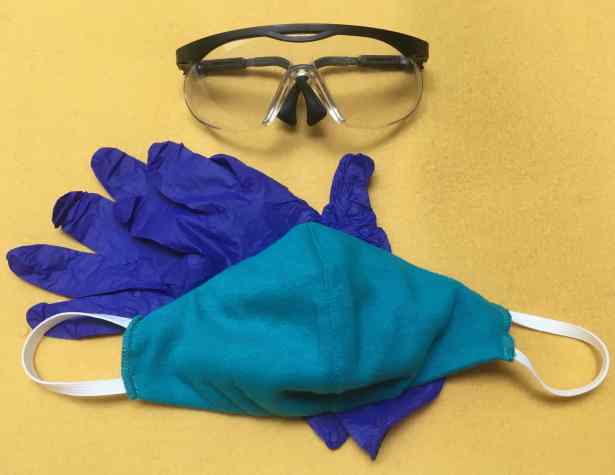
Some feel their lives aren’t worth living if they have to wear a mask to go shopping. Safety goggles, cloth face mask, and disposable gloves

I wonder how those precious snowflakes would hold up under conditions of true adversity. I imagine the oppressed population of Myanmar—or the people in Haiti or Tunisia, watching their fragile governments wobble under anti-democratic onslaughts—could offer lessons on what really constitutes a hardship to pampered American crybabies.

I would recognize that wearing a mask pales in comparison to being the target of genocide even had I never visited Auschwitz.

What a summer we could have had! If only we’d been cautious enough to resume access to theaters and restaurants, but with our masks in place for crowded, indoor conditions from the outset. It might have been the joyful reunion we all dreamed of during 2020’s isolation, loneliness, and despair.Woman hugs child

Hugging my grandma with a mask on didn’t lessen the joy of it. Visiting with my aunt over coffee on the patio instead of in the kitchen offered equal satisfaction. Espresso in demitasse cup on cafe table

Watching as my father’s “elective”—yet quality of life preserving—joint replacement surgery was postponed once, and then a second time, because no hospital bed was available was yet one more cost of the pandemic, but, this time, caused directly by bad actors, not a novel disease with unknown characteristics.

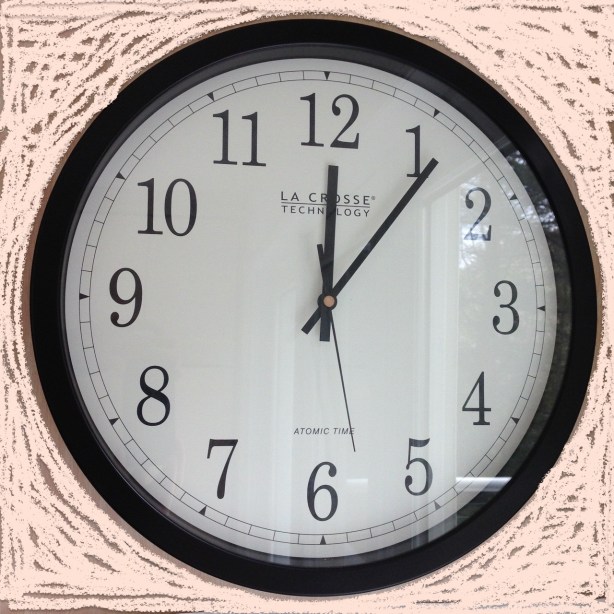
Now that stung.Analog wall clock showing 12:06

Frankly, I believe libertarian freedoms should be available… but only at a reasonable price. Partakers in those freedoms must give up the right to extort payment from the sensible majority.

Refusing vaccines? Fine, but wear a mask in public settings. Also, public funds—and even private insurance—should eventually cease to pay treatment costs incurred by those rejecting approved vaccines for endemic disease sufficient to be flagged by public health authorities.

The price of ignoring experts when an entire society experiences extreme events should be borne by those who choose to heed only their own counsel. That’s a fair trade off.

During outbreaks of any vaccine-preventable, endemic illness, refusniks must also give up the freedom to enjoy entertainment venues and public conveyances for all but essential purposes. Take your bus across town to work—while masked—sure, but recreational jaunts and all air travel unless, say, to receive urgent medical care out of state ought to be curtailed for those likely to spread disease.

NZ Chch bus MetroUnvaccinated kids should learn remotely unless masks are shown to be sufficient in preventing the spread of measles, chickenpox, the equally transmissible delta variant of COVID-19, and any future outbreak of similarly easily spread viruses.

If masks prove to work as well as that, I am 100% fine with unvaccinated kids—wearing masks—in schools forever. The point is to keep vaccine-preventable germs contained, not to dictate personal decisions that affect only oneself.

It should go without saying that the vaccinated should always be prioritized over the voluntarily unvaccinated when medical treatment becomes a scarce commodity that must be rationed. I hope and pray it doesn’t come to that, but, today, I fear for the people of Florida, Louisiana, and Arkansas. Mississippi and Alabama look pretty terrible, too.

Pandemic illness currently strains the pathetically insufficient “just in time” commercial hospitals in these and other states. An August 5th AP news story describes one Broward County hospital cramming beds into auditorium, cafeteria, and conference rooms to accommodate surging COVID-19 caseloads.

How pathetic that we allowed ourselves to fall back to this point more than a year after learning how and where this virus spreads!

Speaking to business owners and service providers, I reiterate that my personal spending will be concentrated in locations with high rates of vaccination. Pile of money

I will preferentially patronize restaurants and stores that demand proof of vaccination before letting anyone remove her mask.

It shouldn’t fall to commercial interests to manage a public health crisis, but dysfunctional politics brought us to that point. Re-opening—with precautions—allows for increased economic activity without excessive deaths. That’s the course I’ll vote for with my wallet.

Here’s hoping leadership by accounting departments can make up for the inadequacies of incompetent elected officials.

Satisfaction derived from one (novel) work in progress

Five weeks in, I’ve written 39,645 words. I’m working on a novel.

If I ever finish it, and then publish it, you should definitely read it.

39,645 ÷ 5 = 7929 words per week

7929 ÷ 7 ≅ 1133 words per day

Truthfully, I don’t know whether to crow about this rate of progress, or if I should be mildly—or wildly—embarrassed by my sloth. Remember, I’m a dilettante who hasn’t published much more than a blog.

Then again, the world can—and will—think what it wants. In the meantime, I shall carry on developing the imaginary universe I can’t help myself from inhabiting, trying to do justice to a scientific concept that my celebrated husband offered as a plot device.

I think it is working. The fact is ridiculously exciting.

On the evening of day 35, around page 170, I got to the good part. You know, that moment where a handful of threads are woven together, and one suddenly understands why we heard about this, then that, then the other thing… ?

Truthfully, I didn’t, myself, see all of it coming. My takeaway: writing fiction can be weird.

If I were a different kind of creature, perhaps I could keep up with regular installments for a diverting blog while crafting a novel clever people would feel compelled to read. My reality defies this notion. The same pool of energy feeds both projects.

Alas, poor readers! The novel wins.

Lately, the novel also encourages me to imbibe a glass of wine alongside the lighting of a five-armed, silver-plated candelabra from my parents’ 25th wedding anniversary, so it’s kind of a strange beast. Either that, or I am the odd one, but don’t you like knowing you are reading a work composed on a laptop by candlelight? That’s not just me, is it?

I’d love to share the recent story of “My First Flight in the Era of the Novel Coronavirus” (hint: uneventful) or “Flying vs. Amtrak Reality for Those Who Take Delta Variant Seriously” (hint: airlines impose mask regulations more seriously than train conductors), but I am forced to choose.

Happily, the kids and I have made it across the USA and back into the physical presence of my father. He needs an elective-yet-function-improving surgery, he was waiting to have family around to get the thing done, and it’s a Really Wonderful Thing that we are here to support him through the process.

Today we had to change the bed sheets prior to surgery and he started bathing with the special, sticky, infection-defying soap. Now, how do we keep the dog off his bed until the incisions heal?

It’s also downright bizarre to be anywhere other than where we’ve been for the past 17 months or so. How often are the rest of you realizing how definitely we are living through Interesting Times? How often do you give thanks for the fact that you’re still around to notice said fact?

My personal answer to that last one: at least once daily.

It’s almost definitely good for my family to have its paradigm shifted at this point. I know that I have become a creature who might just as well never leave the house at all, if left to my own devices. That could likely earn me some kind of diagnosis from the DSM if I were inclined to seek professional opinions on the subject.

I’m not.

Lacking that kind of openness to criticism, I still know I benefit from noticing what’s different here (time zone, state, county, population density) vs. what’s the same. The part where the kids and I are living with Dad’s pandemic puppy is a learning experience.

While I grew up with pets, the last time I lived full time with any was a pair of cats in the 1990’s.

I was really worried that Dad wasn’t training his dog, but the pup is much better behaved than Dad’s most comedic text messages suggested. Phew!

Fear not, blog-reading friends. I am alive, healthy, and grateful for both of these things to be true. Here’s hoping that soon I’ll be begging you, my favorite audience, for beta readers for a dys-/utopian novel. Is anyone game?

May you all remain healthier than the arborvitae my dad put in his yard right before temps topped 116º F here. He’ll be lucky if 2/5 survive the summer, I’d guess. God willing, the delta variant will remain less deadly than that ratio.

Homebound senior wants COVID vaccine yet can’t get shot doctor prescribed

Here’s the story of one elderly American citizen who agreed to be vaccinated against COVID-19, yet hasn’t been able to receive a shot as of mid-June, 2021.

Someone I care about has a very complex medical situation. Her health is fragile, and her immune system is compromised.

My loved one is frail and almost completely housebound; it is a struggle even to get her to scheduled doctors’ appointments with ample notice. Sometimes, her body simply won’t conform to the constraints of sitting in a passenger vehicle. Hospital bed in dining room

She certainly would not be able to wait 30 minutes on a hard chair in a physician’s practice—let alone standing in an aisle at a local pharmacy—the way my kids and I did after our jabs. At the same time, due to a history of severe allergic reactions to drugs and vaccine components, the risk of an adverse reaction is higher than average for this patient.

Consultations with her various specialists resulted in a consensus that the Pfizer product is the only recommended COVID-19 vaccine for her.

Thus far, none of her providers has been able to offer access to a prescribed dose of COVID-19 vaccine during a routine visit. Internet-savvy family members continue searching for a solution that will accommodate her specific needs with no luck to date.

The patient’s state of residence now offers at-home vaccinations for those who are homebound. Unfortunately, the program sends its providers out with the Johnson & Johnson single dose vaccine only. According to the toll-free hotline, there are no exceptions unless the patient is under 17 years old.

This patient, though unable leave home for a shot, cannot take advantage of her state’s offering for housebound residents. According to the Journal of the American Medical Association, approximately 6% of U.S. seniors were completely or mostly homebound as of 2015.

Without a doubt, American wealth and power has provided a tremendous benefit to average citizens who’ve been amongst the earliest to access life-saving vaccines against the novel coronavirus. Public health, however, relies upon the breadth of its network to protect every resident. Many of our most vulnerable are still waiting as vaccines near expiration dates in medical center freezers.

Evidence of widespread vaccine hesitancy proves we must keep working to remove barriers to access for those willing, yet unable, to be vaccinated in currently available settings. Lives—and our loved ones—depend upon it.