Be aware of the following feckless U.S. Senators:
- Ted Cruz (R-Texas),
- Ron Johnson (R-Wisconsin), ?
- James Lankford (R-Oklahoma), ?
Steve Daines (R-Montana),†- John Kennedy (R-Louisiana),
- Marsha Blackburn (R-Tennessee), ?
and Mike Braun (R-Indiana),†
and Senators-Elect:
- Cynthia Lummis (R-Wyoming),
- Roger Marshall (R-Kansas),
- Bill Hagerty (R-Tennessee), ?
- and Tommy Tuberville (R-Alabama)
These Members of Congress signed a posted statement inciting violence in my nation’s capitol today. Lawless Trump supporters have even breached the Capitol Building itself, forcing the U.S. Senate and House to bar their doors and interrupt their proceedings at around 14:30 on January 6, 2021.
 The Senators’ statement pretends that there remains valid and significant contention about the results of our November 2020 election. These men and women are intentionally ignoring the fact that our courts have already acted in accordance with the law and found no legal justification for further action regarding purported irregularities.
2% of Americans believe the Earth is flat in spite of evidence to the contrary being plainly visible to the naked eye at sea or from a plane; the fact that a population being fed a steady diet of misinformation by social- and partisan media doubts reality makes it no wonder that, as per the Senators’ statement, “39% of Americans believe ‘the election was rigged.’ “
By your own admission in your statement, then, Senators, 61% of Americans must believe the election was valid. With the majority holding such an opinion, how do you justify encouraging rioting in the streets of Washington, D.C. and the interruption of the work of our nation’s government?
By continuing to defy the United States Constitution to which they’ve sworn allegiance, our laws, and the reasoned decrees of our state and federal judges, the Senators I’ve listed are feeding their constituents’ inflated paranoia, not doing their jobs as duly elected representatives.
Trump is attempting a coup. These Senators are complicit.
By all means, the Feckless Eleven—and others like freshman Senator Josh Hawley (R-Mo.)—are entitled to hold opinions and do their own research into how, when, and why our elections are imperfect. If they find any actual evidence of wrongdoing, they should bring it to the attention of the courts. It’s hard not to ask, however:
If they sincerely doubt the results of November’s ballots, how do the four newly elected Senators feel justified in showing up in Washington, D.C. at all? By their own logic, they have not received any mandate from their respective constituencies!
If [Senators-elect Lummis, Marshall, Hagerty, Tuberville, and Hawley] sincerely doubt the results of November’s ballots, how do [they] feel justified in showing up in Washington, D.C.?
Perhaps these treacherous Senators should use their own funds to continue investigating, if they sincerely believe there really are unsettled questions; their frequently seditious* states are also free to launch investigations from their own budgets. After all, elections in the United States of America are conducted by the states, each with its own local authority.
One might suppose the representatives of states known to still promote the idea that the Civil War was primarily about States’ Rights’ as opposed to slavery could comprehend this distinction.
These so-called Senators will earn a salary of at least $174,000 per annum to defend the U.S. Constitution. I’ve read that one woman inside the Capitol Building has already been shot. What are the odds it was one of these highly paid politicians glibly spouting conspiracy theories for personal gain as opposed to an aide or security guard serving her country for minimum wage?
Shame on you, Senators. America will remember your names, right alongside that of Benedict Arnold.
♦
† Senators Daines and Braun publicly stated that they would not opt to object to Biden electors after violent extremists stormed the Capitol. In recognition of the update, I’ve lined through their names in my post. 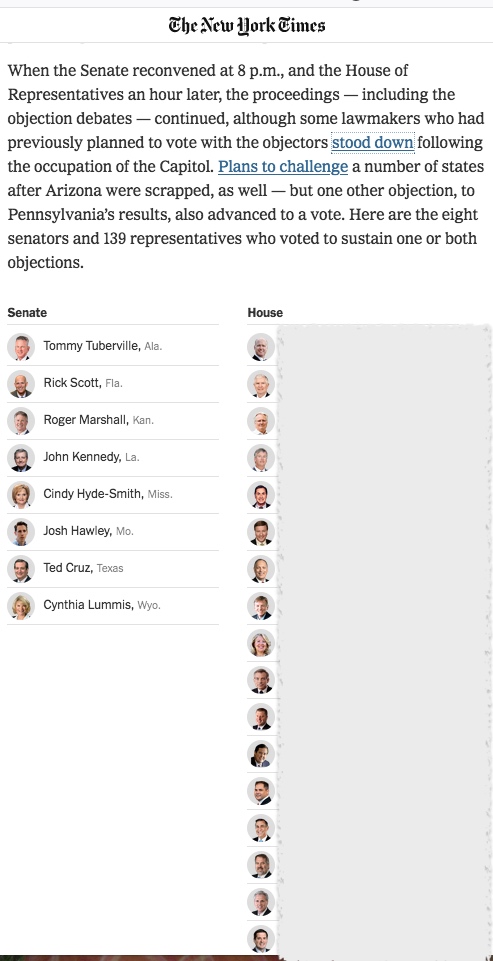
The Senators after whose names I’ve appended a question mark do not appear to have voted to object according to the New York Times, but they were not included in the AP statement I linked to above.
139 Members of the House of Representatives voted to object; their names are included in the NYT link above.
For those who haven’t followed the news, I’ll include the relevant snippet of Trump’s speech that literally instructed his supporters to march on the U.S. Capitol Building. It should be noted that the man himself was lying when he stated that he would join the protestors in that action. Trump went back inside the White House and is reported to have spent the afternoon watching the chaos he’d instigated on television.
“…we’re going to walk down to the Capitol… I know that everyone here will soon be marching over to the Capitol building to peacefully and patriotically make your votes heard today.”
—Donald Trump’s speech of January 6, 2021 as reported on Snopes
* Seven states formed the Confederacy, seceding and initiating the U.S. Civil War: South Carolina, Mississippi, Florida, Alabama, Georgia, and Louisiana, followed shortly thereafter by Texas.
The short-lived Confederate States of America added Virginia, Arkansas, Tennessee, and North Carolina to total eleven states. Slave states Missouri and Kentucky were acknowledged as members, but neither officially declared secession. The Confederate Territory of Arizona is also worth remembering.
Half of the Senators I’ve called out in this post for their reckless, Constitution-violating actions hail from states with a history of rejecting the rule of U.S. law. Three of the others represent states did not yet exist as of 1861: Oklahoma, Montana, and Wyoming.

 I ask this sincerely, with no desire to engage in polarized internet snipe-fests, but in the spirit of attentiveness to what government services various individuals might deem “necessary” and which are “overreach.”
 Rome, civilization par excellence, did not feel that it owed average citizens the protection of civil police. The military kept order to an extent that suited the needs of the state, but there was no one to call when your silver was stolen. It wasn’t until the great republic became an empire that Augustus formed the Praetorian Guard in 27 BCE… to protect himself.
 What follows is a quotation from near the end of the novel, but I don’t believe reading it out of context constitutes a spoiler for the plot. I’m putting it “below the fold” in case any reader feels differently and prefers to stop here.
 I send cards sometimes; other years, I don’t get around to it.




 I am a patriot.
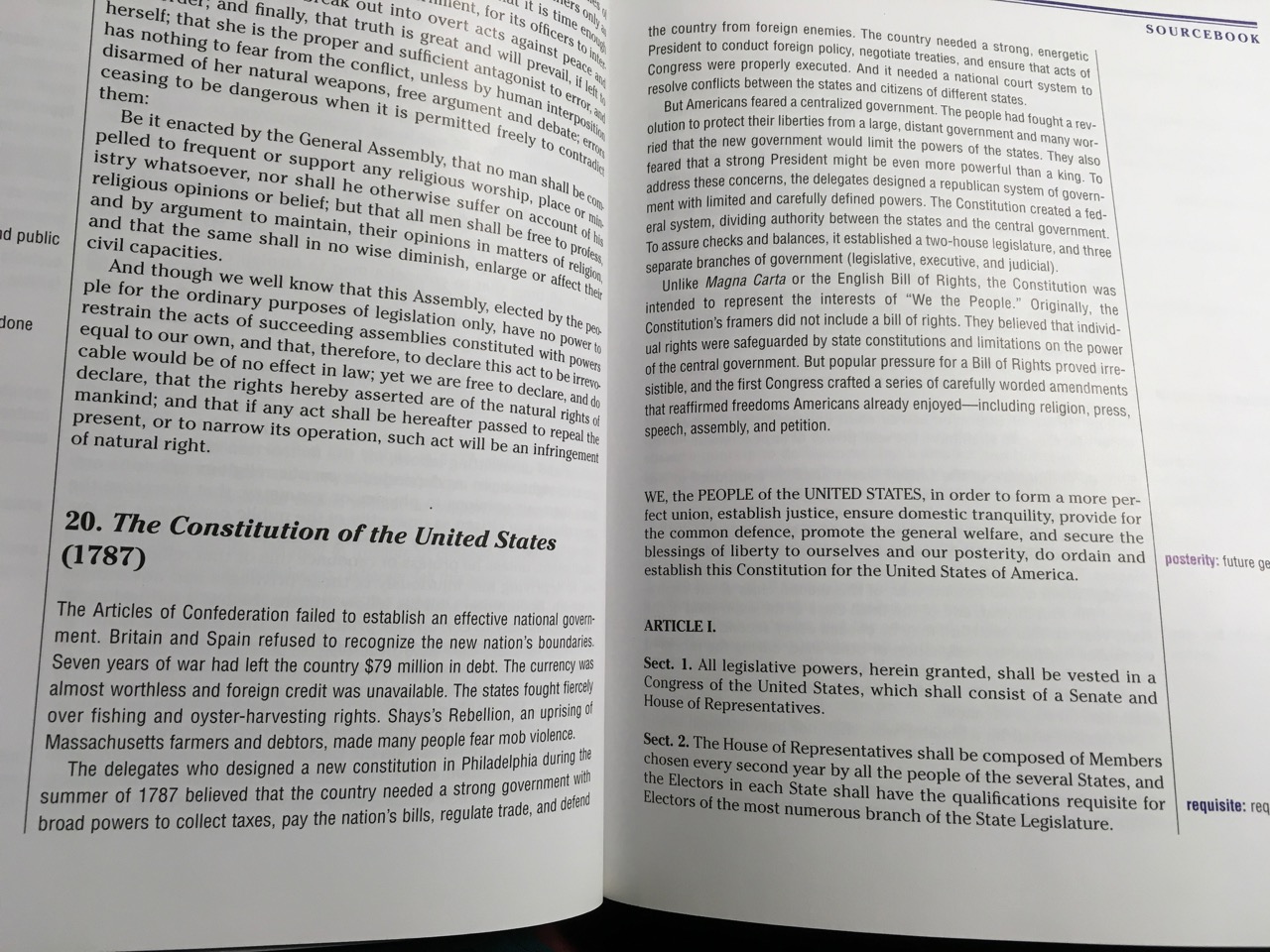 You cannot love America while wiping your nose with its foundational documents.
 Two thirds of Americans voted in 2020; that’s
 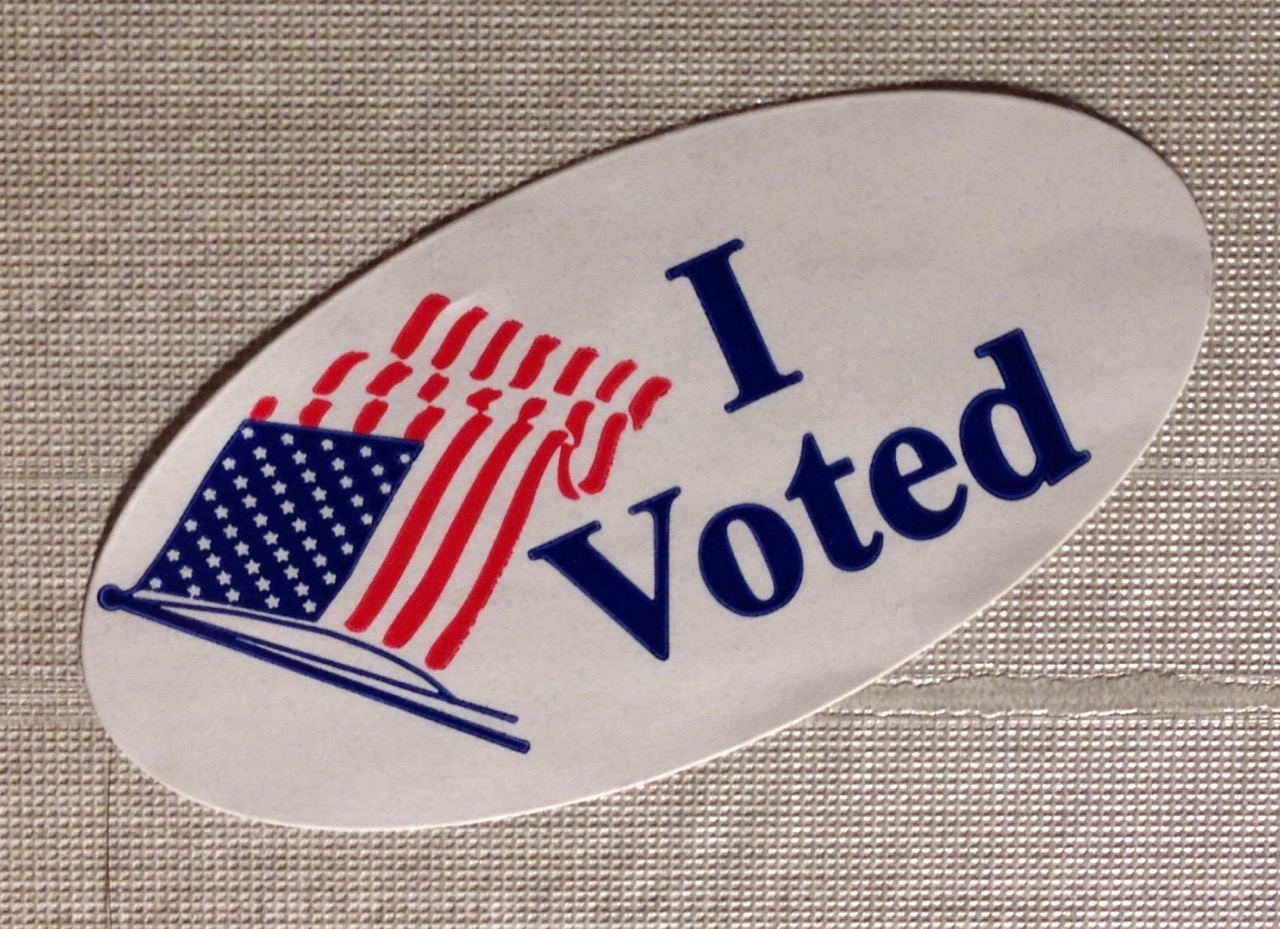 If you live in a district with a recalcitrant elected official, speak up as a constituent and demand that s/he acknowledge the will of the people. Take note of who’s doing his or her job, and whose back remains turned to what can be credibly described as
  Really Wonderful Things