Expressing gratitude for delivery drivers with snacks

In March, I hung a sign on our mailbox, thanking the postman* for working as a then-unknown virus blossomed in our metro area from hundreds of cases to thousands over the course of a few weeks.

Most of us were sheltering in place; he faced the world every day. He’s a gentleman who looks to be approaching retirement age. I wanted him to know his service to our community was not going unnoticed.

Green foam sheet saying Happy Holidays & Thank You to essential delivery workersHere are photos of my new, similar-to-what-I’m-talking-about, winter Happy Holidays gratitude sign. The first one was pink with flowers in honor of the approaching spring. Also flowers, like the holly I’ve sketched here, are easy to draw even without artistic talent. Both were drawn with Sharpie marker on EVA foam construction material to withstand the elements.

Though I’d exchanged pleasantries with our mailman pretty regularly, and friendly waves often, he took time from his rounds to come to our door and acknowledge our well wishes. Our letter carrier told me he’d posted a picture of our little sign to his social media, he felt so touched. He wanted other postal workers to see that people cared.

It mattered, to our most regular delivery driver, that we had made an effort on his behalf.

Thanksgiving give thanks - 1The pandemic has raged on, waning over the summer here in New England, and waxing again under the current punishment of the second wave. Essential workers carry on, and delivery drivers are keeping my family—which includes two septuagenarians with pre-existing conditions and a child with asthma—fed, medicated, and able to enjoy many of the usual trappings of the winter holidays we celebrate.

Without these men and women, business would grind to a complete halt. Never mind those of us who choose and can afford to shop from home; without deliveries, there would be no parts to assemble in factories, no flow of goods or services, no products to buy on the shelves for those who still prefer to visit stores in person.

Delivery drivers are the pulsing lifeblood of modern society. I’m grateful for every one of them, for showing up at work, for keeping our economy functioning, for taking on personal risk to allow me to protect the vulnerable members of my family.

Words alone can’t express the depth of my gratitude!

Winter/Xmas/Hanukkah decorated box of snacks with note of thanks to delivery driversHere’s one tangible way that I’m saying thank you to the drivers who serve my community.

I got the idea for putting out snacks from the internet. I decorated the box with scraps of wrapping paper in hopes the festive decoration would lift spirits while the calories in the snacks nourish bodies. I tried to include a mixture of sweets, savory, and tangerines for a bit of healthy.

Gratitude sign text: Delivery drivers, please take any snack you like as a token...I was a little surprised, actually, by how easily I found an array of grab-and-go snacks in my pantry. The cessation of packed school lunches has left me with more “extra” individual serving items than I might have in normal times. Some of these items were included in a gift basket from a colleague, the cereal was one type in a multi-pack that my family didn’t go for, the kosher doughnut came in a Hanukkah Cheer package we received from a local Jewish group.

Pile of moneyThe internet—and the official sites for the United States Postal Service, FedEx, and UPS—offers conflicting advice on whether and how one may tip professional delivery drivers. Officially, cash seems to be a no-no, or at least strongly discouraged; off the record, I know some drivers sometimes accept gratuities of money or gift cards.

espresso with foam art served with sparkling waterIf I were going out, I might buy a dozen or so small denomination gift cards for places like Starbucks or Dunkin’ Donuts that abound in our area. $5 cards to drive thru restaurants seem reasonable, but I hesitate to offer gift cards that may be against the rules for drivers to accept.

I suspect they would be taken, and appreciated, if I had some to leave out; I’m just rule-abiding, perhaps to a fault, but I offer the idea to my renegade readers.

Insulated thermal carafes labeled Hot Water and CoffeeI wish I could think of a hygienic way to offer a warm drink on cold days right at my door, but leaving out a flask of hot coffee seems unappealing while a contagious virus is circulating.

goSun oven bake cookies from prepared dough - 4If my snacks go quickly and appear popular, I may also try home baked items I don’t know if drivers would risk a homemade muffin in a baggie, but I’m comfortable with the waste if those go untouched. I’d rather keep offering something rather than nothing if my packaged options dwindle. I’ve committed to shopping as rarely as possible as our hospitals fill and COVID-19 case counts continue to rise in our region.

If you’d like to do something similar, I’ve uploaded a PDF of my gratitude sign. Feel free to print it and use it yourself, or adapt it in any way you’d like. I laminated mine because I have a plethora of home business equipment, but a sheet protector offers some protection from the elements, and even a layer of tape extends the life of paper in light rain.

It isn’t important exactly what you do. But, if possible, find some way to thank the delivery drivers making daily life possible in your area. Every one of us has been touched by their contributions.

* The same person who has routinely delivered our mail for many years at this address. I’m thinking of a particular man, hence my choice of the gendered job title.

I wish I had some single serve drinks to include, but my feelings about wasteful packaging keep me from buying many of those. I didn’t have any on hand to include. Any beverage I might offer would have to be schlepped to my house by a delivery driver; is the lugging of liquids worth it in this case? I’ll admit; I’m a bit conflicted on that point.

I would affix a label matching my home address to offer confidence I wasn’t a creeper, up to no good, trying to poison someone!

Roasting vegetables is the right recipe for pandemic winter

  • Hate to cook?
  • Trying to shop less frequently because of a pandemic?
  • Know you should eat more vegetables, but enjoy almost every other food more?
  • Spending more time working and/or learning from home?

If, like me, you tick all these boxes, you should start roasting root vegetables as soon as possible. Best of all, you will have an excuse to purchase a rutabaga. If there’s a vegetable that’s more fun to name, I have yet to hear of it.

Say it out loud: ROOT-uh-BEG-uh! You’re smiling now, right?

Plate of oven roasted carrot, beet, turnip, sweet potato and onionYou will need access to an oven or a toaster oven to cook veggies this way. Beyond that, all that’s required is about one hour and:
  • a sheet pan or other wide, shallow, oven-safe cookware
  • oil
  • salt or other, more sophisticated seasonings
  • vegetables
  • cutting board or plate and a sharp knife

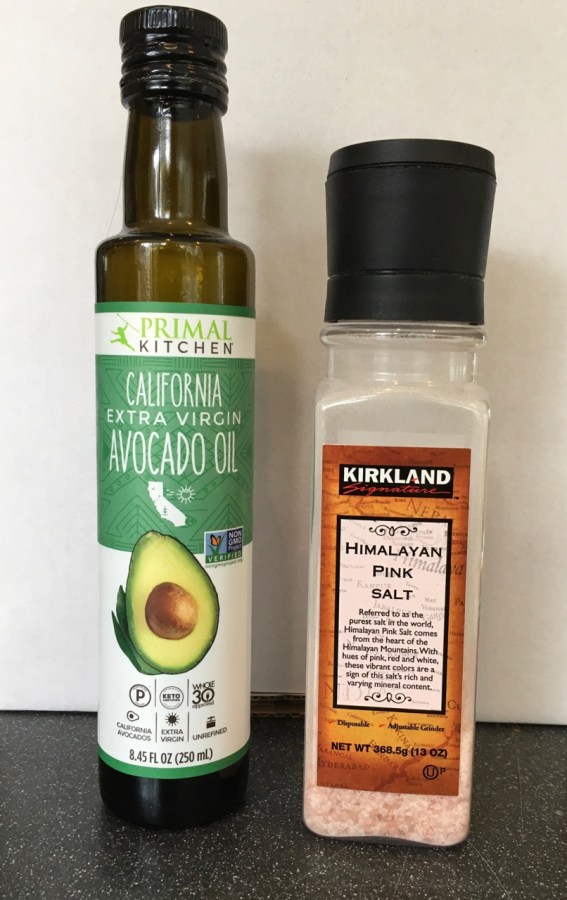
Primal Kitchen avocado oil and Kirkland Himalayan pink saltYou can roast many other things, but the long storing properties of most root vegetables make them ideal for a COVID-19 era menu. Broccoli comes in little bunches; potatoes are sold in great big bags. Shelf life is the main reason for the discrepancy.

Root vegetables in storage boxes and bags: carrot, beet, turnipHere’s a nice resource discussing healthy root vegetables and their nutritional characteristics.

In normal times, many people rush home after work and need dinner on the table within minutes. Roasting is a long, slow process, ill-suited to that kind of lifestyle. Now that a greater* proportion of us are working from home due to the pandemic, however, this kind of “prep it, put it in the oven, then ignore it for an hour while you get back to work” recipe is a lot more accessible.

I was introduced to the concept of roasting root vegetables by a functional nutritionist to whom I was referred by my primary care physician. I suspected that my diet affected the symptoms of my autoimmune condition, but I struggled under the burden of cooking every bite of food for myself given my near total lack of enjoyment of time in the kitchen. This was the best idea the nutritionist gave me from a fairly wide array.

Before I started roasting vegetables, I didn’t buy turnips, rutabagas, or parsnips. Now, I usually keep at least a couple of each on hand because it is so easy to prepare them this way, and the results invariably taste good. Note that these are not vegetables I typically enjoy otherwise.

If you’d like a professionally produced set of step by step instructions, feel free to carry on with Epicurious instead of my low budget advice. Otherwise, here’s my 2 ¢ as the laziest possible chef.

Recipe for roasted root vegetables

  1. Pre-heat your oven to 450° F if you remember; if you don’t, allow more cooking time. This is not a fussy recipe.
  2. Wash all your vegetables, and peel if you prefer.
  3. Chop vegetables into uniform, small-ish pieces.
  4. Pour—or brush with a pastry brush or a bit of paper towel—a thin film of oil onto your baking sheet, lined with foil or a silicone mat first if you prefer.
  5. Spread vegetables in a single layer on prepared baking sheet.
  6. Drizzle with a little oil, and sprinkle on salt and/or pepper, Borsari, or other dried herbs or spices.Borsari original seasoned salt bottle
  7. Roast vegetables, lowering heat to 425° F for about 20 minutes. Check at the 20 minute mark, stirring and flipping pieces over. Continue roasting in 10-15 minute increments until you think they’re done. Look for some darkened edges, or note when the sharp odor of raw vegetables is replaced by the sweeter scent of cooked ones. If in doubt, a total cooking time of 45-60 minutes is probably about right, and most vegetables won’t hurt you if raw or under-cooked, unlike meat.

Roasted vegetables on Silpat lined half sheet panVeg roasting tips from an unseasoned cook
My most often roasted vegetables are sweet potato, carrot, beet, and parsnip, but I use turnips and rutabagas pretty often, too. I have yet to regret roasting any vegetable, but, in my experience, the watery ones seem like extra work for less deliciousness.

Unless you’re cooking for my husband or a similar philistine, always include one small onion with your other vegetables. Caramelized onion is just so tasty unless you hate onions, and maybe even then, and even a small amount lends tons of flavor to the entire rest of the tray of vegetables.

Chop up your vegetables to the size you like to eat. I make little pieces that look like breakfast hash for myself; my husband prefers heftier chunks, a bit larger than dice. I can cook both in the same oven for about the same amount of time with no ill effects, so I’d say the size is purely a matter of personal taste.

Don’t crowd the pan! I always do, and the results will be softer, more “steamed” vegetables with less of the really yummy, caramelized, crunchy bits. Use a larger pan than you think need, and you’ll get the tastiest results. If, like me, you prioritize getting that last dish into the dishwasher instead, just recognize that a smaller batch might turn out better.

Proper chefs on the internet tell me I would get crispier, more delicious vegetables if I used an unlined baking sheet. I use a Silpat non-stick silicone mat anyway. Again, I prioritize easy clean up, and the food ends up good enough for me either way.

Try roasting vegetables you don’t think you like. You may feel differently about them once roasted! I do not normally care for beets or parsnips, but I like them roasted. I like raw carrots, but hate them cooked moist say in a soup; I love them roasted. You can see where I’m going with this. Your experience could differ, but this is a wonderful way to try eating unusual produce that might not normally appear in your diet. Most of us benefit from the addition of greater variety in this category.

Offer roasted vegetables to your kids, possibly not mentioning exactly what they are until they’ve rendered a verdict on taste. Make sure the distinct varietals are different colors so you can identify favorites for future reference. Encourage your kids to eat a whole rainbow of foods. Let them select spices from your cupboard and try roasting with them, possibly by sniffing each bottle until they find one that smells tempting.

My favorite is Borsari Original Seasoned Salt. This is the only “mixed” seasoning in my spice cupboard. It is delicious on duck… and everything else I’ve tried it with. A Whole Foods employee recommended it to me c. 2003.

* 7% of Americans reported being able to work remotely prior to the pandemic; as of October 2020, one third of us are working from home all the time, and 25% report doing so some of the time. More than half of Americans have worked from home for at least part of the pandemic.

4 tips to help kids wear masks safely at school

I’m a volunteer safety monitor during lunch and free time a.k.a. recess at a school serving grades 1 – 8. Aside from keeping the usual eye on the kids, during COVID-19, this job also emphasizes maintaining social distance and wearing face coverings properly.

With a few weeks of the school year under my belt, here are my top tips for parents who hope to help their kids keep their masks in place while they play.

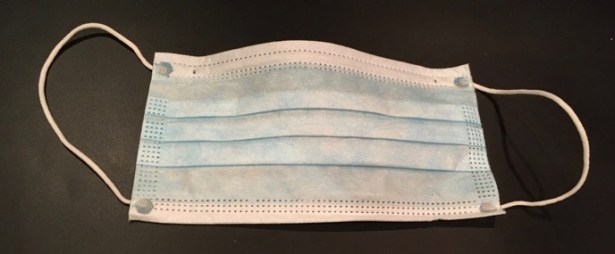
Disposable surgical maskMy top four playground observations regarding children and masks:

  1. Fit matters
  2. Fabric matters
  3. Washing matters for re-usable fabric masks
  4. Instruct kids on how to sneeze before they need to know

Continue reading

Language learning gets silly: Duolingo and a love of mayo

I’ve read on the internet that some people think the worst part of Duolingo is its silly sentences.

Really? Wirklich?

Silly sentences are my very favorite part!

Screen shot of DuoLingo lesson about love and mayoA recent example?

Ich liebe dich nicht, ich liebe nur Mayo.

If you guessed that this sentence means:

I don’t love you, I only love mayonnaise,”

you would be correct.

Now the question becomes, do you love this sentence, or do you hate it?

It’s okay by me if you love this sentence and you love mayonnaise. This is a place for Really Wonderful Things, not judgement, at least so far as condiment choices go. Just don’t expect me to join you in tasting spicy hot sauces.

Condiment bottles: ketchup, mayo, mustard, harissaAt least one language learning blog complains that nonsense sentences do budding polyglots great harm. No one needs this sentence! Why study this?

And yet, for me, the process of practicing vocabulary can get a little dull. By the third repetition of the same phrase, I start to act out, if only in my mind.

Okay: more often than not, I act out outside of my mind, and by proclaiming dull stuff in loud, silly voices from my desk. My kids just adore this behavior while undertaking distance learning, as you can imagine…

Music iPod headphonesI suppose that there are dutiful users of Pimsleur and other audio language study programs who slog cheerlessly through the spaced repetition of those early, monotonous phrases.

My name is X.

I am from Y.

What is your name?

Do you come from Y?

I speak Z.

Do you speak Z?

For me, this inevitably leads to acting out these phrases in the most extreme accents and postures I can manage whilst attempting to approximate the correct “target” foreign accent in a Monty-Python-esque masquerade.

When I’m laughing, I’m learning. Rote repetition turns into a bit of fun. If I’m internalizing the correct grammatical construct, does it matter if my sample sentence borders on insanity? I expect there are lunatic speakers of every living language.

Duolingo loves to talk about ducks and what they do. It’s quirky, but I think it is actually one of the better aspects of the program. The weirder the sentence, the more attention I end up paying to an otherwise predictable practice question. Contrary to what the critics suggest, I can see differences between how the platform presents unique languages that reflect each diverse culture.

I have less loving things to say about the evolving intrusiveness of ads in the ecosystem. Duolingo is far from perfect, but very much worth its price: free.

With a little sprinkle of silly spice, Duolingo has recently kept me committed to a 58 day streak where I’m practicing two to four languages every day. There are worse ways to season one’s studies!

My level varies between 1 and 3 between each of the languages I study on Duolingo, so I’ve seen more than just the most basic introductory lessons for at least German and Spanish.

I would advise, however, that beginning a completely new language on Duolingo seems unlikely to be satisfying or particularly effective, especially where a new alphabet is required. I’ve had classroom exposure to both Russian and Hebrew, but my alphabetic weakness renders the lessons too hard on the mobile platform where you get five strikes (lose 5 ♥) and you’re cut off for the rest of the day. I only study non-Roman-alphabetized languages on my desktop computer with Duolingo for that reason: you don’t run out of hearts on the desktop! Even French stymies me in writing; silent letters are my kryptonite. Sigh.

LunchBots stainless containers for life, even lids lost 10 years later

It can be hard to splurge on expensive items designed to last a lifetime when cheap, semi-disposable alternatives abound in our stores. Their ubiquity makes them seem like the obvious choice.

For parents preparing to pack daily lunches for school, stainless steel and glass containers are a perfect example. I can buy a week’s worth of plastic sandwich boxes for the price of a single stainless steel one.

Screen grab shows $17 for stainless sandwich box vs $8 for 3 plastic ones

Kids lose things. Kids break stuff. Kids aren’t necessarily careful with something just because Mom paid more for it.

And, after all, they are just children! While I want mine to grow up to be careful stewards of their possessions, I’d also like for them to be able to enjoy a meal without fretting about my reaction if the fancy new lunchbox gets dented or scratched.

In spite of such obstacles, the LunchBots brand proved to me this week that I was wise to invest a bit more cash in their products vs. the cheaper plastic competition in 2010. They stand behind their products, even 10 years after purchase!

LunchBots is one of a few companies I’ve personally patronized that opened for business c. 2008. That’s when plastic-as-poison was gaining mainstream steam, leading suburban moms like me to look for non-toxic alternatives to plastic food containers laced with BPA and other endocrine disrupting* compounds that may or may not leach at dangerous levels into what we eat and drink from them.

In 2020, LunchBots replaced a ten year old lid that my child lost. They didn’t charge me a cent, not even the actual cost of mailing it!

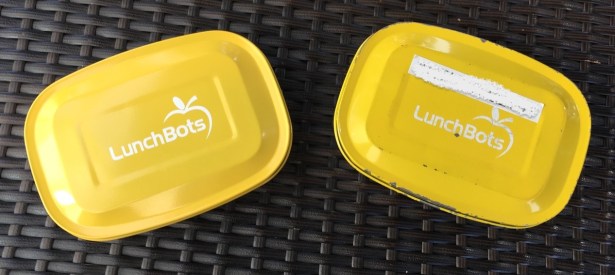
Replacement LunchBots Pico lid next to well worn 10 year old version Continue reading