
COVID-19 tipped at least half the world over, and then we all got to sort through the mess and try to sift a life of our own out of it. For parents, remote learning—and some emergency, un-planned-for home education—has been one of the biggest transitions to negotiate.
 Home schooling challenges those of us who chose it enthusiastically; it’s an even taller order for those reacting to unprecedented interruptions in modern school systems. Finding the right resources can make or break parent-led education efforts. Today I’ll share my child’s experience with foreign language programs offered by Concordia Language Villages (CLV).
I’ve posted in the past about attending in person “family camp” at CLV’s German language facility, Waldsee. Learn more about summer camp here.
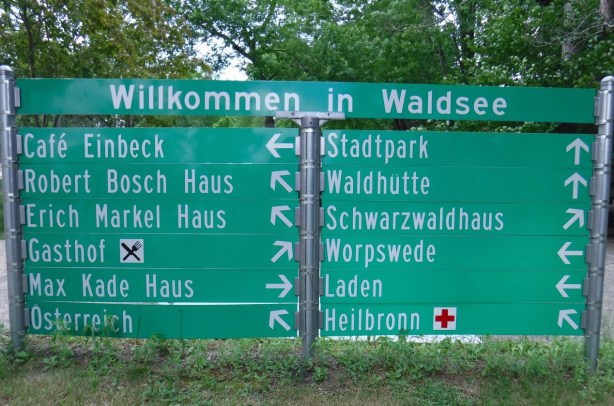
Fast Facts about Concordia Language Villages’ online “Virtual Village” programs
I’ll format this as fast facts* in an attempt to efficiently answer the unfamiliar reader’s likeliest questions.
I’m rushing to post this before the spring semester begins for academic credit programs, because attendance is vital—and mandatory!—for those looking to earn official credits. I’ll address any follow up questions in the comments, or add an update if I discover I’ve missed covering any major questions.
What is/are Concordia Language Villages?
In 1960, a Concordia College faculty member suggested an innovative immersion program for teaching foreign languages to children. Each language gets a summer camp “village” in Concordia’s home state, Minnesota, where participants hear, speak, live, and eat according to their target culture.
Visit CLV’s Who We Are page to hear their own full answer to this question.
The key point here is the language immersion approach. Showing up at camp, kids—even complete beginners—are immediately plunged into a monolingual world in their chosen target language. CLV has spent decades building their unique pedagogy to support an efficient transition that brings children from their comfortable native language to at least basic functionality in a new one.
It’s amazing how fast that can happen in a prepared environment!
Which languages are taught at CLV?
Fifteen (15!) languages are offered in CLV’s full program, but I’ll stick with those available in virtual form in 2020-21 for this post. Those are, in alphabetical order:
- Arabic
- Chinese
- Danish
- Finnish
- French
- German
- Japanese
- Korean
- Norwegian
- Portuguese
- Russian
- Spanish
- Swedish
It is important to note that only the most popular of these languages are offered in the longer term, more intensive sessions at CLV.
What kind of online class is a “Virtual Village”?
First let me clarify that CLV is offering three types of virtual experience for kids. There are
- Clubs,
- Classes,
- and Academic Year High School Credit programs.
Some languages offer adult learning and there’s also German family programming. Since I’ve not tried those, I can’t offer a review, but my in person Family Camp experiences with CLV have been excellent.
Most languages only offer Clubs. These meet once a week for one hour per week, and sessions are six weeks long. Consider this a playful supplement to home or school education. Clubs make sense for kids who still attend hybrid or remote school who would like to practice a foreign language or gain exposure to a new language they may be curious about studying.
CLV Classes are akin to many other “online home school” courses I’ve found for my own kids. These meet twice a week for an hour per session (30 minutes for grade schoolers); as with Clubs, a Class is a mere six week commitment.
High School Credit virtual village programs are offered in:
- French,
- German,
- Italian,
- Japanese,
- Norwegian,
- and Spanish.
The spring term starts soon—January 26, 2020—so don’t hesitate if you want to enroll your teen.
Because the High School Credit program is accredited† and offers 180 or more hours of instruction for the full year, home schoolers can rely upon it as a complete unit of study. When my son applies to college, for example, CLV’s Virtual Credit German class will appear on his “high school” transcript alongside the courses he’s taken at local colleges.
Pupils enrolled in institutions may be able to transfer this credit to their school in order to advance levels or free up time for taking other courses, but that would be at your individual school’s discretion. I’ve had arguments with friends about the value of credit programs outside of public school enrollment when said school disdains anything they didn’t offer themselves. I can’t prove it, but I’d guess colleges will always be more impressed by the kid who studied anything extra vs. those who stuck with the routine offerings of narrow-minded, parochial districts.
Who can join Virtual Village sessions?
- Clubs are open to kids age 8-18
- Classes are offered for Elementary (30 minutes/week), Middle, and High school levels
- and Academic Year High School Credit programs are for 9-12th graders.
Is a CLV virtual offering worth the steep price tag?
My family’s answer is a resounding: Yes! That doesn’t mean the numbers will add up‡ so well for every family.
The basis for my answer? Our older child attended two weeks of Virtual Villages summer camp, in Russian and German. He has been enrolled in an academic credit program this fall, and we opted to continue with the spring session based upon the program’s quality.** Our younger child will be joining a CLV Club in January 2021.
Virtual “summer camp” weeks in 2020
One week of CLV Virtual summer camp cost $325 in 2020. We were so grateful they pulled together a program at all, and my son enjoyed participation online better than he did going in person. Note that this opinion comes from a true introvert!
Online “camp” was not really the equivalent of a traditional week on site at one of language villages, however. It wasn’t nearly as immersive. Then again, it was 1/3 the cost.
Academic Year Virtual High School Credit for 2020-21
By autumn 2020, CLV started hitting its virtual stride. Probably because there was a lot of relevant course material available from their history of hosting on site academic credit programs, this experience has been a valuable one for my home schooled kid. There are two class sessions a week, plus required homework assignments to be completed in the meantime.
A couple of mandatory book purchases were required for the year to the tune of about $35. Admittedly, I didn’t follow up on more esoteric borrowing options after ascertaining my local library was unable to supply a copy of either European title.
Be aware that CLV credit programs cost more than in state tuition for courses at our local community college. Our local community college doesn’t offer German or Russian, however. It’s more aligned to the cost of private college tuition: expensive! That said, if you have a younger teen or concerns about how your child would fit in with a mature college crowd, CLV’s program is designed specifically to educate secondary school students.
In a good language class, it’s vital for the students to mix and chat with each other. Not all 14 year olds are ready to engage in casual conversation with college students.
I’m very comfortable describing the educational value of Concordia’s unique methodology as being equal to or better than my own experience of college level language courses, which I’ve taken at three universities, one public, two private. My experience at CLV family language camp compared favorably to the most challenging, stimulating class I ever took: a semester of full immersion Japanese at Cornell University.
For dollars and cents specifics, take this comparison I pulled off the internet: Harvard University offered a 7 week, virtual due to the pandemic Chinese language class (4 college credits) for $3,340 in 2020. CLV’s Japanese language spring semester program lasts 24 weeks, offers one “high school credit,” and costs $3,860. In my planning notes from previous years, I’d noted that the CLV summer “sleepaway camp” credit for which the participant would earn high school credit cost $4,830 for the four week camp.


Comparing these programs is more apples-to-apples than looking at less sophisticated local offerings, though lucky you if you can find something better and cheaper in your neighborhood!
CLV Classes
For those who can’t even imagine spending so much on an extracurricular program—or for home educated kids who already use other resources to form the bulk of a year’s language credit—the CLV Classes might be a great fit. This is the one offering in CLV’s arsenal for which I haven’t enrolled either of my kids, so I’ll just share the posted details and price to put it in context.
A Class will meet twice per week. It costs $395 for a six week session. There are two more sessions available for registration this academic year in Spanish, for example. That would give you (2 hrs × 6 weeks) of instruction, possibly multiplied by two if your child does both sessions.
As a home educator, I use the “Carnegie unit” method of approximating how much time my kid should spend to equal a high school course. That means 120 hours of instruction. If you want to create a home school language class for your child, you would want to spend another 96 hours on other work in that language to roughly equate to a school class if you’ve signed up for two sessions of CLV Class; if this were just a spring semester course, cut that down to 36 additional hours.
I offer these numbers as a ballpark for concerned parents who didn’t intend to be home schooling, yet find themselves a year into a pandemic with under-educated children. I highly recommend free resources like Mango and DuoLingo for language skill supplementation; along with Mango access, I get Pimsleur audio CD’s from the local library for my home educated kid.
I’ve written about language acquisition tools for myself here and here and here. Presumably these same resources would be useful to teens and young adults.
CLV Club for extra-curricular, after school enrichment
Finally, the least expensive, least intensive CLV offering is the Club product. Clubs meet for one hour per week over six weeks; each session costs $195, and there are two more sessions this school year. I have enrolled a kid in one of the clubs, but it doesn’t start until tomorrow, so I can only describe the claims for now.
 Club will meet once per week, after school. It’s a 60 minute session, and it’s designed to be fun and enriching. My younger child gets a little language instruction at school, but, like most American middle schools, it doesn’t match my idea of academic rigour. I’m not expecting the Club to replace school language instruction, but to enhance it. I have a lot of trust in Concordia’s ability to make that happen.
Bottom line: why give CLV your tuition?
Growing up a middle class nerd in Oregon, if I’d have heard of the CLV program, I would have begged to attend. My parents would have told me it was too expensive! I’ve heard that a famous daughter of a president went, but I don’t have evidence for that assertion.
I highly recommend CLV’s summer camps for families that want to learn languages together, and for outgoing kids with a mild- to moderate- degrees of interest in foreign languages, or introverted kids with a passionate interest in the same. I’ve heard it argued that a family should just travel to the target nation for the same amount of money… but that will be less effective IMHO if you head to a nation where average adults speak excellent English when compared to your minimal-or-less knowledge of their tongue.


CLV has spent over 50 years developing a highly effective process for coaxing children into assimilating a new language and culture with all of their senses. The virtual programs are not quite as robust as the live experience, but they still represent an enthusiastic and thorough offering that brings knowledge to kids wrapped in a joyous appreciation for the value of cultural immersion.
The educational quality is undeniable, and the level of fun is pretty good, too. If schlepping your kids to Minnesota for an expensive camp was never a possibility, consider taking advantage of this year’s virtual offerings like my family has. Perhaps you will be as sold on CLV’s value as I am. Either way, your child will definitely further his or her knowledge of a foreign language, so long as s/he shows up and takes part in the exercises.
♦
* Because anyone who has visited my blog before will know that I wasn’t blessed with a gift for brevity. There’s always more I want to say!
† Accreditation by Cognia
‡ For example, we would be in a position to consider enrollment in a private high school if our child hadn’t preferred home education. Subtracting tuition for CLV and community college courses, we still come out ahead financially vs. the full cost of prep schools in our region.
** Those who have studied German through the widely available Goethe Institut program will appreciate my son’s positive comparison of the CLV academic credit program with his prior level A2 Online-Kurs with that institution founded by the German government


 For me, a short list of targets I know I can meet provides fuel for my willpower engine. If you feel you’ve “failed” at New Year’s Resolutions in the past, consider trying this method for yourself. Little victories may also prove to be your catalyst for bigger wins.
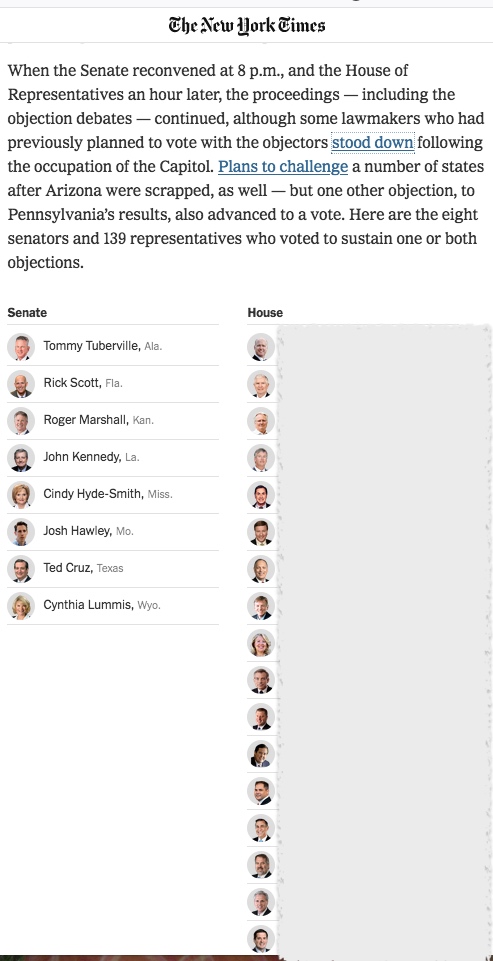
 The Senators’ statement pretends that there remains valid and significant contention about the results of our November 2020 election. These men and women are intentionally ignoring the fact that our courts have already acted in accordance with the law and found no legal justification for further action regarding purported irregularities.
 What follows is a quotation from near the end of the novel, but I don’t believe reading it out of context constitutes a spoiler for the plot. I’m putting it “below the fold” in case any reader feels differently and prefers to stop here.
 The image on Vermont Cranberry Company’s bottle is obviously an homage to
 Really Wonderful Things