Countertop mini dishwasher offers quick fix for dead appliance in pandemic-mode home

It is only with tongue firmly in cheek and a deep respect for the fact that I have enjoyed a relatively safe, comfortable, and very happy life that I state—cue swell of melodramatic music—the worst possible thing has happened:

My dishwasher died, mid-pandemic!
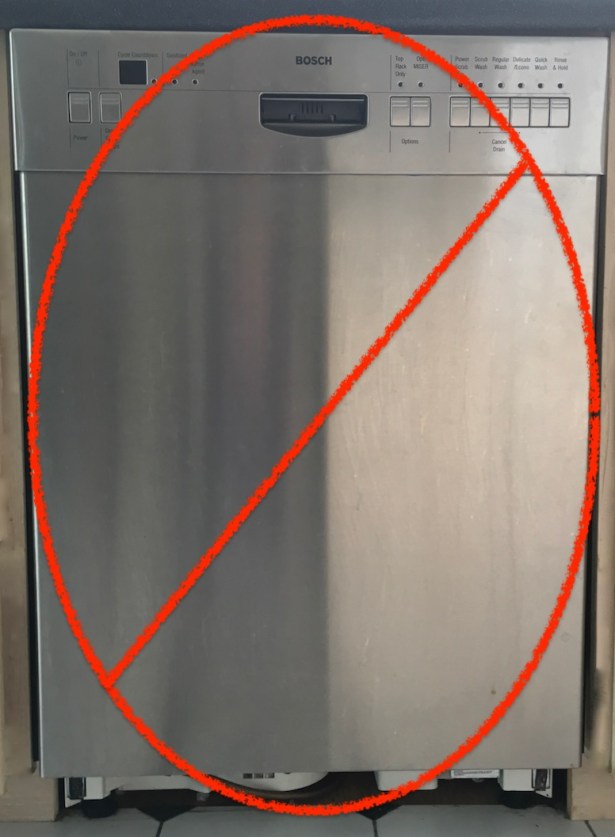
Red NO symbol crossing out broken stainless steel appliance

My dishwasher died, mid-pandemic!

This feels like a catastrophe because we run that appliance roughly four times most days with everyone working and/or learning remotely from home.

The Bosch dishwasher we got with this house no longer powers on following a few weeks of intermittent-but-increasing button-press failure. Our non-expert analysis of what was under the hood kick-plate didn’t reveal any obvious reset to try on our own. We have ordered a replacement.kickplate removed from stainless steel dishwasher showing hardwiring and soldered copper pipe instead of flexible tubing

For those who don’t already know me well, now is when I confess to being a thoroughly disinterested cook. The one time I directed a full kitchen remodel where my preferences reined over popular opinion, I bought almost literally the cheapest electric coil top! stove from Sears whilst splurging on a high end, German-made Miele dishwasher.

My priorities may not be common, but I’m quite clear on what they are.

The dishwasher is the most used appliance in our home excepting the stalwart, always-on refrigerator. It follows only central heating, running water, and refrigeration in my estimation of the crowning virtues of everyday technology.

Pandemic shortages & risks still affect appliance purchase, delivery & installation

Fortunately, more than half of our household of six is at least partially vaccinated, lessening the risk to us of having a plumber in to install a new machine. Risks to essential workers dealing with the public day in and day out remain much higher than those of their customers.

Since our atypical home includes a kitchen one story above ground level, we will also require delivery well inside the threshold. I imagine dishwasher delivery generally requires more than one single person. The model I chose weighs 107 lbs (48.5 kg.) That’s two more contacts outside our bubble.

Accomplishing this dishwasher replacement will mark the first time any tradesperson—let alone three outsiders—has entered our home since before the first shutdown began.

All of these health-preserving convolutions must also be viewed within the broader context of commerce in 2021. Plumbers were hard to book before COVID; getting one to show up now is beyond difficult.

Supply chains all over the world have been disrupted by the scourge of coronavirus infections. The Miele that I elected to replace my defunct Bosch SHU66C may have benefited in production from its maker’s domestic parts manufacturing, but getting the finished product from Germany to New England remains fraught with delays as of May 2021. The one I wanted due to arrive a few days after I contacted my favorite local appliance store is now back-ordered.

I’m not sure when I will get the new machine I’ve purchased, let alone how soon I can book professional installation by a qualified plumber.

I sought a short-term solution to maintaining household peace—and sanitation!—in the interim. A portable, countertop dishwasher is what I found.Aikoper countertop appliance on kitchen counter

Typical portable dishwasher requires standard faucets to accept adapter

I opted for an Aikoper Compact Portable Dishwasher with 6L Built-in Water Tank & Water Hose Inlet (Model KOP-DW2605A) ordered from Amazon.

Countertop dishwasher manual and warranty card

There were a few “portable” dishwashers available locally, but all were variations on the design I know well from my first apartment: full- or almost-full-size models that roll up to the sink and connect with a special “quick connect” adapter that screws onto a standard faucet. These adapters replace an aerator (i.e., a little mesh screen that twists off easily) and are widely available in hardware stores and online.

The issue with any of those models is that we installed a modern “pull out sprayer” faucet when we moved here.

Pull out spray heads are great for everyday use. I like the option for one fewer hard-to-clean protrusion from the countertop, eliminating the off-to-the-side sprayer I grew up with

Or, as we did in this home, integrating the spray function into the faucet itself frees up that existing counter cut out for installation of a plumbed in, multi-stage water filter. I find the tap water in our community distinctly unpalatable without filtration beyond a carbon block pitcher.

Either way, I didn’t want to change my self-selected faucet to accommodate short-term daily use of the countertop dishwasher.

My purchase of the Aikoper Compact Portable was also influenced by the fact that we have historically hosted at least one very large Thanksgiving banquet each year. I see this little machine as a way to more quickly zip through the multi-day process of cleaning multitudes of party dishes at holidays in the future.

For both cases, I would have to ditch the faucet design I prefer to accommodate use of most portable dishwashers. There’s no way I’m going to swap out my faucet in either scenario.

Tank based, compact dishwasher alternatives exist & solve common issues

On Amazon, I found a different portable dishwasher design.

Tank-based dishwashers like these seem to universally? include the option to connect via the adapter I’ve already described, yet they also incorporate a holding tank for the fresh, clean water that will be used to wash the dishes. A user can fill that tank via a pitcher or my preferred pull-out faucet, pouring water into the vented, screened hole on top after removing the loose-fitting white debris cap.

Once filled, tank-based machines complete their wash cycles without blocking access* to the kitchen sink throughout the run.

The included plastic pitcher and wide, flat funnel aren’t strictly necessary to manually fill the machine, but the funnel (marketed as the “pouring water assistant”) is particularly nice to have. Filling pitcher included with appliance, 1.8 L capacity

Since the pitcher is marked to have a 1.8 L capacity, you might expect that filling it just over three times and emptying into your dishwasher tank might be sufficient to prepare the appliance rated as having 6 L capacity. It seemed to require at least five pitchers-full the first time I ran the machine to test its functionality.

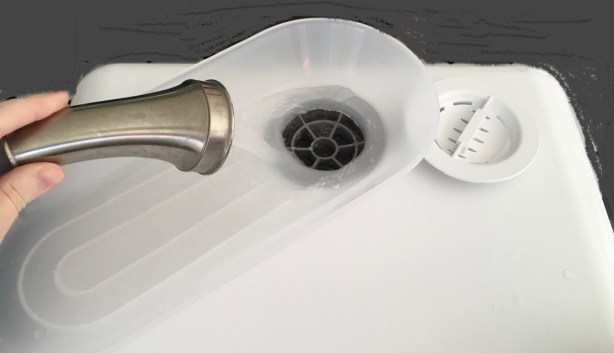
Filling with a pull out faucet sprayer is much more convenient, especially for those of us who lack hand strength and become exhausted easily lifting full pitchers of water. I found it annoying to fill the appliance via a pitcher.Filling funnel included with appliance
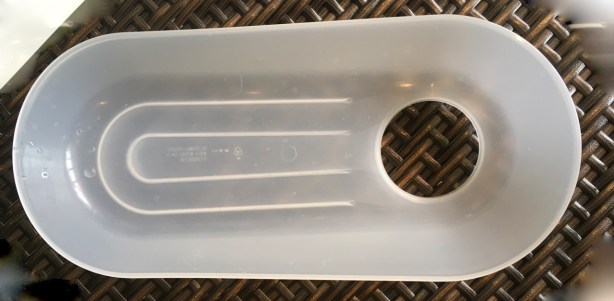
With the dishwasher sitting on a kitchen counter, it is a little bit high for me to reach over and fill, so I can’t see exactly where I’m aiming the water. The funnel helps channel every drop right into the receptacle where it belongs.Water flowing from pull out spray head into dishwasher filling hold
A 61 inch long water supply hose was included in the Aikoper box. The water supply hose has a right angle connection on one end which should help with keeping installation very close to a back wall. Remember that you will need a faucet adapter not included to install with this option.

If installing with the water supply hose option, your water pressure must be between 0.04 MPa and 1 MPa, per the Aikoper manual.

Because the water supply inlet and drain pipe outlet are set into an indented area at the back, bottom edge of the dishwasher and the supply hose has a right angle connection, the included hose should not require any additional clearance behind the appliance.

A side benefit of pre-filling the dishwasher with water, then letting it run without any connection to the household water supply, is that it eliminates that chilly scenario when a family member starts a built in model while someone else is showering.

In 2021, no one should live with plumbing that routinely scalds or runs cold, but that kind of annoyance remains common in many older homes.

Draining the used, dirty wastewater is also necessary. Tank-based dishwasher models like my Aikoper Compact Portable allow one to route the drainage hose into an adjacent sink or a large bucket.

The drain hose pictured was included in the Aikoper box. It’s about five feet long.

Because the water supply inlet and drain pipe outlet are set into an indented area at the back, bottom edge of the dishwasher but the drain hose has a straight connection, about one inch of additional clearance may be required behind the appliance if you’re trying to get it as close to a wall as possible. I have found replacement hoses with a right angle connection on Amazon, but I haven’t purchased one to confirm this gap could be eliminated.Ruler and cardboard showing gap between back of appliance and bent drain hose as if pushed back against a wall
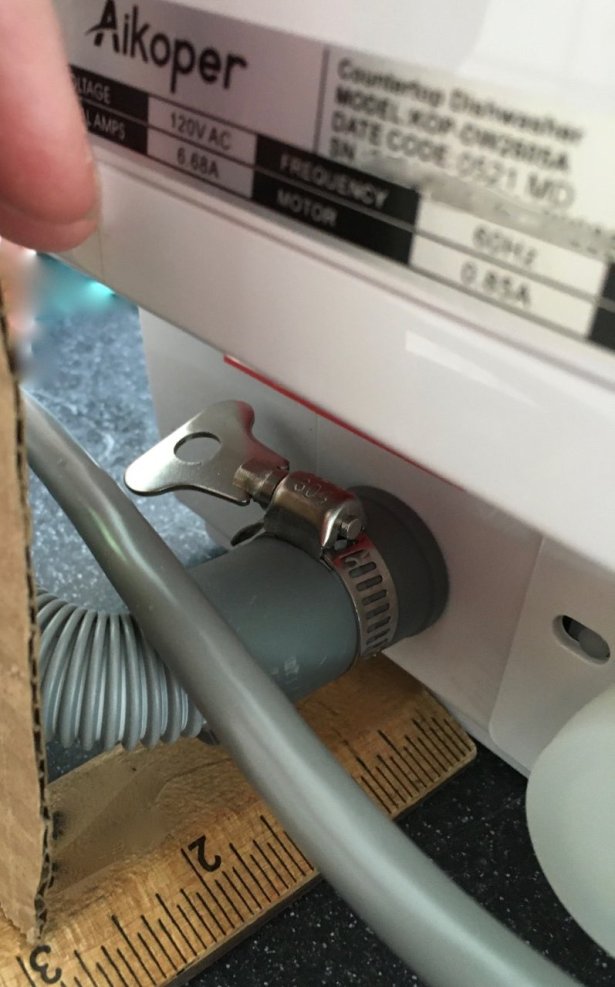
A small suction cup on the hose is supposed to keep its end inside your grey water bucket, but mine does not stay fixed to even the smoothest plastic waste container I’ve tried. Happily, the exiting water does not seem to flow with enough force to cause the hose fly around spraying filth, as was my initial fear.

Obviously, if you drain your dishwasher into a bucket, remember that you’ll need to lift the receptacle for emptying. With the machine’s approximately two gallon (6 L) capacity, expect a weight of about 15 lbs (6.8 kg) of grey water to dispose of after running each load of dishes.

Those of us with arthritis or other physical limitations will benefit from emptying the waste bucket midway through a wash cycle. Doing so reduces the effort required vs. lifting a full bucket. I’m careful to keep a second, smaller dish handy to put the wastewater hose into while I do this, however, lest the machine discharge additional grey water at an inconvenient moment and flood my kitchen with filth!

dirty grey water in Rubbermaid Commercial square containerMost people probably have a sturdy office sized trash can, five gallon bucket, or other suitable container for catching wastewater in the quantity required. If looking to purchase a new, highly suitable receptacle, I’d suggest a Rubbermaid Commercial Crystal-Clear Square Storage Container in the 8 quart size which will accommodate more than 7.5 L, large enough to prevent splash-over messes.

The 6 qt size pictured above in the same product line is sufficient to the task, but only just, and mine ended up perilously full when I used it without taking care to empty mid-cycle. You could make this container work for the task if you have one on hand, but I wouldn’t recommend its purchase for this particular job.

A bucket with a handle or handles will be easier to lift and empty.rubber cap stuck on appliance with strapping tape

A small, black rubber cap stoppered the drain port on the back of this dishwasher. In order to avoid losing this small piece, I used the tape that had been employed for security during its shipment to adhere the cap to the back side of my appliance. It will be useful to avoid inconvenient drips when moving the Aikoper immediately after use. Small amounts of water are likely to remain inside the machine for hours or days after the last cycle.

Dishwashers save water vs. hand washing

This seems like the right time to point out an easily overlooked fact: full size, modern (post-1994) dishwashers clean an entire load with about 5 gallons of water. Hand washing a sink full of dishes consumes more than five times as much—up to 27 gallons of fresh, potable water—while not offering any improvement in results.

The mini sized Aikoper Compact Portable uses just 1.6 gallons (6 L) per load though, to be fair, an overflowing double sink full of dirty dishes might take two cycles to get through.compact dishwasher settings shown: Normal, Hygiene 162 F, Fruit
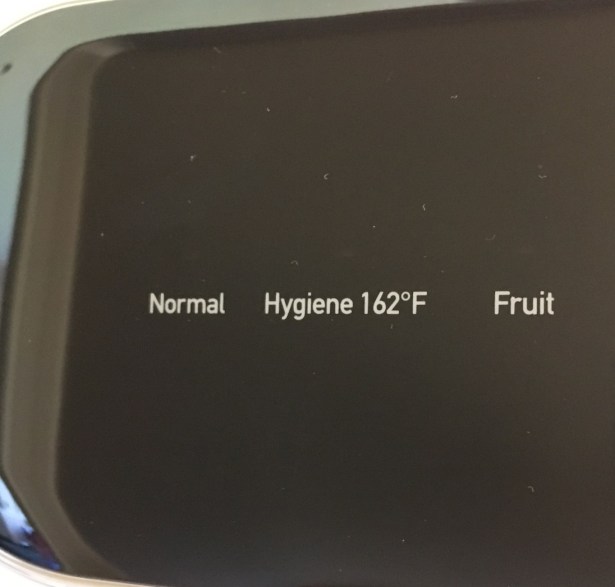
Typically, dish-washing machines increase water temperatures to a sanitizing 140-150 °F, well above suggested water heater settings designed to protect children from scalding while saving energy.

The U.S. EPA recommends setting hot water heaters to 120 °F.

My new Aikoper Compact Portable dishwasher uses 162 °F for its hottest cycle, well above the temperatures at my tap. In 2021, even a little appliance such as this one includes an internal heating element to optimize wash and rinse temperatures and improve hygiene.

Growing up in the American West, I was taught to wash dishes using two basins for soapy and clear water; we never let the faucet run throughout the task! My family appears unable or unwilling to internalize these habits, so my search for a backup dishwasher has an altruistic motive as well as supporting my hatred for manual household chores.

Energy use—according to the Energy Guide yellow card standard with all American appliances for almost as long as I can remember—compares as favorably as one would expect between my broken-down Bosch and my new portable.

The U.S. Government suggests the Aikoper Compact Portable will consume 150 kWh/year of electricity.

Keep in mind that compact and full size dishwashers are not directly comparable using this system. Also, due to the years that passed between issuance of the Bosch label and today’s Aikoper label, average electricity rates grew from 8.28¢/kWh to 13¢/kWh whereas natural gas averages went from 65.6¢/therm to $1.05/therm in the same period.

My broken, full size Bosch was expected to consume 430 kWh/year vs. 150 kWh/year for the much smaller Aikoper. By comparison, the new, full size Miele I’ve ordered is rated at 230 kWh/year according to the manufacturer’s website.

Aikoper Compact Portable: Do dishes come out clean?

More than any other fact or feature about the Aikoper Compact Portable Dishwasher, what most want to know first is, “Will my dishes come out clean?”

I always had to scrub or re-wash the spoons before. That doesn’t seem to be necessary with the new dishwasher.”
Continue reading

Kitchen compost bucket solutions to tame the sticky stink

I’ll have to begin with the bad news: if you fail to take your compost out, eventually, there will be odors. Don’t believe anyone who tells you otherwise.

Fundamentally, we’re talking about the process of decay by which food scraps become nourishment for future cycles of growth. It’s all good, but you’ll notice there’s goo in good

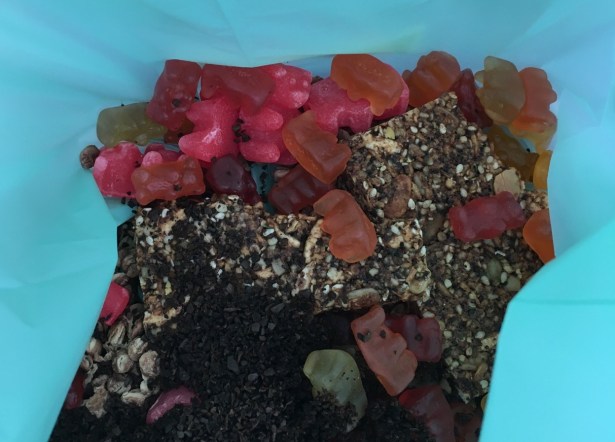
Biology gets sticky and stinky. Mathematicians know it.food in kitchen compost pail including gummy bears, coffee grounds, oatmeal, and seeds

Having accepted that taking out the compost is at least as important as removing household trash, here are my simple ideas for a less messy, less smelly, less likely to leak composting experience.

I recommend:

  • an 8-10 quart food storage container with tight fitting lid
  • 4 gallon compostable liners for the kitchen compost pail
  • a household paper shredder
  • scrap paper and cardboard shipping boxes destined for recycling
  • 13 gallon compostable liners for the curbside bin

Snapware food storage bin and lid lined with UNNI compostable bag with cardboard

Continue reading

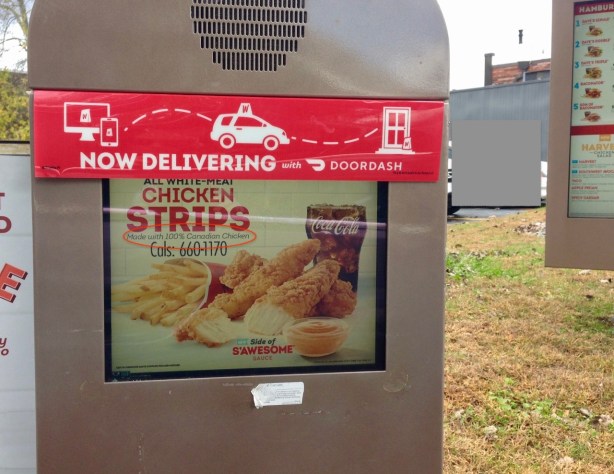
100% Canadian Chicken, Wendy’s boasts at American drive through

While slightly outside my usual areas of interest, this struck me as comment-worthy last week. I noticed this ad at a Wendy’s hamburger chain drive up kiosk. The rotating range of ads was displayed on the video screen that now accompanies the microphone and speaker.

Wendy's Canadian chicken - 1.jpg

All White Meat Chicken Strips, Made with 100% Canadian Chicken!

Never mind that the calorie count alone should send a wise person running, and no need to chide me for giving in to the temptation of fast food on a busy afternoon. It’s a rare indulgence, and I didn’t order chicken strips anyway.

But, isn’t “100% Canadian Chicken” an odd boast for an American chain restaurant?

The first Wendy’s opened in Columbus, Ohio in 1969.

I’m all for food products containing 100% of whatever they are purported to be. Actually, I believe it is my right as a consumer to get what the label claims is inside. I’m also more inclined to feel good about a Canadian farm animal as food product than, say, a Chinese or Brazilian one, but that could just be my cultural bias expressing itself.

Here’s some proof that Canadians care about their fast food chicken.

Admittedly, I’m in a position to act on my values and purchase higher quality food grown closer to home and via sustainable methods. For years, our family has purchased via the Community Supported Agriculture (CSA) model as well as relying upon Farmers to You for access to 80+ farms in our local food system.

The odd visit to Wendy’s aside, I care about the origin of the food I eat and what I feed my family. Is that the heartstring the Wendy’s ad was trying to pluck?

I’m wildly curious: does anyone else wonder what the marketing department was trying to say with this ad? How do you respond to the promise of 100% Canadian Chicken?

Barcelona 2017: B&B Wine & Cooking in El Pla del Penedès, Spain review

Attempting to wrangle every thought I’ve entertained about a week long trip to Europe would result in my posting about it after weeks if not months passed. Instead, I’ll try to focus rather narrowly on little slices of the journey. Knowing my propensity to go on and on and on, this might also keep my posts to a digestible length for the digital age.

Foodie fantasy outside the city of Barcelona

Here’s a not-so-secret secret: I’ve avoided driving in any nation except my ownokay, I’m ignoring Canada. Forgive me, neighbor to the north! But your roads are so similar to my own, and I can bring my own trusted car. It doesn’t count.

On this, my most recent trip to Europe, I faced a conundrum. Hire a rental car, or give up a much anticipated trip?

Barcelona 2017 B and B Wine Cooking car Renault Espace - 1

Renault Espace, felt like the largest car in  Spain

I rented a car. I hated almost every minute of driving the lovely but oversized Renault Espace in even small cities like Vilafranca del Penedès and Sant Sadurní d’Anoia, but it did provide me with the means to reach a really sublime rural experience: a mother and son private cooking class with the owner at B&B Wine & Cooking in El Pla del Penedès, about 45 minutes outside of Barcelona.

Background: civil unrest in Catalunya & a nervous husband

Barcelona 2017 Vilafranca Catalan flag - 1

Monument in Vilafranca with Catalan flag flying proud, NOT the national flag of Spain

My husband, whom we might politely describe as “travel averse,” was trying to dissuade me from joining him in Barcelona with DS2 at all. DH was near to canceling his own appearance at a really interesting conference. Why? The Catalan independence movement, and media depictions of dissent and violence that were widespread in the months leading up to our trip.

Back in the spring, when I found a reasonable* coach airfare to join DH on this jaunt to Spain, I immediately invited my children to come along. Shocking no one, my little guy opted to miss a week of school and join us; to my chagrin, my punk teen decided he would rather stick to his usual academic routine at home and demurred.

Though I find myself pondering whether someone could have switched DS1 at birth** for my rightful child, I do sort of understand the teenager’s desire to assert his independence by doing something—anything!—different from what his parent suggests.

Beyond the city limits: choosing an experience

So there were three of us headed to Spain in the early winter of 2017. We would be staying in the heart of Barcelona for the four nights of the conference. After that, DH booked his ticket home at the earliest possible moment. To save over $1000 each, DS2 and I needed to stay over until Saturday.

Barcelona 2017 B and B Wine Cooking outside flowers

Spain flowers even in winter

Originally, I’d booked accommodations in the medieval center of Girona for the parent-child short break. Girona is about an hour north/northwest of Barcelona. Trains, while available, aren’t super convenient to that village, however. There is no city-traffic-avoiding route back to BCN Barcelona International Airport during morning rush hour without a private car. Parking in old Girona is also not known to be convenient.

While I was keen to visit this ancient town due to its beautifully preserved Jewish quarter and its being the setting for a great series of medieval mysteries, it turns out that the world has discovered Girona because Game of Thrones has filmed there. That’s a little too much pop popularity for me to visit El Call right now.

DH, fearing he would leave and then a transit strike—or worse, total civil unrest!—would leave his wife and child at the mercy of a rioting mass of Catalan separatists, wanted me to make a plan better suited to last minute changes and further removed from the politicized masses.

I booked a rental car from BCN for the morning of DH’s departure. This option provided us with freedom of movement in the face of taxi strikes or to flee more serious unrest in that unlikely event. I then found an intriguing bed and breakfast outside the city in which DS2 and I would spend our final two nights in Spain.

As an aside, I never felt unsafe in Barcelona or the surrounding region. Except possibly while negotiating the narrow, winding exit from the airport parking garage in an SUV the size of a semi, but you can’t blame that on politics.

Catalunya: experiencing hearth & home

One of the ideas I’d entertained for making the trip to Spain a pleasure for both myself and my younger son was a cooking class.

barcelona-2017-b-and-b-wine-cooking-class-mom-with-kid-e1517158098792.jpg

We (helped Marta while she) made that paella!

Yes, it’s true, any regular reader knows that I’m not typically an enthusiastic cook.

That said, I am an enthusiastic student of what makes other people—and other cultures—tick, and it is hard to place a finger on the pulse of Catalunya without discussing food. These are people who love to eat, who know how food really ought to be, and who seem to enjoy sharing all of the same.

I’d entertained the notion of this class in Barcelona, but the timing wasn’t working out quite right. Plus, if I’m honest, I would rather visit a nice, dusty history museum any day, whereas my son was hoping to stay in the hotel watching his favorite cartoons in various languages.

What did pop up when I started researching lodgings outside the city of Barcelona, but within a radius of about one hour, were farm- and winery- based experiences.

Penedès, if I’m getting this right, is the heart of the grape growing region that produces some the world’s best sparkling wines, or cava, as it’s known locally. At least one person with whom I spoke implied that champagne is basically just a French knock off of Catalan cava!

I won’t take a position in the subjective argument of “best” or the historical question of “first,” but I can tell you that it is easy for a non- aficionado to learn about and experience great sparkling wines in Penedès, even with a child in tow.

Barcelona 2017 B and B Wine Cooking street sign

Signpost guides the way. Take the narrow dirt track to the right around the cluster of houses.

So I booked the B&B Wine & Cooking in El Pla del Penedès and hoped for the best. It had good reviews on Trip Advisor, but was mostly an unknown. I chose to use Hotels.com for booking, just in case any of it was less than legit, but, in the end, have nothing but good experiences to report from Penedès.

BandB WineandCooking Cava welcome - 1If I return, next time I will book directly with the B&B. When you do, they guarantee you the lowest room rate and give you a free bottle of cava as a welcome gift.

B&B Wine & Cooking, El Pla del Penedès

This bed and breakfast is family friendly. I’ll start there, because so many B&Bs in the USA are fussy establishments that seek to insulate their guests from such inconveniences as children and telecommunications. This is not that. Continue reading

The ideal souvenir: evocative, a little frivolous, but not useless

Is a souvenir always a mass produced tchotchke made in China, probably being sold by a franchised gift shop sending its profits out of the community?

That’s common today, but it’s not the only form a memento can take.

Should I bring anything tangible home from my travels, or are memories sufficient?

I don’t have to; I don’t always!

Nevertheless, a well-chosen souvenir can whisk me from daily life back to vacation bliss in an instant, for an instant, if it’s something I wear or use.

Bring a piece of your travels home with you

The ideal souvenir for me is very probably different than yours. That’s okay—great, actually! I’m always ready to advocate for people to assess their own needs and wants and try to ignore cultural noise arguing for random consumption without self-reflection.

Know thyself, and consume accordingly.

I’m not a minimalist, however. I admire austere spaces with their stark beauty, but I revel in a home built up with layer after layer of color, texture, and conversation-provoking oddities around every corner.

I do strive to purge what I don’t need or love, but my heart is large and my love knows few bounds. My tolerance for stuff is high, so long as the resultant collection reads “joyful exuberance.”

But I travel often, and usually with my kids.

If you’ve ever been to a store with children, you’ve probably observed their magpie like attraction to anything for sale.

In a kitchen store, they want tongs for squeezing a sibling’s ear from across the room. In a pharmacy, requests roll in for pill boxes with bright colors or a folding cane because… how cool is that? You can pretend to be infirm, and then hit your sibling from even farther across the room!

My kids have lots of nice stuff, but I’m not a parent who regularly gives in to this kind of begging. We don’t impulse buy toys. If we like something, we make a note, go home to consider it, and return to make a purchase. I’m trying to help them ignore the modern siren call of instant gratification.

From their toddlerhood, I’ve made and enforced strict rules about how one behaves in stores. This includes the rule that we will abandon a shopping trip, immediately, if behavior crosses a line that negatively impacts others, no matter how inconvenient to me and my agenda. Asking once is allowed; begging is against the rules.

Still, they will sidle up and ask—usually politely, often bubbling with enthusiasm—at every shopping opportunity. Souvenir shops are places I try to avoid.

Souvenirs for the kids

My approach to family souvenirs is to find something that we can enjoy now (during the trip) and continue to use at home. In Hilton Head, we bought a folding kite to fly on the wind-swept beach. Now, the kite lives in our beach bag.

Travel board games or small toys that meet my usual criteria for quality have been picked up on other vacations. Ideally, it will be something tied in to the location we’re visiting, but sometimes it’s enough to recall a trip when we take out a game to play:

“Remember, we got this on that rainy day in Seattle. We played in the hotel lobby by the fireplace and ordered the pizza with the spicy sauce…”

Even a Lego set or mass produced kit can evoke a special place or time. The Lego Space Needle set was purchased at… Seattle’s landmark building, the Space Needle. A Lego set with a camper was bought, and built, during our stay at a rustic fishing cabin.

More often than I would expect, my kids remember clearly when and where a toy came from. Taking this approach has worked pretty well for me thus far.

It’s not a given that a new toy will show up on a trip, but it isn’t out of the question if a rainy day or a need for quiet time presents itself in combination with a fascinating kit or object.

Souvenirs for myself

If I’m strictly honest, I’ll admit to the occasional toy bought for Mommy, too. We might have picked up another modular building to add to our family Lego display during our recent road trip. It’s entirely possible that I assembled a Parisian Restaurant as soon as the vacation laundry was done.

Lego Parisian Restaurant - 1

Much more often, I’m looking to avoid extra stuff to carry home from a trip. Usually, I acquire an inch or more of paper memories. Brochures, maps, and books are weaknesses I won’t deny. But, unless we’re on a road trip and there’s lots of room to store things in the back, I find shopping bags and bulky souvenirs stressful.

I plan what I carry on a trip. It feels wrong—even dangerous—to add items willy-nilly whilst en route.

My most successful strategy has been to purchase accessories as souvenirs, or, less often, items of clothing. These are things I can wear (i.e., use), and, when I do, I’m reminded of where they came from. It’s like a self-powered generator for joy.

A linen scarf, sewn by a bearded man

linen scarf from Ohio - 1Wear the scarf? Now my neck is warm, my outfit is complete, and my heart recalls a wonderful shop run by two bearded brothers who don’t offer wi-fi but do offer a hand-crafted, multi-level indoor tree fort in the back of their cafe to entertain the kids.

The Well Lancaster OH - 1

Lancaster, Ohio eatery, The Well

The brother with the shorter beard? He made the linen scarf himself. Oh yeah, and they serve a kale salad that my children agreed tasted good!

I think those guys are wizards…

A purple leather bag proudly bearing Roots Canada’s beaver logo

My purple handbag? Made in Canada, near the urban Toronto Roots location where I purchased it. I only own two nice leather bags. I’m not a purse junkie. This one, however, was the perfect dark purple color, just the right size, and had exactly the arrangement of pockets I’d been looking for.

I saw it in the window as I wandered around Toronto’s snazzy shopping district, finding my way to a theatre for a matinee. I paused. I yearned. I went to my show, but came back and entered the shop before returning to my hotel.

It felt like fate. My memory of the acquisition plays in my mind like a slow motion falling-in-love montage from a sappy film.

I’ve never regretted buying this bag.

I don’t shop recreationally in my everyday life, so purchases like these become vivid memories. The tangible results? They’re wearable triggers to enjoy them again.

If I find myself stopping by Target for clean socks while traveling, that’s a failure. I’ll need to plan better next time.

But, coming home with an accessory, or a hand-knit sweater, preferably locally made?

That’s my ideal souvenir.