I don’t think my behavior should be characterized as doom-scrolling, but I do subscribe to—and read daily—two of the major American newspapers as well as a handful of magazines. I prefer my news* to be well-researched, fact-checked, and professionally edited, thank you!
Recently, everywhere I look, I’m confronted by angry, polarized debate creating artificial binary positions on the particulars of education in the COVID-19 era.
In person learning is too dangerous! Remote learning is useless! Both positions are flawed…
“In person learning is too dangerous!”
“Remote learning is useless!“
Both positions are flawed because real life is nuanced. What works for one child—or one family, or one community—can’t be arbitrarily exported to someone else’s situation because there are meaningful differences between cases.
 Some teachers aren’t at particularly high risk for complications from the novel coronavirus, and want to get back into classrooms quickly. By all means, let’s put those educators to work in communities where infection rates make that a sensible solution. Other teachers have pre-existing conditions or would prefer to teach remotely: there’s an audience‡ for that modality, too.
I have yet to see any analysis comparing the number of teachers who’d like to get back inside schools with the number of families who desire the same for their kids. What if all this finger pointing is for nothing and those numbers align naturally in most communities? Shouldn’t someone put a modicum of effort into asking such a straightforward question that could solve so many problems?
 Remote education worked well for some∝ students. Learning outside of a large, “industrial school” setting was the dominant mode of education for most people prior to the past century. It’s ridiculous to pretend that there is only one path from ignorance to wisdom; all of human history argues otherwise.
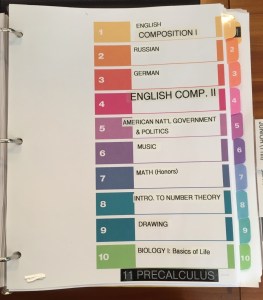 I’ve read articles bemoaning the selfishness of (rich) parents forming COVID-19 learning pods instead of sending their kids back to public schools. At the same time, many (mostly urban) schools don’t have enough physical space to safely host all of their pupils in a socially distanced manner.
It strikes me as obvious that the removal of some kids—admittedly, those whose families can afford to pay private tutors or take time away from work to teach their own themselves—from over-crowded conditions will only improve the odds against infection-via-density for those who remain.

It flat out sucks that we have yet to find a way to offer any semblance of an equal opportunity for an excellent education to all students regardless of color, creed, or zip code, but reducing each pupil’s risk of contracting COVID-19 in his or her classroom is a more straightforward problem to solve.
Since this is literally a matter of life or death, I think we should start with the low hanging fruit of smaller class sizes by whatever means possible. Some skilled educators may be lured by wealthy families’ ability to pay for private tuition, but few go into teaching for the money, so I suspect most passionate teachers will remain in the system where they chose to work.
Some families have no option but to send their kids back to classrooms. They depend upon this one and only form of state-sponsored child care in America in order to work, earning a paycheck, but also contributing their labor to benefit society. Their kids deserve to be the first children back at school in person. I willingly cede the seats my kids could rightfully occupy to children who need them more.
The children of essential workers and kids who live with food insecurity should have first dibs on in person instruction this year. This isn’t about getting the most back for every penny I spent in taxes, it’s about doing the right thing at a tumultuous time.

Lunchbox, ready for school.
It is pathetic that many of our schools are in poor repair and lack modern HVAC systems or windows that open. It is ridiculous how many young bodies we squeeze into rooms designed for far fewer. It is outrageous that millions† of our children depend upon meals served at school for essential nutrition.
None of that is right, but all of it is true. I will continue to advocate for better schooling for every kid at every opportunity I see, but I’m not going to ignore reality when lives are at risk. Neither choice is pure merit, but neither choice deserves scorn.
The choice that works for your family this year is good enough. Do what works. Kids can learn in many ways and from many sources, especially when they see their parents carefully making thoughtful choices on their behalf.
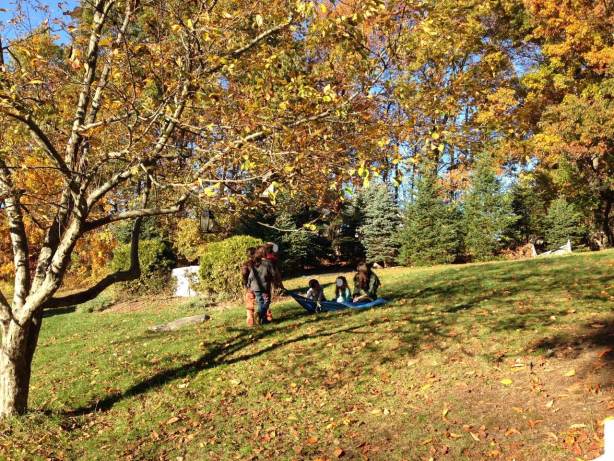 Kids are resilient. Thank God! Most of the kids will be all right. That’s the best we can do in the face of a viral adversary that has killed 171,787 Americans as of August 29, 2020.
For the moment, the best I can offer my community is to keep my kids away from public spaces to alleviate the pressure of a pandemic on the strained resources of our health and education systems.
I’m doing my best, like so many other parents. Frankly, we should all give ourselves a break, because our best really is good enough for now. Instead of blaming each other for making different choices, let’s all focus on meeting the needs of our own kids, each in our own ordinary, reasonable way.
 Highly paid elected officials in D.C. and other capitals deserve the pressure and expectation of doing more, because they are the ones who dropped this particular ball. Give them the blame they’ve earned. The U.S.A. is failing in its attempt to manage the COVID-19 pandemic, but it isn’t for lack of effort on the part of average American parents.
♦
* It’s true that I added the New York Times to my paid subscriptions only after COVID-19 started sweeping the world, but I’d been on the verge of the upgrade purchase for almost a year. I think this is where I give a shout out to the Boston Globe, The Atlantic, Wired magazine, and The Economist for edu-taining me through a pandemic, right?
It was my growing reliance on NYT Cooking recipes during the early phase of sheltering-in-place (with hit-and-miss grocery deliveries) that finally prompted me to input my credit card number.
‡According to this NY Times article from September 4, 2020, 40% of parents have chosen remote learning instead of taking advantage of the hybrid or in person options offered in that city.
∝As a mother who has home schooled one of her children for over seven years, my experience was that customizing my own plan for my own child was far easier than implementing the adapted curriculum dictated by my other kid’s school that was unprepared for the sudden need for remote learning last spring. American parents have the right to educate their own children as they see fit, so declaring as a home educating parent is an alternative for those whose kids responded poorly to their schools’ offerings.
† In 2018, 29.7 million children received free or reduced-cost lunch daily per the USDA





 Solo, I might subsist on cold cereal and the occasional spoonful of peanut butter, but my standards for parenting are a little higher than those for self care. I want to feed my family healthy meals consisting of whole foods sourced from readily identifiable ingredients found in nature, but I don’t want to spend too much time slaving over a hot stove to do so.




 Really Wonderful Things