Because I at least try to be a considerate and thoughtful traveler, I regularly look up phrases to suggest “the best way” of doing things. One such example? Parents traveling in First Class whilst their children trail along in steerage a lesser service category.
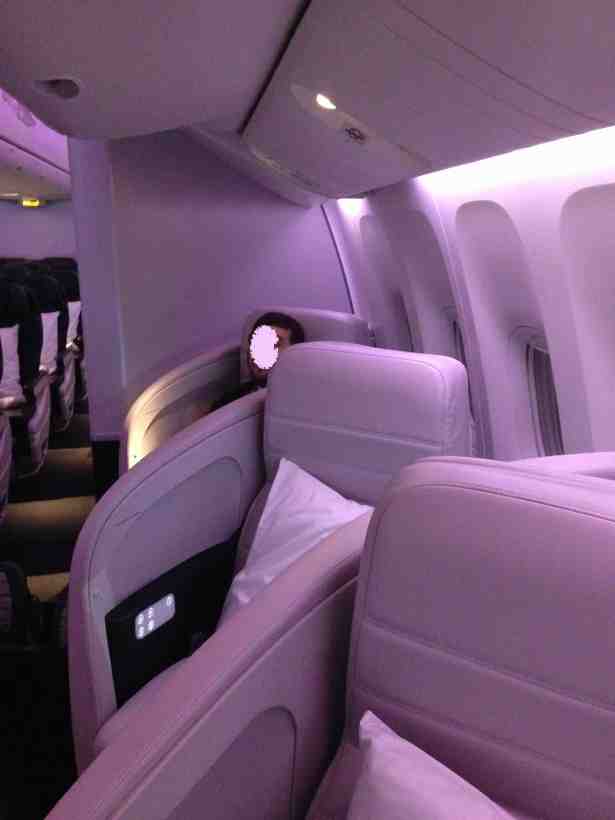 What I find most fascinating about the search results is the concurrent expression of two opinions that lead inexorably to parent shaming without a solution:
- Children don’t belong in First Class unilaterally!, while
- Parents who “abandon” their kids in Economy while riding up front themselves are monstrous jerks who should be drawn and quartered (or at least shot.)
Essentially, the sum of those two arguments leads to the conclusion that parents ought never travel in First Class while their children are under age.
Here’s where I’ll swing back around to a point I’ve stressed on this blog before: I often purchase tickets in premium cabins because of my health. Chronic autoimmune illness makes that option more comfortable—but also safer and healthier—for me.
I live with chronic pain.
Every day, I probably ache in at least a few joints. Travel—otherwise one of my great joys—can make my symptoms worse. A larger, more adaptable seat does help. More room, easier access to a lavatory, and the simple comfort of a foot rest or extensible leg support makes the difference between a successful trip and a multi-hour torture chamber.
Note that the acquisition of a more comfortable seat is something I do in addition to taking the most powerful opioid painkillers I’ve got. In transit, I will still suffer more pain than my daily average with these interventions. I choose the world-expanding possibilities of travel in spite of the cost, but the calculus for any given trip can be complex.
If there were legal protections on a minimum amount of space per passenger on a plane, the actionable facts in this argument could be different. If I were guaranteed a seat in Coach that provided enough room to shift position and freedom from being kicked and elbowed by even a plus-sized seat mate, I’d be open to debating the courtesies of keeping younger travelers out of the pointy end of the plane.
Since that is a pipe dream, however, the traveling public is going to have to tolerate my presence in Premium Economy and better, when I can afford it. And, where I go, there also will travel my children when I deem it desirable that they join me.
Given these facts, which option is preferable to the segment of society that objects to children in First Class and kids seated away from their folks?
My own choice is usually dictated by my finances.
When I score an awesome cheap fare up front, I typically book my little guy (middle school aged, so not so terribly tiny) in the seat next to me. He is delighted by the idea of a luxury trip, though modern domestic First Class is a far cry from gold-plated splendor. I prefer having his company to sitting alone.

Aer Lingus Business Class legroom

Coach legroom= 1″ from seatback
Then again,
I do actively discourage any sense of entitlement to this, my more peer-influenceable child. He has also known the joys of sleeping in a cramped Economy seat on a too-long/too-short transatlantic flight, and he knows full well how to wait his turn in the interminable queue to board, settle quickly into his seat and stow his own carry on, and then keep himself to himself en route to make the uncomfortable as tolerable as possible for everyone else aboard the jet.
The older teen would rather sit on his own regardless
because he’s way too cool to be seen with me, so he’s stowed in steerage unless
a really high Coach fare is actually a poor value compared with the mileage earning
and family togetherness opportunities of a bargain up front.
Don’t gasp–it does happen! Leisure travelers who covet rock bottom fares and business travelers whose companies pay top dollar tend to prefer flights on different days and times.
 Always check fares in all classes before booking! You may find First Class for less than Coach. It’s rare, but I have seen it* myself.
This summer, I’m accompanying my husband to a conference in the UK and we’re bringing the little guy along. On the way out, his ticket, purchased with frequent flier miles, is in Comfort+ (i.e., Premium Economy) while his father will be four rows ahead but behind the magic curtain in Delta One.
My own flight, also bought with miles, will be on a different date, itinerary, and airline entirely. We don’t have that many miles on any given airline at one time. Also, I often depart ahead of time to allow a day (or more) of recovery before entering full “tourist mode” and because I enjoy travel so much more than DH does. He rarely takes even a single day off concurrent with his business trips.
It’s a transatlantic redeye, so the kid is expected to sit, settle, and sleep. His “solo” presence is unlikely be a bother to anyone at all under these circumstances, even offering his adjacent seatmate a bit more space due to his small stature. Purchasing the equivalent to his dad’s company-paid Business Class seat was simply out of our reach.
To be clear: I, personally, am not talking about abandoning a toddler 40 rows back from his responsible adult companion. Perhaps non-parents need to be told, too, that there is no single age when every child will be ready to sit alone. As with staying home alone without direct supervision, I’d judge the right age to be over six years at a minimum and by the age of 13 for almost everyone.
Our return to the US presents a completely different set of circumstances. The lo-o-o-ong nonstop flight from Ireland to the Pacific Northwest should see the boy wide awake and therefore more likely to want or need something from a parent, if only to ask if my usual strict limit of one sweet drink per flight could be adjusted, “just this once.” I also found a relatively low fare in a premium cabin whereas Economy on the direct flight I wanted was rather high. In this scenario, I’m opting to pay to seat my child up front next to me.
It’s been argued that
children don’t appreciate the “best parts” of the premium cabin experience. For many travelers, that appears to be getting drunk! True, my son won’t be sipping champagne, and he isn’t overly inconvenienced by the cramped conditions in the cheapest seats so the extra room is “wasted” on him.
Both of us will enjoy easier access to the lavatory, however, and the better service offered by less harried flight attendants. My younger son is outgoing and friendly; he will appreciate plenty about traveling with a more gracious level of service. The fact that
different elements of Business Class will tickle his pre-teen fancy doesn’t make his experience count for less.

Glacier view over Greenland
Where will my teen be during this jaunt? Well, he would rather fly alone to visit his grandparents sooner and leave the UK to the rest of us.
Somehow, I’ve produced offspring that aren’t as interested in foreign travel as I am. After a bit of practice sitting in Coach 20 rows behind me, he graduated to a solo flight with Unaccompanied Minor service around age 12. Now,
though still in high school and underage, he’s old enough to manage his own passage through the security gauntlet and onto a direct† flight without paying for the airline’s hand-holding.
My solo teen might also annoy those who like to complain, but he’s not an intrusive passenger with his slim build and quiet habits. On his last trip to visit Grandma, he texted me joyfully upon landing from his ultra cheap middle seat that the guy by the window didn’t need to pee even once. Never having to get up once makes a great flight by his metrics.
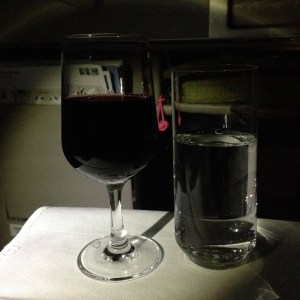 Feel free to compare that behavior to the tipsy adult who spills his third drink all over you and your laptop. The guy may offer to pay for your dry cleaning, but you’ll be wearing stained and sticky pants for the next half a day regardless.
♦
*This actually seems to be most likely around holidays when families travel to be together. What a great way to treat yourself if clan gatherings are a source of great stress as well as joy for you.
†If there were a way to get him booked into a hotel without an adult in the event of delays or flight cancellations, I would trust him to make connections, too. The boy is downright competent!




 I suffer more from the cold since developing an autoimmune disease, but November in New England isn’t traditionally known for sedentary al fresco activities. Even hale and hearty young people become uncomfortable sitting still as the mercury drops much below room
 And, of course, we got weather like this in October!




 Now I wish I had a very
  Love or hate the looks, these are some radically comfortable chairs.
 No part of my body hates any other part when I sit in an Eames Lounge. Try not to judge that statement if you don’t live with chronic pain. That’s a damn fine chair.
 Really Wonderful Things